


Rongai Reitti
Ainoa pohjoinen lähestymistapa. Rauhallinen, asteittainen nousu lähellä Kenian rajaa, villieläimiä, dramaattisia Mawenzi-näkymiä ja erittäin alhaista polkuliikennettä.
Pohjoinen Lähestyä
Rongai Route on Kilimanjaron ainoa polku, joka lähestyy huippua pohjoisesta alkaen Kenian rajalta Nale Morun kylästä (1 950 m). Tämä antaa sille luonteen, joka on täysin erilainen kuin kaikki muut reitit. Hiljaisempi, villimpi ja selvästi etäisempi tuntuma ensimmäisistä askeleista lähtien. Alkuaikoina voit jakaa polun kenenkään kanssa. Yläleireistä pohjoiseen katsottuna Amboselin ja Tsavon kansallispuistojen laajat tasangot leviävät altasi Keniaan, jossa joskus vaeltelee norsu- ja kirahvilaumoja.
Rongai-reitti tarjoaa yhden Kilimanjaron asteittaisimmista nousuprofiileista. Ihanteellinen retkeilijöille, jotka haluavat tasaisen, hallittavan nousun ilman jyrkkiä ryyppyjä tai dramaattisia päivittäisiä korkeuden heilahteluja. Se kulkee kaikkien Kilimanjaron ekologisten vyöhykkeiden läpi: mäntymetsän, sademetsän, kanervan ja nummien, alppien aavikon ja viimeisen jääkauden arktisen huippualueen. Lähellä Mawenzi-huippua, joka on todennäköisesti Kilimanjaron dramaattisin toissijainen huippu, polku tarjoaa upeat rosoiset maisemat ennen kuin se kulkee laajan satulan läpi Kibo Hutiin.
Avainyksityiskohta, joka tekee Rongai-reitistä ainutlaatuisen: se ei seuraa portaitaan. Nouset pohjoista polkua pitkin, mutta laskeudut Marangu-reitin kautta kaakkoispuolella. Tämä tarkoittaa, että koet Kilimanjaron kaksi täysin erilaista puolta yhdellä tutkimusmatkalla. Huippukokous on Gilman's Pointin kautta kraatterin itäisellä reunalla, sitten eteenpäin Uhuru Peakille. Seitsemän päivän vaihtoehto, jonka ratkaiseva sopeutumispäivä Mawenzi Tarnissa on erittäin suositeltavaa huippukokouksen onnistumisen saavuttamiseksi.
Onko Rongai-reitti Oikein sinulle?
- VAIN pohjoisen lähestymistavan ainutlaatuinen näkökulma ja syrjäinen erämaatunnelma
- Matalimmat yleisömäärät. Usein polku on täysin itselläsi päiviä
- Paras mahdollinen reitti villieläimille elefantille, kirahville ja kolobus-apinalle
- Asteittainen, tasainen nousu. Ihanteellinen aloittelijoille ja korkeudesta hermostuneille
- Upeat Mawenzi Peak -maisemat. Dramaattiset rosoiset tornit lähietäisyydeltä
- Ainutlaatuinen kokemus Kilimanjaron kahdelta puolelta. Nouse pohjoiseen, laske kaakkoon
- Paras sadekauden vaihtoehto pohjoisilla rinteillä sataa paljon vähemmän
- Rajoitettu "kiipeä korkealle, nuku matala" -profiili. Vähemmän optimaalinen sopeutuminen kuin Lemosho tai Machame
- Pitkä kuljetus Moshista Rongai-portille (n. 2,5-3 tuntia epätasaisilla teillä)
- Kibo Hut sulautuu vilkkaan Marangu-reitin yksinäisyyteen päättyy päivänä 4/5
- 6 päivän vaihtoehdolla on alhaisempi onnistumisprosentti. 7 päivän suositus
- Laskeutuminen Marangu-reitin kautta. Erilainen maasto, kaikki vaeltajat eivät pidä siitä
Rongain reitti kartalla
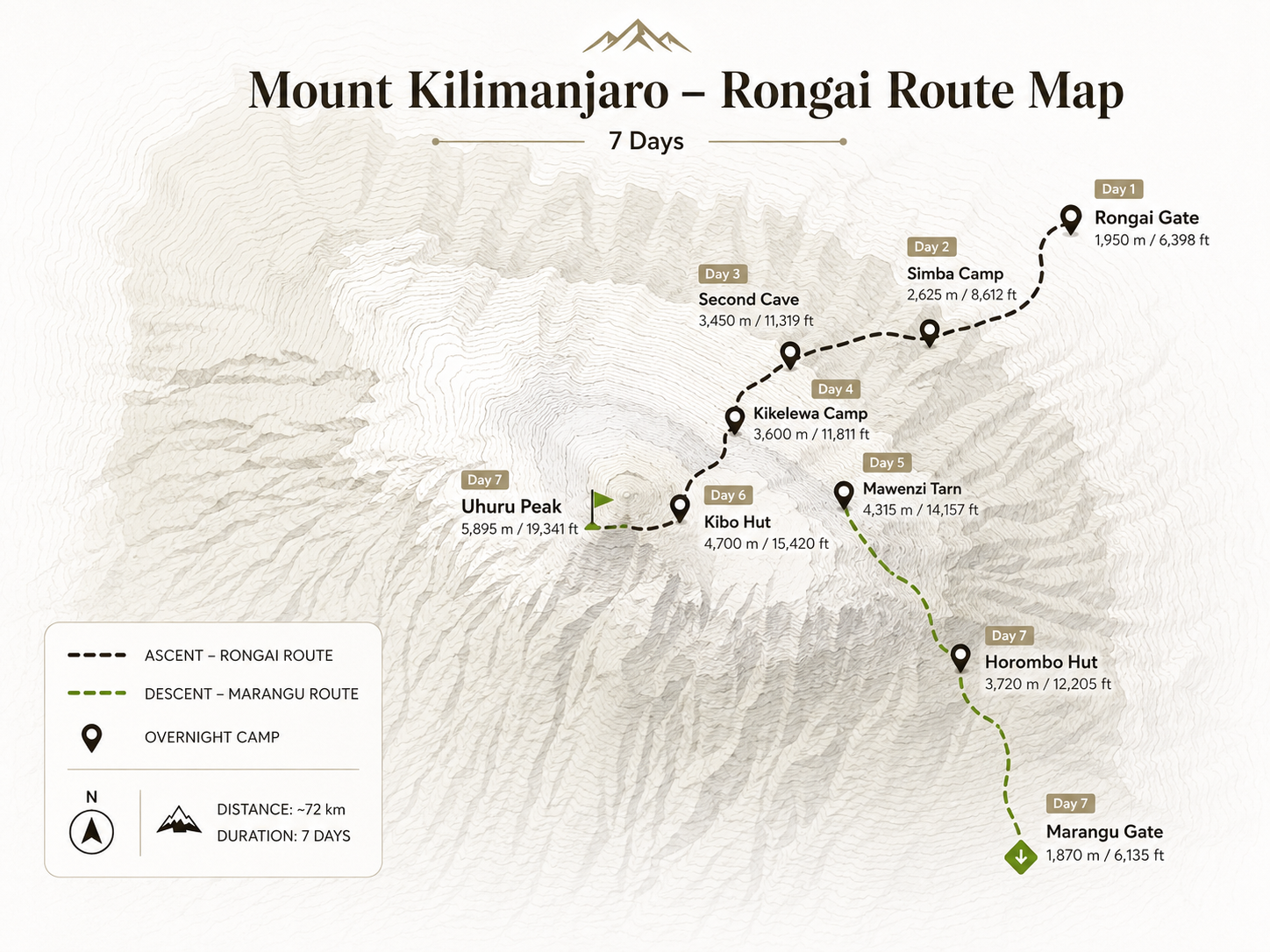
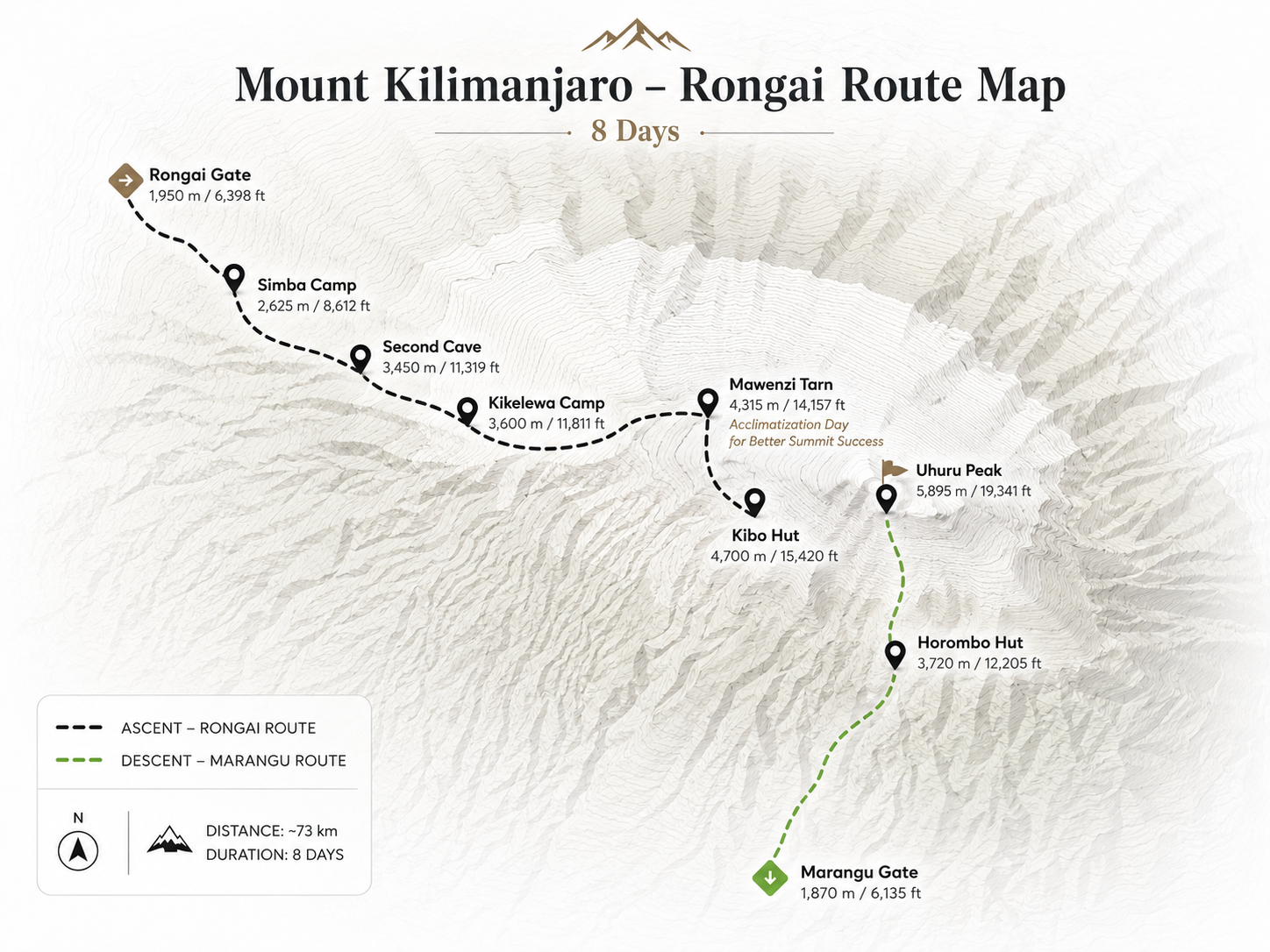
Visuaalinen opas
Korkeus Profiili
Reitti Reittisuunnitelma
Rongai-reitin seikkailu alkaa 2,5–3 tunnin ajomatkan päässä Moshista, mutkittelee maaseudun viljelysmaiden ja kylien läpi Kilimanjaron pohjoispuolelle. Saavut Rongain portille (1 950 m) lähellä Nale Morun kylää. Ainoa Kilimanjaron polkupää vuoren pohjoisella, Kenian rajalla. Puistorekisteröinti on valmis ja Haven Trails -miehistö järjestää varusteet ennen ensimmäisten askeleiden ottamista.
Polku alkaa varovasti maissi- ja perunapeltojen halki, sitten tulee mäntyviljelmään ennen siirtymistä vuoristoiseen sademetsään. Polku kiertyy ylöspäin tasaisen asteittaisella, hallittavalla tahdilla. Tämä on Rongain tunnusmerkki. Katso erottuvia Black and White Colobus -apinoita metsän katoksessa. Kun puut alkavat ohenea, näkymät pohjoiseen Keniaan avautuvat dramaattisesti. Laajat Amboselin ja Tsavon tasangot ulottuvat alapuolella, ja kirkkaana päivänä voit nähdä vilauksia elefanttilaumoista tai kirahveista kaukana alla olevilla tasangoilla. 3-4 tunnin kuluttua saavut Simba Campiin (2 600 m), joka on ensimmäinen yösi vuorella nummialueen reunalla.
Tänään on reitin pisin kävelypäivä ja ensimmäinen täysi uppoutuminen Kilimanjaron nummialueelle. Jätät metsän taaksesi ja astut kanervien, jättiläislobelioiden ja laajan panoraamanäkymien maailmaan. Polku kiipeää tasaisesti koilliseen ja ylemmältä nummolta voi ensimmäistä kertaa tuntea vuoren mittakaavan. Kibon kupoli näkyy nyt selvästi yläpuolellasi lännessä ja Kenian tasangot näyttävät putoavan loputtomasti pohjoiseen.
Ohitat toisen luolan (3 450 m), luonnollisen kallion suojan, jota paimenet ovat käyttäneet historiallisesti, lounastauolla. Sieltä polku lähtee pääradalta ja seuraa pienempää, intiimimpää polkua kohti Mawenzi Peakin rosoista siluettia. Maisema on syrjäinen ja villi. Tämä on Rongain loistava lahja retkeilijöilleen. Saavut Kikelewa Caves Campiin (3 600 m) iltapäivällä suoritettuasi yhden Kilimanjaron reitin kauneimmista nummipäivistä. Avoimet näkymät ovat upeita. Korkeus tuntuu nyt ja oppaasi tarkkailevat kaikkia tarkasti.
Tämän päivän vaellus on lyhyempi, mutta jyrkempi kuin mikään tähän mennessä näkemäsi. Reitti kiipeää jyrkästi ylös ruohomaista rinnettä Kikelewan luolista poistuen nummivyöhykkeeltä ja saapuen korkealle alppien autiomaaalueelle. Kasvillisuus harvenee. Olet nyt selvästi korkean korkeuden maailmassa. Mawenzi Peakin dramaattiset tornit kohoavat suoraan pään yläpuolelle, ja niiden rosoiset vulkaaniset kalliopylväät eroavat millään muulla vuorella. Mawenzi (5 149 m) on Kilimanjaron toiseksi korkein huippu ja yksi Afrikan silmiinpistävimmistä alppimuodostelmista.
Saavut Mawenzi Tarn Hutiin (4 300 m) ajoissa lounaalle. Kaunis leiri kätkeytyneenä Mawenzin upeiden tornien varjoon korkean jäätikkötornin vieressä. Iltapäivän loppuosa on sinun levätäksesi, tutkiaksesi lähistöllä tai valokuvataksesi dramaattista ympäristöä. Oppaat tarkkailevat korkeutta. Happisaturaatiotarkistukset ovat vakiona. 6 päivän reitillä jatkat huomenna Kibo Hutiin; 7 päivän reitillä tämä on sinun sopeutumiskohtasi.
Tänään ylität satulan. Yksi Kilimanjaron surrealistisimmista maisemista. Satula on korkea karu tasango, joka ulottuu Kibon ja Mawenzin kahden huipun välissä, istuen noin 4300-4500 metrin korkeudessa. Se on laaja, tuulen raatama alppiautiomaa, jossa on tulivuoren leviämistä ja pölyä ilman kasvillisuutta. Maisema on ulkomainen ja syvästi vaikuttava. Kuin kävelisi kuun pinnalla. Takanasi Mawenzin rosoiset tornit väistyvät. Edessä Kibon sileä vulkaaninen kupoli täyttää koko taivaan.
Kävely on pitkä, mutta kaltevuus on lempeä. Tasainen, hallittava kulku. Kuljet Rongai-reitiltä Marangu-reitille Kibo Hutissa (4 700 m). Piste, jossa molemmat reitit yhdistyvät viimeistä työntöä varten. Tupa on kivinen suojarakennus perusvarusteineen. Jaat tämän tilan Marangu Route -vaeltajien kanssa tänä iltana. Syö illallinen aikaisin, pakkaa huippukokousvarusteesi ja lepää niin paljon kuin voit. Herätys on asetettu noin klo 23.00 tai keskiyölle. Huippuyö alkaa muutaman tunnin kuluttua.
Puolen yön aikoihin oppaasi herättää sinut. Lämpötila Kibo Hutin ulkopuolella on lähellä nollaa tai sen alapuolella ja pimeys on täydellinen lukuun ottamatta ajovalojen sirpaleita, jotka jo liikkuvat ylämäkeen. Pukeudut tietoisesti. Jokainen kerros etenee oikeassa järjestyksessä. Lämpöpohja, fleece, eristetty takki, untuvaparka, paksut käsineet, kommandopipo, suojalasit. Otsalamppu syttyy ja otat ensimmäiset askeleet ylöspäin yöhön.
Rongai-huippureitti kiipeää koilliskraatterin seinää pitkin tulivuoren rinteessä olevien vaihtojen kautta. Pohja on löysä ja vaativa. Jokainen askel on tietoista työtä tässä korkeudessa. Opas määrittää hitaan, rytmisen tahdin. "Paalutanko." Hengität. Sinä astut. Lasket hengityksesi. Tunnit hämärtyvät. Aamunkoitteessa, 5–7 tunnin kiipeilyn jälkeen, ylität kraatterin reunan Gilman's Pointissa (5 756 m). Ja horisontissa Mawenzi Peak -huipun yli paahtava auringonnousu pysäyttää sydämesi kauneudellaan. Olet Afrikan mantereen taivaan katolla.
Sitten viimeinen 45 minuutin kävelymatka kraatterin reunaa pitkin. Valtavien jäätiköiden ohi, jotka hehkuivat kultaa aamun valossa. Uhuru Peakille (5 895 m). Afrikan korkein kohta. Hetki on musertava, uuvuttava, iloinen ja syvästi hiljainen. Valokuvien ja juhlien jälkeen laskeudut alas. Rongai-reitti laskeutuu Marangu-polun kautta. Jyrkkä ja säälimätön väsyneillä jaloilla. Kuljet takaisin Kibo Hutin läpi lepäämään lyhyesti ja jatkat sitten aina Horombo Hutille (3 720 m) ja saavut myöhään iltapäivällä. Nukut syvään ja kiitollisena.
Viimeinen päiväsi Kilimanjarolla. Jalkojen jokainen lihas muistaa eilisen huipputyönnön, mutta lämmin ilma ja laskeva korkeus elvyttävät sinua askel askeleelta. Horombo Hutista (3 720 m) seuraat Marangu-reittiä etelään nummien läpi ja takaisin vuoristometsään. Ohitat Mandara Hutin matkan varrella. Miellyttävä pysähdyspaikka viimeisille välipaloille ja jäähyväisille ohikulkijoiden kanssa.
5-7 tunnin laskeutumisen jälkeen saavut Marangu-portille (1 830 m). Vuoren kaakkoinen uloskäynti. Oppaat ja kantajat kokoontuvat viimeiseen juhlaseremoniaan. Perinteisiä lauluja, tanssia ja sydämelliset onnittelut. Saat virallisen Kilimanjaro Summit -sertifikaatin (kulta Uhuru Peakille). Ajomatka takaisin Moshiin on hiljainen, heijastava ja syvästi tyydyttävä. Olet kiivennyt Afrikan korkeimmalle vuorelle. Ja tehnyt sen puolelta, jonka alle 10 % kiipeilijöistä koskaan näkee.
Sama rauhallinen, luonnonkaunis avajaispäivä kuin 6-päiväinen vaihtoehto, mutta tietoisuus, että sinulla on ylimääräinen päivä sisällytetty aikatauluusi, antaa sinulle alusta alkaen täysin erilaisen psykologisen kokemuksen. Ei ole kiirettä. Pelkkää läsnäoloa. Ajettuasi 2,5–3 tunnin ajomatkan Moshista Pohjois-Tansanian maaseudun viljelymaiden läpi saavut Rongai Gatelle (1 950 m) lähellä Kenian rajaa. Ilmoittautuminen, varusteiden tarkistus ja Haven Trails -miehistön esittelyt.
Reitti kiipeää loivasti maissipeltojen, mäntyviljelmien läpi ja vehreään vuoristoiseen sademetsään. Colobus-apinoita ilmestyy katokseen. Metsä on viileää ja rauhallista. Kun puut ohenevat kohti nummia, Kenian tasangot avautuvat pohjoiseen yhdessä Kilimanjaron odottamattomimmista näkökulmista. Täältä ylhäältä katsottuna Amboselin ja Tsavon kansallispuistojen tasangot näyttävät ulottuvan horisonttiin ja voit bongata villieläimiä kaukana alempana olevista kerroksista. Simba Camp (2 600 m) tervehtii sinua metsän ja nummien rajalla 3-4 mukavan tunnin jälkeen. Illallinen sotkuteltan ympärillä, aikainen lepo.
Päivä alkaa tasaisella nousulla nummialueelle. Avoin, tuulinen ja laaja taivas kaunis. Maiseman luonne muuttuu täysin eilisestä: kanervapensaat väistyvät jättiläismakkareille ja lobelioille; kiviset harjut korvaavat metsän latvoksen. Polku jatkuu koilliseen, Kenian tasangot putoavat pohjoiseen ja Kibon kupoli hahmottuu selvemmin länteen.
Toinen luola (3 450 m) on lounaspaikkasi. Luonnollinen kivisuoja, josta avautuvat näkymät. Sieltä polku lähtee pääpolulta ja kulkee hiljaisemman, intiimimmän linjan kohti Mawenzia. Iltapäivällä saavut Kikelewa Caves Campiin (3 600 m), joka sijaitsee rinteessä ja josta on laajat näkymät Keniaan. Korkeus alkaa tulla tunnetuksi. Hengitys on huomattavasti erilaista. Kostuta hyvin, syö täysi illallinen ja nuku aikaisin. Huomenna on lyhyempi päivä mutta jyrkempi.
Lyhyempi päivä suurella korkeuden nousulla. Kikelewasta polku kiipeää jyrkästi nurmikasta rinnettä korkealle alppien aavikkoalueelle. Kasvillisuus katoaa. Ilma ohenee huomattavasti joka askeleella ylöspäin. Ja sitten. Mawenzi. Mawenzi Peakin (5 149 m) rosoiset tulivuoren tornit kohoavat suoraan yläpuolellesi, ja niiden kalliopinnat on muotoiltu miljoonien vuosien eroosion vaikutuksesta lähes arkkitehtoniseksi torneiksi. Se on yksi dramaattisimmista leiripaikoista kaikkialla Kilimanjarossa.
Mawenzi Tarn Hut (4 300 m) sijaitsee luonnollisessa kulhossa Mawenzin itäisen kasvon alla, pienen jäätikön vieressä, joka heijastaa yllä olevaa huippua. Saavut ajoissa lounaalle. Iltapäivä on sinun. Lepää teltassasi, tee lyhyitä kävelyretkiä, kuvaa ympäristöä. Oppaat suorittavat pulssioksimetriatarkistuksia ja tarkkailevat varhaisia korkeusoireita. 7 päivän reitillä yövyt täällä kaksi yötä: tänä yönä lepäämään ja saapumaan ja huomenna tottumaan aktiivisesti. Nuku hyvin. Huominen vaellus tekee kaiken eron.
Tämä on 7 päivän reitin ratkaiseva etu. Ja syy huippukokouksen onnistumiseen kasvaa merkittävästi. Aamiaisen jälkeen lähdet oppaidesi kanssa sopeutumisvaellukselle kohti Mawenzi Ridgeä, kiipeämällä noin 4 600 metriin ennen paluuta leirille. Tämä "kiipeä korkealle, nuku matala" -sykli on yksi tehokkaimmista työkaluista sopeutumiseen korkealle: kehosi tuottaa enemmän punasoluja vastauksena korkeampaan korkeuteen ja palautuu sitten alemmalla nukkumakorkeudella. Huominen kävely Kibo Hutille tuntuu tämän päivän takia huomattavasti helpommalta.
Harjuvaellus itsessään on poikkeuksellinen. Valitset tiesi vulkaanisen kiven halki tarnin yläpuolella ja nouset nopeasti korkeuteen, ja jatkuvasti laajenevat näkymät Kibon kupolille länteen ja Kenian tasangoille avautuvat pohjoiseen. Tuuli voimistuu harjanteella. Ilma on ohutta, mutta kehosi on vahva. Palaa Mawenzi Tarn Hutiin suurelle lounaalle, iltapäivälepolle ja varhaiselle illalliselle. Tänä iltana pakkaa huippukokousvarusteesi huolellisesti. Huomenna ylität satulan Kibo Hutille. Viimeinen leiri ennen huippua.
Tänään ylität satulan. Kilimanjaron korkea, karu tasango Kibon ja Mawenzin tulivuorenhuippujen välissä. Satula on noin 4 300–4 500 metriä korkea ja täysin vailla kasvillisuutta: valtava kuumaisema harmaasta tulivuoresta, joka ulottuu kilometrien päähän kahden jättiläisen välissä. Mawenzin rosoiset tornit väistyvät takaasi, kun Kibon valtava sileä kupoli vetää sinua eteenpäin. Taivas täällä on valtava. Hiljaisuus on täydellinen tuulta ja askeleita lukuun ottamatta.
Kävely on pitkä, mutta kaltevuus on lempeä, mikä on tervetullut hengähdystauko takanasi olevien jyrkempien päivien jälkeen. Sinun kehosi. Hyvin tottunut eilisestä harjuvaelluksesta. Liikkuu tasaisesti ohuessa ilmassa. Saavut Kibo Hutiin (4700 m) aikaisin iltapäivällä. Kivimökki on jaettu Marangu Routen retkeilijöiden kanssa. Oppaat järjestävät viimeisiä tiedotustilaisuuksia: huippukokouksen ajoitus, tahdistus, hätäprotokollat, tarkka polku Gilman's Pointiin. Syö kaikkea mitä voit. Juo vettä, kunnes se tuntuu epämukavalta. Nukkumaan mahdollisimman aikaisin. Hälytys tulee noin klo 23.
Hälytys soi noin puolenyön aikaan. Nouset makuupussista kylmään, hiljaiseen pimeyteen. Jokainen kerros jatkuu. Lämpöpohja, fleece, eristetty takki, untuvatakki, paksut käsineet, kommandopipo. Otsalamppusi syttyy. Viimeinen juoma kuumaa teetä, jos vatsa sallii ja sitten astut ulos. Yötaivas Kilimanjaron yllä. 4700 metrin korkeudessa ilman valosaastetta. On yksi upeimmista nähtävyyksistä maan päällä. Tähtiä loistaa miljoonina, kun aloitat hitaan, tasaisen nousun.
Rongai-huippureitti kiipeää koilliskraatterin seinää pitkin loputtomien siksakkivien vaihtojen kautta tulivuoren laaksossa. Pohja on vaativa. Korkeus on valtava. Opas määrittää tahdin. Tuskallisen hidasta, tarkoituksella. "Paalutanko." Hengitä hengityksellä. Tunti tunnilta. Pysähdyt säännöllisesti lyhyitä taukoja ja vettä siemailemaan. Sitten, 5–7 tunnin kiipeämisen jälkeen pimeässä ja kylmässä, ylität kraatterin reunan Gilman's Pointissa (5 756 m), aivan kuten ensimmäinen aamun valo loistaa oranssina ja vaaleanpunaisena Mawenzin siluetin yllä itäisellä horisontilla. Auringonnousu 5 756 metrin korkeudessa on hetki, joka muuttaa ihmisiä pysyvästi.
Viimeinen 45 minuutin kävelymatka kraatterin reunaa pitkin Uhuru Peakille (5 895 m) ohittaa valtavat kullassa hehkuvat jäätiköt. Tulet huippukokouksen kyltille. Afrikan korkein kohta. Ja kaikki, mitä olet kantanut päivinä ja öinä, saapuu mukanasi. Sitten pitkä, jalkoja polttava laskeutuminen: alas Kiboon lepäämään, sitten Horombo Hutille (3 720 m). Saavut myöhään iltapäivällä uupuneena ja voittajana. Uni tulee heti.
Viimeinen päiväsi. Hyvin levänneenä Horombo Hutista alemmalla korkeudella nukutun täyden yön jälkeen, aloitat viimeisen laskeutumisen nummien läpi ja takaisin rehevään metsään. Ilma rikastuu ja lämpenee joka askeleella alaspäin. Ohitat Mandara Hutin matkalla. Miellyttävä pysähdys teetä ja pohdintaa. Metsä sulkeutuu jälleen ympärillesi: tuttua, lämmintä, elävää linnunlaulua ja pehmeää tuulen kahinaa katoksen läpi.
5-7 tunnin kuluttua ilmestyy Marangu Gate (1 830 m). Matka on valmis. Kuljettajasi ja oppaasi kokoontuvat seremoniaan: laulua, tanssia, yhteisen voiton kädenpuristusta. Saat virallisen Kilimanjaron huippukokoustodistuksen. Kultaa niille, jotka seisoivat Uhuru Peakissa. Emotionaaliset hyvästit. Ajomatka takaisin Moshiin on hiljainen ja heijastava. Olet kiivennyt Afrikan korkeimmalle vuorelle sen ainutlaatuisimmalta puolelta ja nähnyt Kilimanjaron kasvot, joita useimmat retkeilijät eivät koskaan kohtaa. Kannat sitä mukanasi ikuisesti.
Yön yli Pysähtyy
| Leiri / mökki | Korkeus | Alue | Yö | Huomautuksia |
|---|---|---|---|---|
| Simba Camp (ensimmäinen luola) | 2600 m | Metsän / Moorlandin reuna | Yö 1 (molemmat) | Ensimmäinen luola lähellä; avoimet näkymät pohjoiseen Kenian yli; colobus-apinoita alueella |
| Kikelewan luolat (kolmas luola) | 3,600 m | Moorland | Yö 2 (molemmat) | Toisen luolan jälkeen lounaspysäkki; Mawenzi-näkymät alkavat; avoin harjuleiri |
| Mawenzi Tarnin mökki | 4,300 m | Alppien autiomaa | Yö 3 (molemmat) · Yö 4 (7 päivää ) | Mawenzin tornien alla; jäätikkö; dramaattisin leiri; 7 päivää: 2 yötä sopeutumisvaelluksella |
| Kibo Hut | 4,700 m | Arktinen / Scree | Yö 4 (6 päivää) · Yö 5 (7 päivää) | Kivimaja jaettu Marangu-reitin kanssa; huippukokouksen perusleiri; keskiyön lähtö |
| Uhuru Peak | 5,895 m | Huippukokous / Arktinen | Ei käytössä | Via Gilman's Point (5 756 m); Rongai nousee koilliskraatterin seinään |
| Horombo kota | 3,720 m | Moorland | Yö 5 (6 päivää) · Yö 6 (7 päivää) | Marangu-reitin laskeutuminen; yhteiset mökit; viime yönä vuorella; ansaittua lepoa |
| Marangu-portti (uloskäynti) | 1,830 m | Metsä | Ei käytössä | Päivä 6 (6 päivää) / Päivä 7 (7 päivää); huippukokouksen todistus; miehistön juhla; palaa Moshiin |