
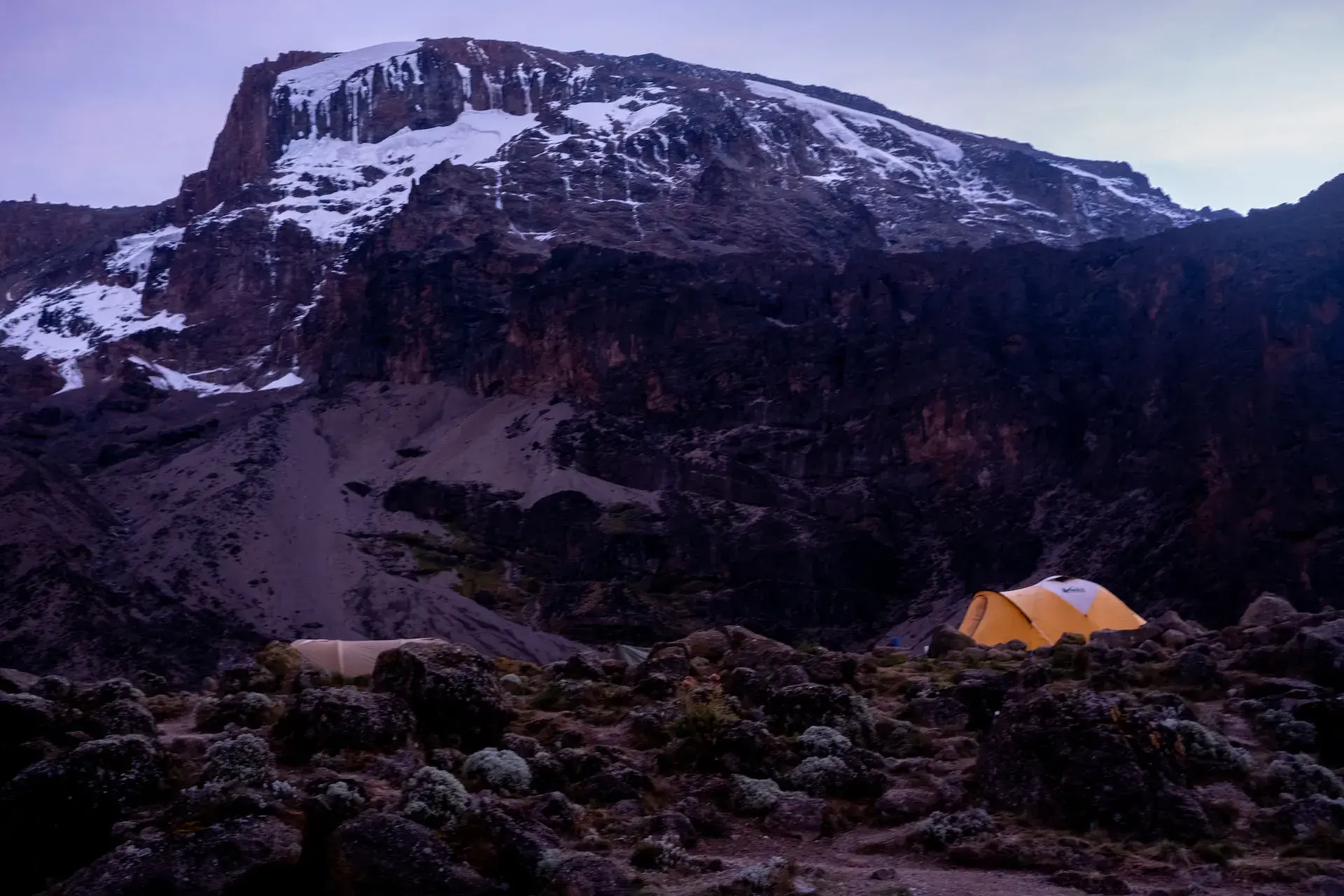
Parku Kombëtar i Malit Kilimanjaro
( Kilimanjaro national park) is a true definition of East African beauty. This park shelters Africa’s highest point
– Mali Kilimanjaro
, a very popular creation that holds quite a strong profile. Mali Kilimanjaro
, along with its three volcanic cones “Mawenzi
”, “Kibo
” and “
Shira
” is a dormant volcanic mountain in Tanzania
Është një nga shtatë kodrat dhe gjithashtu del se është mali më i lirë në botë. Udhëtim për në Tanzani
annually and is one of those daring places every adventurous traveler should visit at all costs. The climbing experience
is quite physical, tiresome and risky but the feeling of hiking till the Uhuru peak
is an accomplishment you will always be proud of hence, definitely worth every effort of your endeavors. The mountain rises approximately 4,900 meters from the base to a breathtaking 5,895 meters above sea level.
Vendi i Parkut Kombëtar Mali Kilimanjaro : Ky park kombëtar ndodhet në Tanzani, në jug të kufirit me Kenya. Parku Kombëtar Arusha and a person in Arusha town is very capable of viewing the Mountain clearly from the comfort of their hotels or lodges as the sip a cup of tea.Parku Kombëtar Kilimanjaro covers an area of 1688 square kilometers and is located at coordinates of 2°50 ’–3°10 ’S latitude and 37°10 ’–37°40 ’E longitude. Mali Kilimanjaro the biggest attraction in this national park is strategically located and one can easily be accessed through different routes which favor the hikers to make their choice depending on the ease of hike. Parku Kombëtar Kilimanjaro can be accessed by road and by flight. One can decide to fly into Kilimanjaro International Airport which is one of the biggest national parks in Tanzania.
Routes for Hiking Mali Kilimanjaro Mali Kilimanjaro hiking is easier in a way that the trekkers/hikers are able to access different hiking trails which are categorized in the ease of hiking. There are 6 routes that are fully approved for hiking the tallest mountain in Africa to be able to reach the Uhuru Peak Rrugët ku mund të bëhen marshimet përfshijnë: Lemosho Route which is a 70-kilometer trail that passes through the Londorossi Gate. This route is among Rrugët më të mira for clients since it has registered high successes to the peak. Another of the routes is the Umbwe Route E cila shihet midis rrugëve më të vështira, dhe suksesi në këtë rrugë është i vështirë për shkak të kohës së shkurtër të amsimatizimit. Shira Route Që depërton deri në skaj të malit. Lemosho Route . This route is used by few hikers since it was replaced by an easier route i.e. the Lemosho Route. The Rongai Route është gjithashtu një nga Kilimanjaro hiking routes dhe është gjithashtu një nga rrugët më të vështira për të ecur, pasi ka një kohë të shkurtër për aclimatizimin. Marangu Route commonly known as the “ Coca Cola ”route and is the oldest route to use while hiking mount Kilimanjaro. It is one of the cheap options for hiking and it also has a permanent dormitory of sleeping huts for the hikers. Finally, we have the Machame route which is the longest route to hike the mountain. It is long but considered a better option by the hikers because it has better acclimatization time. It is also known as the “ Whiskey Route “Me të gjitha këto rrugë të caktuara, sigurohuni që Përgatitu duke bërë disa ushtrime për marshim , dhe mbani mend të kujdeseni për disa Fakte për marshimin Mali Kilimanjaro .
Koha më e mirë për vizitë Mali Kilimanjaro: Mali Kilimanjaro is located near the Equator and therefore, the areas around the mountain receive Dry Seasons and wet seasons. Hiking mount Kilimanjaro is quite dangerous when the weather is messy for example during the wet seasons, it is dangerous because of the slippery trails, snow, mud and other weather disasters which might be of harm to the body. Therefore this leaves the Dry season being the best time to hike mount Kilimanjaro . The dry months which are favorable for hiking are the months of December to March and those of late June through to September. Therefore, be sure to book your mount Kilimanjaro Hiking Safari during these months.
Llojet e kafshëve të egra në Parkun Kombëtar Mali Kilimanjaro: This being a national park, it harbors quite a number of wildlife species that may be eye-catching to the traveler who is on a safari across the Kilimanjaro Plains and may be planning to hike the great mountain. Some of the wildlife species include the cape Buffaloes who leave in the mountain forest that surrounds the National Park. Another of the most eye-catching species is the African Elephants which are seen in big herds traversing the lands between Namwai and Tarankia rivers. In the montane forest, you will be able to find primate species like the blue monkeys, western black and white colobuses, bush babies, and other species like leopards, giraffes, bats, antelopes among others. It is quite an amazing experience for those who are planning to hike to be able to view different kinds of wildlife species as traverse Parku Kombëtar i Malit Kilimanjaro .
AKTIVITETI I PËRTËRIRËVE NË KILIMANJARO NATIONAL PARK
Mali Kilimanjaro, Chala Crater Lake, Kibo Peaks, Shira Plateau, Olpopongi, and other breathtaking beauty can be seen in the park. Mountain climbing is the park ’s most popular tourist activity in the park. Nature hikes, mammalian and bird watching, trekking, camping, and a visit to the Maasai tribe are all available to visitors. Ja disa gjëra për të bërë në Tanzani, veçanërisht në Parku Kombëtar Kilimanjaro, gjatë safarit.
Bird watching
The fact that Parku Kombëtar Kilimanjaro is home to over 150 bird species, with forest birds at the top of the list, is good news for bird lovers. Both resident and migratory birds from all over the world, including Asia, can be found in the park. The local black-shouldered kite, long-tailed trogon, Gabar goshawk, blue-naped mouse birds, grey hornbill, African fish eagles, white-cheeked barbet, African pygmy kingfisher, red-capped robin chat, and white-necked raven are just a few of the birds that may be seen in Kilimanjaro national park.
Hiking
The most popular activity in Parku Kombëtar Kilimanjaro is hiking up Africa ’s highest freestanding summit. Thousands of tourists visit the country solely to do so. At 5,895 meters high, Kilimanjaro ’s highest peak, which is always snowcapped throughout the year, summiting the Kibo peak provides excellent views of the surrounding town, other peaks of the mountain, such as Shira peak, and the lush greenery. The majority of the days climbing Kilimanjaro are not difficult because the paths are not steep; instead, the challenge is dealing with the altitude.
Kilimanjaro ka gati shtatë rrugë marshimi deri në majë dhe dy rrugë për të zbritur nga mali; çdo rrugë është unike në kuptimin që disa janë më të vështirë për t'u rritur se të tjerat; disa rrugë kanë një mundësi më të lartë për të arritur në majë se të tjerat; dhe disa rrugë janë më shpërblyese në lidhje me pamjet e peizazhit, si Edhe gjëra të tjera tërheqëse, si kafshët e egra që shohin rrugës për në majë të malit. Në rrugët më të gjata, mbërritja në Samitin Mali Kilimanjaro Uhuru peak dhe zbritja deri në pikën e finishit zgjat nga pesë në nëntë ditë.
Wildlife viewing
Parku Kombëtar Kilimanjaro is home to a range of habitats and climatic zones that are home to a variety of wild creatures, and you may be able to see some of them when hiking to certain spots. The majority of visitors to Parku Kombëtar Kilimanjaro come to climb the mountain, so game viewing isn ’t a priority. There are many fascinating and often unusual creatures on Kilimanjaro, but we recommend going on a Tanzania safari in one of the other big national parks if you want to see giant African mammals like the Big Five in Ngorongoro or Serengeti. There are enormous herds, predators galore, and even the Great Wildlife Migration to be found there.
Në Kilimanjaro national park, veçanërisht në shpatet e pasura më të ulëta ka shumë kafshë madhështore (dhe zogj) për t'u parë. Elefantët, buajt e Kepit, rinoqerontët e zinj, gjirafat, leopardët, servalët, hienat, babuinët, majmunët, antilopat, aardvarët, mongolët, porkupinat, baldocat e mjaltit, hiakët e pemëve, foshnjat e egra dhe krijesat e tjera të egra, mund të gjenden në Kilimanjaro national park.
Cycling
The Kilimanjaro bike trek is one of the few truly unique ways to see the Kilimanjaro national park and climb Mali Kilimanjaro. The Kilema trail is the only way to get to the top by mountain bike. This activity promotes physical fitness and recreational use of the natural environment with minimal impact, boosting visitors ’experiences. However, it is advised that experienced motorcyclists and guides are the ones to participate in this activity. Ride through the Chagga people ’s farmlands while taking in the breathtaking environment. Note that cycling to the summit incurs additional expenses and necessitates the use of mountain bikes.
Safari në këmbë
Unlike mountain climbing, the nature-guided tours do not seek to reach the summit. This is really a simple method of extending/ get more close to the nature. The lower slopes of Mali Kilimanjaro are popular for nature walks. The trek allows you to get up close and personal with even the tiniest glimpses of nature. Tourists may see black and white monkeys, colobus monkeys, olive baboons, butterfly species, insects, bird species, and a variety of other fascinating creatures while on a stroll.
Ec në shira plateau.
The Shira Plateau, a few kilometers west of Kibo, is on one of the routes to Mali Kilimanjaro. Caldera is the name given to this magnificent plateau. You ’ll be walking on the remains of a volcano that erupted over 500,000 years ago as you trek around the plateau. Because of its extraordinarily rich variety, particularly among species, this is a popular destination for wildlife aficionados. In this area, you can take your time and look for elephants, buffalos, elands, and lions, though you should be aware that the environment is dense, so you may have to look for them carefully.
Visit chala Crater Lake
Chala Crater Lake is located in the shadow of Mali Kilimanjaro, near the Kenyan-Tanzanian border, in a crater caused by volcanic activity on the mountain. The pristine waters of the lake can be turquoise blue, midnight blue, or even a magnificent emerald depending on the time of year you come.
Të shkosh rreth liqenit dhe poshtë mureve të kraterit është një mënyrë e madhe për të parë tilapinë e rrezikuar Chala, e cila mund të shihet vetëm këtu. Ka edhe disa gjëra shtesë në dispozicion, edhe pse do të jetë shumë e izoluar gjatë sezonit të ulët. Edhe pse nuk ka roje në detyrë, noti lejohet në këtë liqen krateri.
Discover Olpopongi
Another amazing thing to do during your safari in Kilimanjaro national park. Discover the best of culture at Olpopongi, which offers one of Africa ’s most authentic Maasai experiences. You can also visit the kraals, where these early immigrants lived for a long time, learn more about Maasai family traditions and mores, sample local cuisine, and converse with Maasai about their past.
Gjëra të tjera për të bërë në Parku Kombëtar Kilimanjaro përfshijnë camping , which brings you closer to nature and allows you to enjoy the gorgeous bush or forest of Africa ’s highest mountain, one of the unique kinds of experiences you will never forget.
Picnicking: Në vendet e Parkut Kombëtar Mali Kilimanjaro përfshihen Jiwe la Mbula, Daraja refu, kulaç, ujë përfundimtar e të tjerë.
Filming, Duke vizituar ujin që bie , dhe duke takuar locals for a cultural Përvoja është gjithashtu pjesë e Kilimanjaro national park.
AKOMODIME NË KILIMANJARO NATIONAL PARK
Akomodimet në Kilimanjaro national park mund të kategorizohen në dy grupe, si për shembull Shtëpi kur marshon Mali Kilimanjaro and Strehimet para dhe pas marshimit në mal Kilimanjaro.
Kur marshon në malin e Kilimanjaro,
You ’ll have to sleep in a tent unless you ’re trekking the Marangu route, which provides huts for climbers. All hikers on the other seven Kilimanjaro routes are required to camp on the tent. Camping on the mountain is part of the adventure, and your tent will become your own private sanctuary to rest and recoup after a long day on the path. If you don ’t want to sleep in a tent while ascending Mali Kilimanjaro, the best alternative is to take the Marangu route, which offers some of the greatest huts with all the amenities you ’ll need to enjoy your night while summiting Uhuru Peak.
The Marangu path is the only one with hut accommodations where you can spend the night while trekking to Africa ’s tallest peak, Kilimanjaro. The Mandara and Kibo huts each have 60 bunk beds, while the Horombo huts have 120 bunk beds. The dormitory-style lodgings on the Marangu route range from 4 to 20 bunk beds per room. The private room cannot be rented; however, the bed positions are assigned on a first-come, first-served basis. As a result, be prepared to share your sleeping shelter with strangers. Although the Marangu Route may be done in 5 days, climbers should allow an extra day for acclimatization. Its disadvantage is that the path might become quite congested especially during the tourism peak season. Më poshtë janë kasollet e strehimit në Marangu route
- MANDARA HUT (2,700 METERS)
Në ditën e 1, kampi i Hutit të Mandararës ndodhet në Marangu Route. Udhëtimi fillon në 1,879 metra dhe përfundon në 2,700 metra, duhen 4 orë për të udhëtuar nga Marangu Route deri në kampin e Hutrave të Mandararës.
- HOROMBO HUT (3,720 METERS)
On Day 2, the Horombo Hut Campsite is located on the Marangu Trail. The journey begins at 2,700 meters and ends at 3,720 meters. The hike from Mandara Hut Campsite to Horombo Hut Campsite takes around 6 hours.
- KIBO HUT (4,700 METERS)
Në ditën 4, kampi Kibo Hut ndodhet në Trail Marangu. Udhëtimi fillon në 3,720 metra dhe përfundon në 4,700 marshim nga Horombo Hut Kampsite në kampin Kibo Hut rreth 6 orë.
Të tjerë vizitorë që marshojnë Mali Kilimanjaro nga rrugët e tjera, përveç Maranguit, mund të qëndrojnë në tenda në disa vende fushimi përgjatë rrugës për në majë të malit.
Akomodimet mbas dhe para se të arrish në majë Mali Kilimanjaro
The Parku Kombëtar Kilimanjaro is near Moshi, the main town in the Kilimanjaro region, although Arusha, which is only 2 to 3 hours away and has plenty of lodgings, is also close by. There is enough accommodation surrounding Mali Kilimanjaro to satisfy all interests, budgets, and trip kinds, ranging from luxurious wilderness lodges to comfortable tented camps. Whether you ’re looking for a place to stay before climbing Mali Kilimanjaro or a relaxing safari lodge from which to explore the area, our Mali Kilimanjaro lodging is guaranteed to inspire you and make arranging your Tanzania safari a lot easier.
Kilimanjaro View Lodge, Dual Mountain View Lodge, Kimana Omega Safari Lodge, The W Hotel, Teule Guest House, Kaliwa Lodge, Kilemakyalo Mt. Lodge, and others are some of the accommodations near the Parku Kombëtar Kilimanjaro where you can rest before or after your visit to Kilimanjaro or climb Kilimanjaro. Another alternative is to drive a few kilometers to Arusha, where you will most likely find more hotels to enjoy after or before your safari to Mali Kilimanjaro.
KOHIA E VITIT KILIMANJARO
Tourists can visit Parku Kombëtar Kilimanjaro all year, However Kilimanjaro is best climbed during the dry season, which runs from June to October, and from late December to early March, right after the short rains and before the long rains. Avoid November and March-April if at all possible, as it is the rain seasons and the paths through the forest will be slick and the routes up to the peak, particularly the Western Breach, will be covered with snow.
KILIMANJARO NATIONAL PARK ECOSYSTEM
There are five distinct ecological climatic zones on Mali Kilimanjaro which includes Cultivation Zone, Forest Zone, Heather-Moorland Zone, Alpine Desert Zone, and Arctic Summit climate zones. On your way up Africa ’s tallest peak, you ’ll pass through each of these zones. The wildlife, birds, and vegetation of Parku Kombëtar Kilimanjaro are diverse. Walking from the equator to the North Pole has been compared to the five different climate zones on Kilimanjaro, which range from tropical jungle to frigid tundra at the summit. In terms of flora and animal life, each climate zone has its own distinct traits.
Lobelia gjigante (Lobelia deckenii ) and the big groundsel are two prominent species that grow in the moorlands. Elephants, buffalo, and eland live in the forests of the southern slopes and neighboring areas. Black and white colobus monkeys, blue monkeys, bushbuck, and duikers are among the smaller species that live in the forests. The forests are also home to a diverse range of birds, including the endangered Abbot ’s starling.
KILIMANJARO ’S LOCATION
Mali Kilimanjaro is Africa ’s highest peak, rising to a height of 5,895 meters above sea level. Kilimanjaro is a mountain in Tanzania near the Kenyan border that is part of the Parku Kombëtar Kilimanjaro. Kilimanjaro is roughly 140 miles (225 kilometers) south of Nairobi, Kenya, and about 100 miles (160 kilometers) east of the East African Rift System.
KILIMANJARO ’S WEATHER AND CLIMATE
The bush regions and rainforests surrounding Mt. Kilimanjaro have an annual temperature range of 70 to 80 degrees Fahrenheit (21 to 27 degrees Celsius). Because of the park ’s proximity to the equator, the temperature rarely changes much during the year, so expect 70 to 80 degrees all year. The hottest months are from January to March. Ascending the mountain, though, the temperatures drastically shift. The temperature varies dramatically at the peak of the mountain. Its great height makes temperatures resemble those of an arctic environment. At such an altitude, temperatures can drop to -20 degrees Fahrenheit (-29 degrees Celsius) during the night. Because of this diversity, it is impossible to categorize the entire region as having a single climate.
November to December and March to May are the wettest months, with rainfall averaging 13.8 inches. June to October are the driest months, with rainfall as low as 0.6 inches. However, the amount of precipitation falls steadily over the course of the year. Because of the park ’s characteristics and proximity to the equator, this is the case.
Gjatë gjithë vitit, lagështia mbetet relativisht e lartë, vetëm duke rënë në 57 në raste të rralla, por duke arritur 77 për qind te të tjerët. Muajt e pranverës dhe të verës kanë lagështinë më të madhe, ndërsa muajt e vjeshtës dhe dimrit kanë më të ultat. Për shkak të lagështisë së lartë dhe reshjeve, që bëjnë që lagështia të ngjitet në ajër, ka shumë mjegull në këtë zonë, veçanërisht në pyjet e shiut. Midis majit dhe tetorit, zona është prekur kryesisht nga erërat verilindore tregtare, me erërat e tregtisë juglindore që kanë një ndikim të vogël midis nëntorit dhe marsit. Duke mbajtur një nivel të lartë reshjesh në pranverë dhe një nivel më të ulët reshjesh në verë, rënie dhe dimër.
ÇFARË ËSHTË PËR TË DINI KILIMANJARO?
Mali Kilimanjaro is the highest free-standing peak in the world and the tallest mountain on the African continent. Kilimanjaro features three volcanic cones: Mawenzi, Shira, and Kibo. Mawenzi and Shira are no longer active volcanoes, but Kibo, the highest mountain, is dormant and may erupt again in the future. Kilimanjaro is also noted for being home to a variety of vital wild animals that can be found in the surrounding forest throughout your walk to the summit. Furthermore, Kilimanjaro provides fresh and clean air from the forest as well as clean water from the mountain to the local inhabitants surrounding the mountain and all Tanzanian nationals.
SI TË PËRBALLOSH KILIMANJARO NATIONAL PARK
Kilimanjaro is easily accessible by both air and road transportation. Fly to Kilimanjaro International Airport if you wish to visit Kilimanjaro (JRO). Parku Kombëtar i Malit Kilimanjaro lies a few kilometers south of the airport. Disa nga linjat ajrore që fluturojnë direkt në Kilimanjaro international airport përfshijnë
MË PARË I KILIMANJARO NATIONAL PARK
Parku Kombëtar Kilimanjaro has a long history in Tanzania , dating back to the colonial era. For Arab and Chinese traders, the mountain served as a marker. The mountain (described as a snow island in the sky) first appears in the writings of Ptolemy, a Graeco-Roman polymath (a man of many skills) who lived in the first century AD and was a historian, writer, astronomer, geographer, and mathematician. It was not mentioned by Chinese scholars until roughly seven centuries ago.
Johann Rebmann, a missionary, published a story in 1849 that was widely disbelieved. In 1885, the German Protectorate of Kilimanjaro was established. Hans Meyer, a German geographer, and Ludwig Purtscheller, an Austrian mountaineer, were the first to reach the summit of Kilimanjaro in 1889. It was referred to as “Germany ’s highest peak ” Në atë kohë. Kilimanjaro që atëhere është bërë një destinacion popullor marshimi si për vendasit, ashtu edhe për vizitorët. Mali Kilimanjaro dhe pyjet e tij përreth u përcaktuan si rezervë loje nga administrata koloniale gjermane derisa u caktua në Britani si Mbrojtëse nën Lidhjen e Kombeve deri në pavarësinë e Tanzanisë në 1961.
Kilimanjaro was established as a forest reserve in 1921, following the eruption of Mali Kilimanjaro. To safeguard its unique ecosystem, the mountain and its six adjacent forest corridors were declared a national park in 1973. In 1987, the park was designated as a UNESCO World Heritage site , and in 2005, it was expanded to include the entire tropical forest that had previously been part of the Kilimanjaro Forest Reserve, and where certain species found on a Mt. Kilimanjaro climbing fieldtrip are found nowhere else on the planet. The indigenous Chagga people still farm the lower hills. The blue monkey is one of the many species that dwell in the area surrounding the mountain. Since then, the main attractions of Parku Kombëtar Kilimanjaro have been Mali Kilimanjaro, Africa ’s highest mountain, as well as the park ’s surrounding forests and rare wild species.
Që kur 1973, kur Kilimanjaro u përcaktua si një park kombëtar dhe një UNESCO World Heritage Site , the Tanzanian government, in collaboration with conservation international bodies, has been working hard to preserve and conserve the mountain and its surrounding forest in order to maintain its origin, reputation, and identity. Despite the effort of conservation the mountain, According to National Geographic, researchers and other conservationists have been predicting and commenting that the glaciers of Mali Kilimanjaro may disappear as soon as 2030, and some more optimistic scientists project the extinction date for the Furtwangler Glacier to be 2060. However, both dates are well within the lifetimes of many readers.
Kilimanjaro means “mountain of whiteness ”or “shining mountain,” according to most linguists and etymologists who investigate the origins of local words. The name is thought to be a blend of two words from distinct tribal languages (“Kilima ” means mountain in Swahili and “Njaro ” means shining/whiteness in Chagga).
FORMATION OF MOUNT KILIMANJARO
Mali Kilimanjaro ’s three summits were made millions of years ago by volcanic explosions. Shira, one of the volcanic cones, is now extinct and degraded, while Mawenzi and Kibo, the other two, “melted ”together during successive eruptions. With its iconic Uhuru summit at about 6000 meters above sea level, Kibo is now the highest.
Mali Kilimanjaro is made up of three volcanic cones that originated as a result of extensive continental rifting. Volcanic activity is considered to have started some 1 million years ago when molten lava began to burst through fractures in the lithosphere caused by the thinning of the crust. This lava had a low viscosity at first and expanded outward to form a gently sloping foundation. Continued eruptions released heavier, more viscous lava, eventually forming the Shira volcanic cone. The Shira cone fell into a vast caldera (a cauldron-like cavity much bigger than the original volcano) after volcanic activity halted, forming the Shira Ridge. Following eruptions, Kilimanjaro ’s two additional main volcanic cones, Mawenzi and the currently inactive Kibo, as well as smaller parasitic cones, were formed.
KILIMANJARO ’S LOCATION
Mali Kilimanjaro is Africa ’s highest peak, rising to a height of 5,895 meters above sea level. Kilimanjaro is a mountain in Tanzania near the Kenyan border that is part of the Parku Kombëtar Kilimanjaro. Kilimanjaro is roughly 140 miles (225 kilometers) south of Nairobi, Kenya, and about 100 miles (160 kilometers) east of the East African Rift System.
KILIMANJARO ’S WEATHER AND CLIMATE
The bush regions and rainforests surrounding Mt. Kilimanjaro have an annual temperature range of 70 to 80 degrees Fahrenheit (21 to 27 degrees Celsius). Because of the park ’s proximity to the equator, the temperature rarely changes much during the year, so expect 70 to 80 degrees all year. The hottest months are from January to March. Ascending the mountain, though, the temperatures drastically shift. The temperature varies dramatically at the peak of the mountain. Its great height makes temperatures resemble those of an arctic environment. At such an altitude, temperatures can drop to -20 degrees Fahrenheit (-29 degrees Celsius) during the night. Because of this diversity, it is impossible to categorize the entire region as having a single climate.
November to December and March to May are the wettest months, with rainfall averaging 13.8 inches. June to October are the driest months, with rainfall as low as 0.6 inches. However, the amount of precipitation falls steadily over the course of the year. Because of the park ’s characteristics and proximity to the equator, this is the case.
Gjatë gjithë vitit, lagështia mbetet relativisht e lartë, vetëm duke rënë në 57 në raste të rralla, por duke arritur 77 për qind te të tjerët. Muajt e pranverës dhe të verës kanë lagështinë më të madhe, ndërsa muajt e vjeshtës dhe dimrit kanë më të ultat. Për shkak të lagështisë së lartë dhe reshjeve, që bëjnë që lagështia të ngjitet në ajër, ka shumë mjegull në këtë zonë, veçanërisht në pyjet e shiut. Midis majit dhe tetorit, zona është prekur kryesisht nga erërat verilindore tregtare, me erërat e tregtisë juglindore që kanë një ndikim të vogël midis nëntorit dhe marsit. Duke mbajtur një nivel të lartë reshjesh në pranverë dhe një nivel më të ulët reshjesh në verë, rënie dhe dimër.
VIZITORËT FAKILITE NË KILIMANJARO NATIONAL PARK
The National Park was created with tourism in mind, and it receives more than 10,800 visitors each year. Non-climbers can climb the mountain, and the tour is becoming increasingly popular. All visitors climbing the peak must be accompanied by a guide, ideally from a certified tour operator, and take mountain sickness precautions. Despite the fact that there are six paths up the mountain, 91 percent of hikers use the Marangu Trail. On this trail, climbers will find three huts: Mandrara, Horombo dhe Kibo Operatorët e udhëtimeve sigurojnë ushqim, strehim dhe derëtarë, një skuadër shpëtimi malor ndodhet në selinë qendrore të parkut dhe në secilën nga kasollet, një shtëpizë, një bujtinë, një dyqan dhe pajisje me qira në Marangu route.