Kilimanjaro Routes

Marangu Route 6 Days

6
Days
5,895m
Summit
86.6%
Success Rate
Moderate
Difficulty
View Itinerary
Home Kilimanjaro Routes Marangu Route 6 Days
Overview

The Comfortable Coca-Cola Route

The Marangu Route is Kilimanjaro's oldest and most established trekking path, affectionately known as the "Coca-Cola Route" for its accessibility and comfort. Unlike the Machame Route's challenging ascent, Marangu offers dormitory-style hut accommodation and a steadier, more direct approach to the summit through well-marked trails.

What truly sets Marangu apart is its unique infrastructure with comfortable mountain huts (Mandara, Horombo, and Kibo) featuring beds with mattresses, running water at lower elevations, and communal dining. The optional 6-day itinerary includes an extra acclimatization day at Horombo Hut, allowing climbers to hike to Mawenzi Ridge or Zebra Rocks, resulting in excellent summit success rates (83-87%).

The route traverses spectacular ecosystems: from dense rainforest bursting with exotic birds and wildlife, through open moorlands dotted with giant lobelias and groundsels, across the barren Saddle between Mawenzi and Kibo peaks, to the stark alpine desert. You'll experience genuine mountain hiking with the comfort of hut accommodation, hot meals, and sleeping in beds instead of tents.

6 days
Duration
5,895m
Peak Altitude
~56 km
Total Distance
86.6%
Summit Success
Huts
Accommodation
Moderate
Difficulty
Pros & Cons

Is Marangu Right for You?

Advantages
  • Only route with comfortable hut accommodation. Beds with mattresses and pillows
  • Well-established infrastructure. Running water, flushing toilets, communal dining
  • Shortest and most direct route 5-6 days vs 6-10 on other routes
  • Same ascent and descent route no complex logistics, easy to navigate
  • Oldest route with proven track record. More than 100 years of established use
  • Emergency road access to Horombo Hut (3,720m). Faster evacuation if needed
  • Beginner-friendly with good success rates (83-87% on 6-day option)
Considerations
  • Crowded route most popular option due to accessibility
  • Less scenic than Machame or Lemosho. More direct, less variable terrain
  • 5-day option has lower success rate (83.8%). Fast pace with limited acclimatization
  • Same trail up and down less variety in scenery and camping locations
  • Shared huts with other trekkers less privacy than tent camping
  • Limited flexibility if you want to skip acclimatization day
Route Map

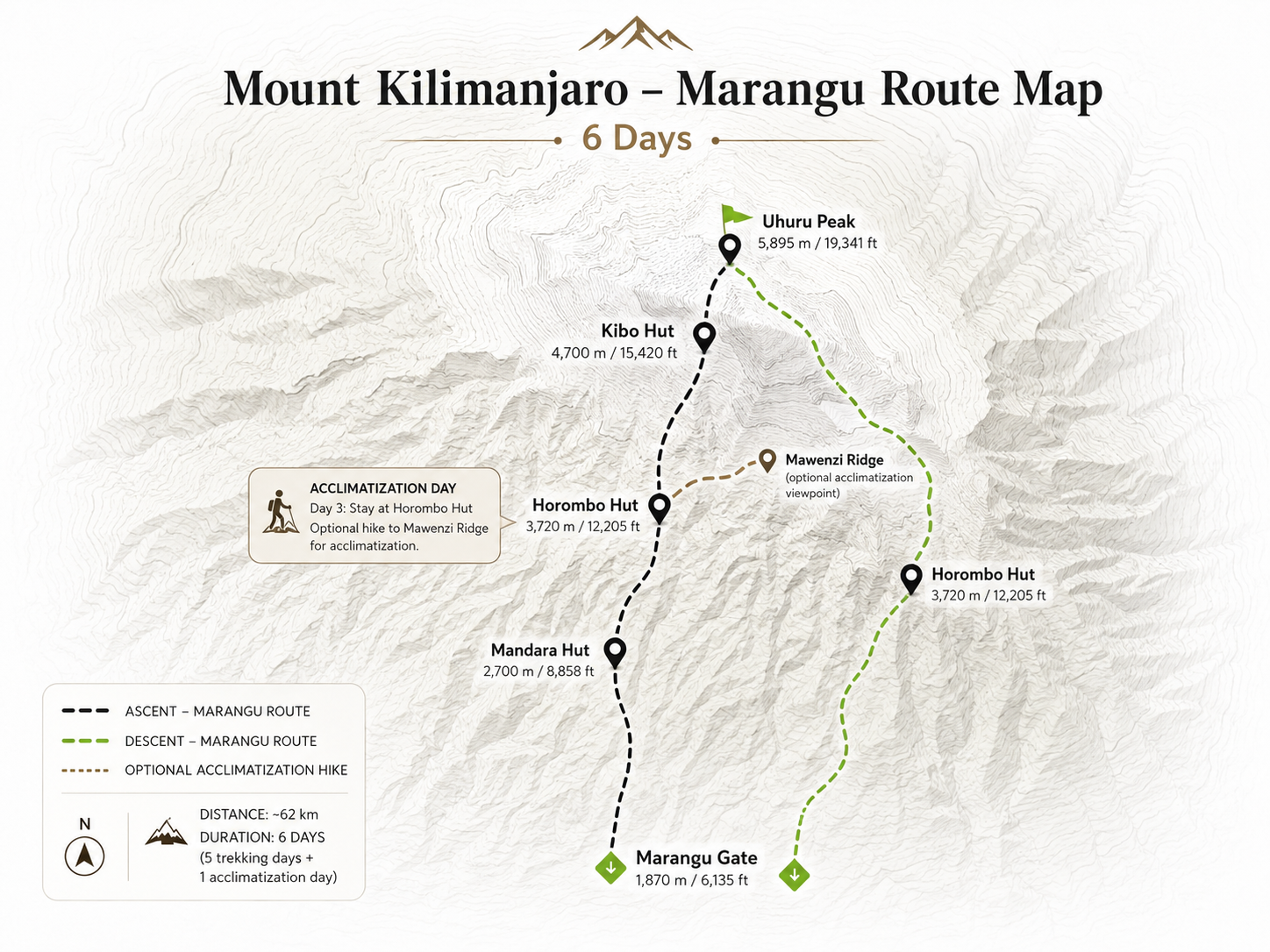
Marangu 6-Day Route on the Map

Marangu 6-day route map
Start/End Point
Camp / Hut
Summit / Acclimatization Day
Descent Route

Visual Guide

Elevation Profile

Marangu Route Trail Map
▸ Start: Marangu Gate (1,860m), Eastern approach trailhead
▸ Day 1: Mandara Hut (2,720m), Forest zone, moderate ascent, optional Maundi Crater visit
▸ Day 2: Horombo Hut (3,720m), Moorland zone, panoramic views of Kibo and Mawenzi peaks
▸ Day 3: Acclimatization Day at Horombo, Hike to Mawenzi Ridge or Zebra Rocks (~4,020m), sleep at Horombo
▸ Day 4: Kibo Hut (4,703m), Cross the Saddle (alpine desert between Mawenzi and Kibo)
▸ Day 5: Uhuru Peak (5,895m) → Descent to Horombo Hut (3,720m), 12-15 hour round trip, midnight summit start
▸ Day 6: Horombo Hut → Mandara Hut → Marangu Gate (1,860m), Final descent, summit certificate presentation
Day-by-Day

6-Day Route Itinerary

1
Marangu Gate → Mandara Hut
1,860m → 2,720m 3-4 hrs 8 km

After breakfast in Moshi, you drive to Marangu Gate, where your guides complete park registration and the porters pack the loads. The trail climbs gently through montane rainforest of tree ferns, moss and tall trees, where blue monkeys and many birds may be seen. You reach Mandara Hut in the afternoon; the Marangu route uses shared huts with dormitory beds rather than tents.

Guide's note Hold back on the first day, even if you feel strong. The slow pace through the forest is deliberate, and it pays off higher up the mountain.

Rainforest Zone Blue Monkeys & Wildlife Mandara Hut (Beds) Hot Showers Available
2
Mandara Hut → Horombo Hut
2,720m → 3,720m 5-6 hrs 12 km

The path leaves the forest and enters open moorland, with giant heathers, lobelias and groundsels lining the trail. On clear days you see both of Kilimanjaro's main peaks, Kibo and the jagged Mawenzi, ahead. The walk is long but steady, and your guides set a slow pace, the famous pole pole, to help your body adapt. The night is spent at Horombo Hut.

Guide's note Horombo is a busy junction where ascending and descending climbers meet. Listen to their stories, drink plenty and keep the pace gentle.

Moorland Views Giant Senecios Mawenzi & Kibo Visible Horombo Hut (120+ Beds)
3
Acclimatization Day → Mawenzi Ridge / Zebra Rocks
3,720m → 4,020m → 3,720m 5-6 hrs hiking 8 km

An acclimatisation day at Horombo Hut. After breakfast you hike higher, often towards Zebra Rocks or the Mawenzi saddle, before returning to sleep at the same hut. This climb high, sleep low approach gives your body more time to adjust to the altitude and is one of the best ways to improve your chances on summit night. The afternoon is for rest, fluids and good food.

Guide's note Today the extra height is gained slowly and lost again before night. Mention any headache or loss of appetite to your guide; both are common and easier to manage early.

Acclimatization Hike Mawenzi Ridge · 4,020m Pulse Oximetry Check Full Hydration & Rest
4
Horombo Hut → Kibo Hut
3,720m → 4,703m 5-6 hrs 10 km

Today you cross the Saddle, the wide alpine desert between Mawenzi and Kibo. Vegetation thins until only rock and volcanic sand remain, and the air feels noticeably thinner. You reach Kibo Hut around midday, eat an early dinner and rest. Your guides will check your health, prepare you for the night ahead and explain the summit plan.

Guide's note The Saddle is wide, exposed and often windy. Cover up against the sun and wind, keep drinking even though it is cold, and enjoy the long views back to Mawenzi.

The Saddle (Alpine Desert) Lunar Landscape Kibo Hut (Final Camp) Midnight Summit Prep
5
Kibo Hut → Uhuru Peak → Horombo Hut
4,703m → 5,895m → 3,720m 6-8 hrs (summit) + 6-7 hrs (descent) 24 km

You wake around midnight and begin the climb by headlamp up the steep scree slope towards Gilman's Point on the crater rim. From there, conditions and your health permitting, you continue around the rim to Uhuru Peak, the highest point in Africa at 5,895m. After photographs you descend to Kibo Hut for a rest and then continue down to Horombo Hut. This is a very long and demanding day.

Guide's note Summit night is a slow, steady climb in the dark and cold. Follow your guide's pace, keep snacks and water close to your body, and remember that turning back is always a sound decision if your guide advises it.

Uhuru Peak 5,895m Sunrise Summit Glaciers & Crater Gilman's Point View
6
Horombo Hut → Mandara Hut → Marangu Gate
3,720m → 2,720m → 1,860m 6-7 hrs total 20 km

After breakfast at Horombo Hut, you descend through the moorland and back into the rainforest to Marangu Gate. The walk is long, and your legs will feel the descent, but the air grows warmer and richer with every step. At the gate you receive your summit certificate, say goodbye to your crew and drive back to Moshi for a hot shower.

Guide's note The descent is hard on the knees, so poles and short steps help. It is also the moment to thank the crew: the farewell and tipping at the gate is a warm, lively end to the climb.

Summit Certificate Porter Celebration You Conquered Kilimanjaro! Hotel Recovery Rest

the shape of the climb

How this climb unfolds

The six-day Marangu adds the day that matters most: a full day at Horombo Hut, with a walk up toward Mawenzi Ridge or Zebra Rocks before returning to sleep. It is the same friendly hut route, through forest, moorland and the Saddle, with a much better chance to adapt.

It suits first-time climbers who prefer a bed in a hut to a tent, and anyone who likes the idea of a well-trodden, steady path. The huts are simple and shared, so bring a warm sleeping bag and earplugs.

zone by zone

The mountain on this route

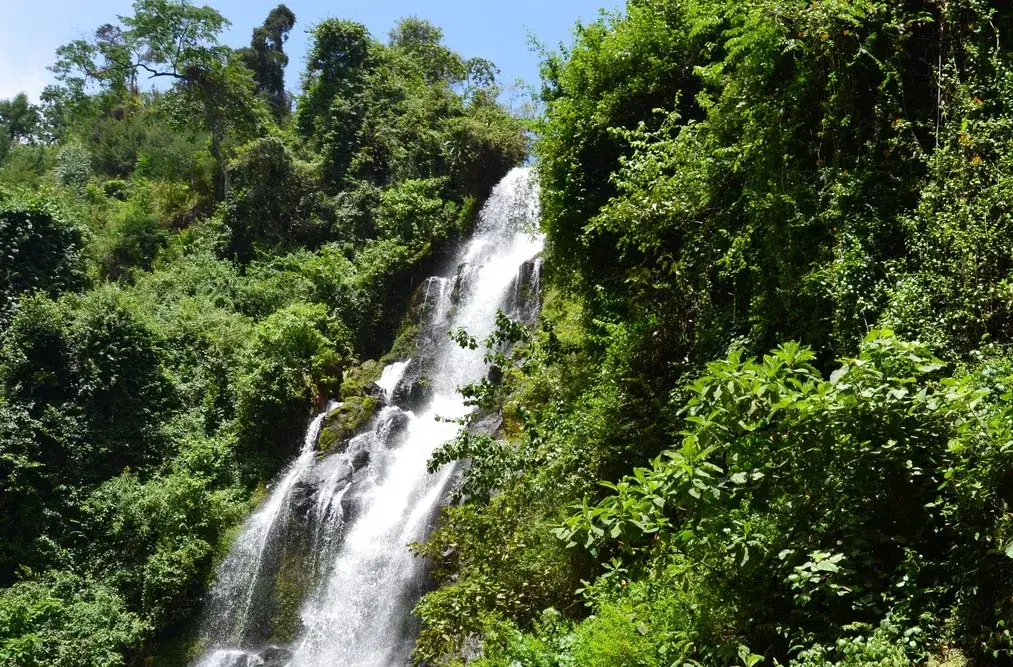
Montane rainforestEvery route begins in damp, mossy forest of tall trees, ferns and flowering plants. Blue monkeys and black-and-white colobus are often heard before they are seen, and the trail can be muddy after rain.
Mountain hutsThe Marangu route is the only route on Kilimanjaro with shared huts and dormitory bunks instead of tents, at Mandara, Horombo and Kibo. Huts are simple and can be busy in high season.
The SaddleA wide, high desert between Kibo and Mawenzi, crossed on the Marangu and Rongai approaches. It is exposed and often windy, with long views back toward Mawenzi's jagged peaks.
The summit zoneThe crater rim and Uhuru Peak, at 5,895 metres, sit in a world of thin air, ice and fierce cold. Most climbers set off around midnight to reach the rim near sunrise, then descend the same day.

Our porters are the heart of every climb. Learn a few words of Swahili, and you will see faces light up on the trail.

From our mountain crew

before you go

Preparing for the climb

AcclimatisationAltitude, not fitness, is the main reason climbers turn back. Extra days, a slow pace and the 'climb high, sleep low' principle all help. Your guides check how you feel and monitor oxygen saturation daily, and a longer itinerary generally improves your chances.
About the summitReaching Uhuru Peak is never guaranteed. Weather, health and how each person adapts to altitude decide the day, and the guide's decision to turn back for safety is final. Reaching the crater rim at Stella Point or Gilman's Point is a real achievement in itself.
When to climbThe driest and most popular months are usually late June to October and January to early March. April, May and November are wetter and quieter on the trail. The summit is cold all year, whatever the month.
Where you sleepThe Marangu route uses shared huts with dormitory bunks and mattresses at Mandara, Horombo and Kibo. Bring a warm sleeping bag; huts are basic and can be busy in high season.
Your mountain crewEach climb is supported by licensed guides, a cook and porters who carry equipment, food and water. We follow fair-load and fair-pay practices for porters; tipping is customary at the end of the climb, and we share guidance on amounts.
What to packLayers are everything: thermal base layers, a fleece, an insulated down jacket, a waterproof shell, warm gloves, a hat, broken-in boots, a headtorch, sun protection and a four-season sleeping bag. Equipment can be hired in Moshi or Arusha.
Health and insuranceSee a travel-health clinic about vaccinations, malaria prevention and altitude medication before you travel. Your insurance must cover trekking up to 6,000 metres, including emergency evacuation.

other ways up

Related climbs

planned around you

Plan this climb with us

Tell us your preferred dates, group size and any previous experience at altitude. We will confirm the route, crew and hotel nights, and send a clear, personalised quote that lists exactly which park fees, equipment and transfers are included.

Camps & Huts

Overnight Stops

Camp / HutAltitudeZoneNightNotes
Mandara Hut2,720mRainforestNight 1 (both)Stone hut; beds with mattresses; hot showers; communal dining
Horombo Hut3,720mMoorlandNight 2 (5-day) / Nights 2-3 (6-day)Largest hut on Kili (120+ beds); facilities; acclimatization day hike to Mawenzi Ridge (6-day)
Kibo Hut4,703mAlpine DesertNight 3 (5-day) / Night 4 (6-day)Final camp at Saddle; dormitory accommodation; midnight departure to summit
Uhuru Peak ⭐5,895mArctic ZoneN/AAfrica's highest point; glaciers & crater; Gilman's Point on rim; sunrise summit
Descent RouteVariableMultipleDay 4-5 (5-day) / Days 5-6 (6-day)Same trail descent: Kibo → Horombo → Mandara → Marangu Gate
Compare Routes

How Marangu Compares

Lemosho
7-8 days
Moderate
90%
Success Rate
Machame
6-8 days
Challenging
85-95%
Success Rate
Marangu
5-6 days
Moderate
83-87%
Success Rate
Rongai
6-7 days
Moderate
80%
Success Rate
N. Circuit
9-10 days
Moderate
95%
Success Rate
Umbwe
5-6 days
Difficult
60%
Success Rate
FAQ

Common Questions

Why is it called the "Coca-Cola Route"?
The Marangu Route earned the "Coca-Cola Route" nickname because it's the easiest and most comfortable route on Kilimanjaro. Making it as accessible and approachable as a cold Coca-Cola on a hot day! It features dormitory-style hut accommodation instead of tent camping, a well-established and direct trail and has been operating since the early 1900s. It's the opposite of the challenging "Whiskey Route" (Machame).
Which duration should I choose 5 or 6 days?
5-day: Best for experienced mountain climbers with excellent fitness and time constraints. 83.8% success rate. Fast pace with limited acclimatization. 6-day (recommended): Optimal choice for most climbers. One full acclimatization day at Horombo Hut (hiking to Mawenzi Ridge or Zebra Rocks) boosts success rate to 86.6%. Perfect balance of fitness level, acclimatization and experience. We strongly recommend the 6-day option for best results.
Do I sleep in tents or huts on the Marangu Route?
You sleep in comfortable dormitory-style huts at all three hut stations. Mandara Hut (2,720m), Horombo Hut (3,720m) and Kibo Hut (4,703m). Each hut features bunk beds with mattresses, communal dining halls and washing facilities. This is the ONLY Kilimanjaro route offering hut accommodation instead of tent camping. You'll need a warm sleeping bag rated for freezing temperatures, especially for Kibo Hut at 4,703m but porters carry your luggage for you.
What makes the Marangu Route unique?
Marangu is unique in several ways: (1) it's the ONLY route with hut accommodation instead of tent camping, (2) the same trail is used for both ascent and descent. No different routes to navigate, (3) it has an emergency road access to Horombo Hut for evacuation if needed, (4) Horombo Hut (120+ beds) is the largest hut on Kilimanjaro, (5) it's the oldest and most established route with 100+ years of proven use and (6) it crosses the scenic Saddle between Mawenzi and Kibo peaks.
What is included in Haven Trails' Marangu packages?
All packages include: professional licensed guide and assistant guides, dedicated porter team (one per climber, plus cooks), all national park fees, comfortable dormitory accommodation in mountain huts (beds with mattresses), full board meals on mountain (breakfast, lunch, dinner, snacks), group first aid kit and emergency oxygen, daily health monitoring with pulse oximetry, transfer from/to Moshi hotel, and official summit certificate. Huts provide communal dining halls, hot water for washing, and toilet facilities.
When is the best time to climb the Marangu Route?
Best seasons: January-March and June-October (dry seasons). The Marangu Route is well-protected by the hut infrastructure, making it more resilient to weather than open camping routes. However, dry months significantly improve visibility, reduce cloud cover, and provide better conditions at high altitude. We arrange climbs year-round, but the dry seasons offer the most pleasant mountain experience with clearest summit views.