Marangu Route
The Coca-Cola Route. Kilimanjaro's most comfortable trek with flexible 5-6 day options and hut accommodation for all climbers.
The Comfortable Coca-Cola Route
The Marangu Route is Kilimanjaro's oldest and most established trekking path, affectionately known as the "Coca-Cola Route" for its accessibility and comfort. Unlike the Machame Route's challenging ascent, Marangu offers dormitory-style hut accommodation and a steadier, more direct approach to the summit through well-marked trails.
What truly sets Marangu apart is its unique infrastructure with comfortable mountain huts (Mandara, Horombo, and Kibo) featuring beds with mattresses, running water at lower elevations, and communal dining. The optional 6-day itinerary includes an extra acclimatization day at Horombo Hut, allowing climbers to hike to Mawenzi Ridge or Zebra Rocks, resulting in excellent summit success rates (83-87%).
The route traverses spectacular ecosystems: from dense rainforest bursting with exotic birds and wildlife, through open moorlands dotted with giant lobelias and groundsels, across the barren Saddle between Mawenzi and Kibo peaks, to the stark alpine desert. You'll experience genuine mountain hiking with the comfort of hut accommodation, hot meals, and sleeping in beds instead of tents.
Is Marangu Right for You?
- Only route with comfortable hut accommodation. Beds with mattresses and pillows
- Well-established infrastructure. Running water, flushing toilets, communal dining
- Shortest and most direct route 5-6 days vs 6-10 on other routes
- Same ascent and descent route no complex logistics, easy to navigate
- Oldest route with proven track record. More than 100 years of established use
- Emergency road access to Horombo Hut (3,720m). Faster evacuation if needed
- Beginner-friendly with good success rates (83-87% on 6-day option)
- Crowded route most popular option due to accessibility
- Less scenic than Machame or Lemosho. More direct, less variable terrain
- 5-day option has lower success rate (83.8%). Fast pace with limited acclimatization
- Same trail up and down less variety in scenery and camping locations
- Shared huts with other trekkers less privacy than tent camping
- Limited flexibility if you want to skip acclimatization day
Marangu Route on the Map
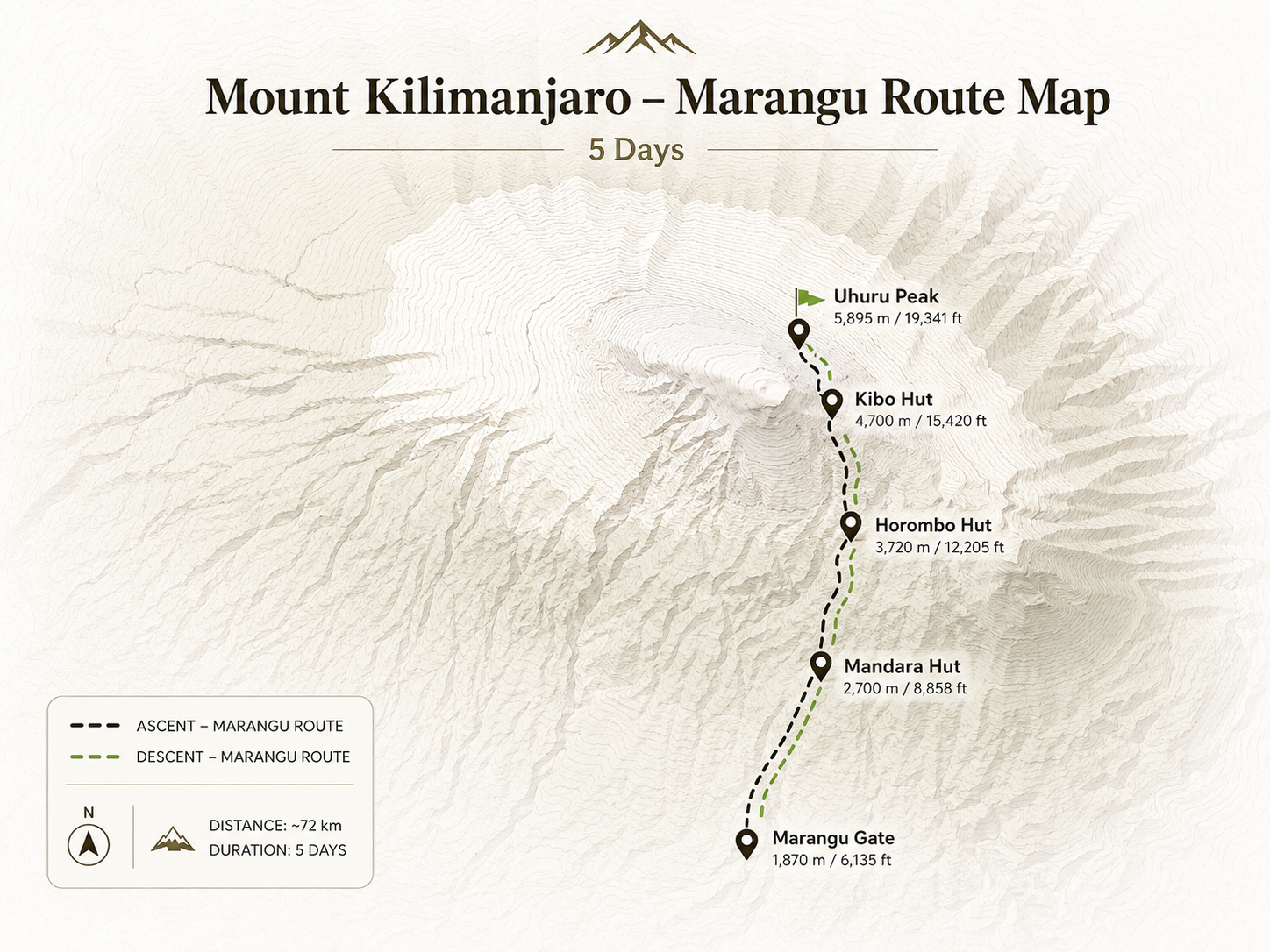
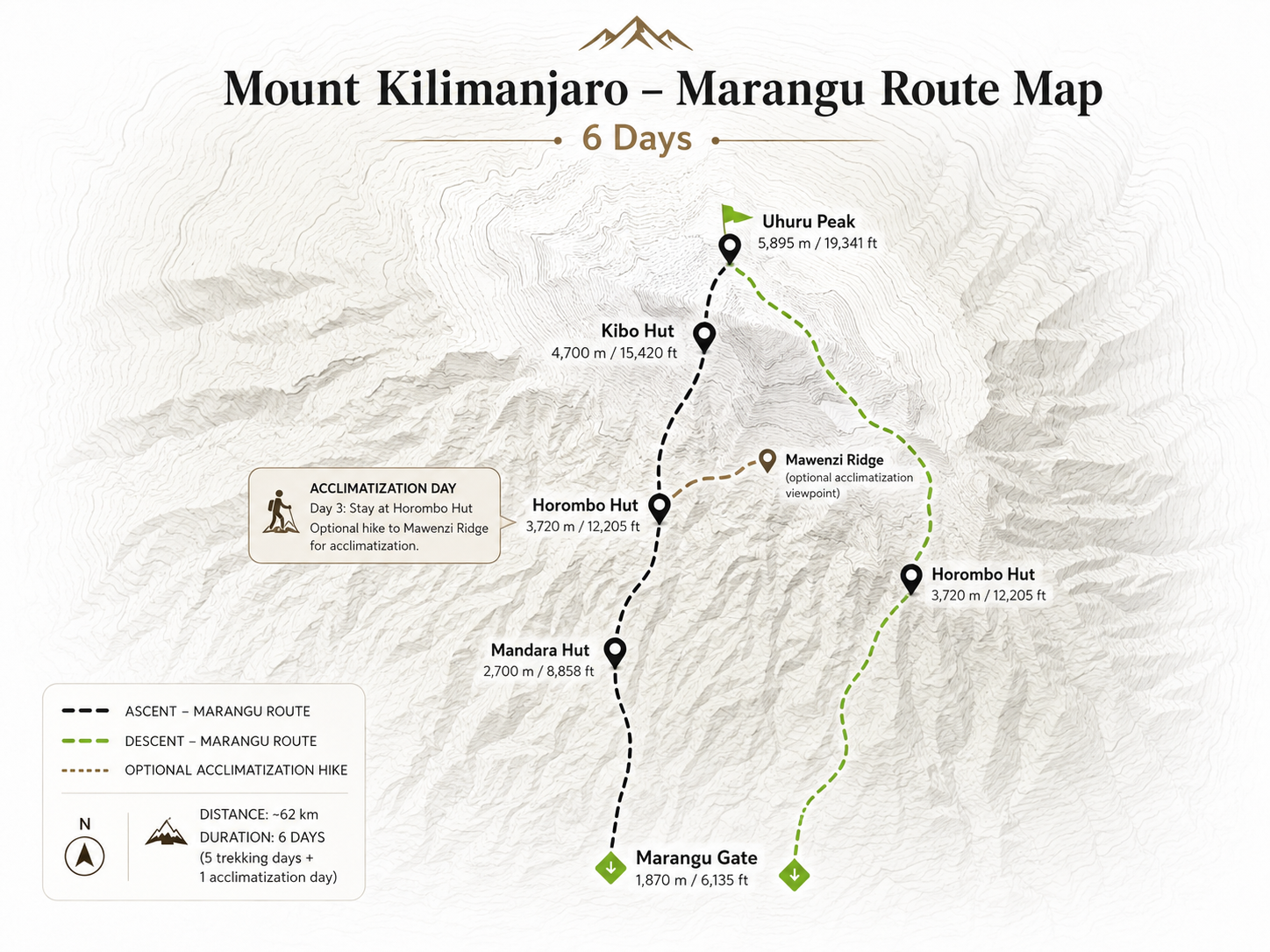
Visual Guide
Elevation Profile
Route Itinerary
Your Kilimanjaro journey begins at Marangu Gate (1,860m), where your Haven Trails team completes registration with Tanzania National Parks Authority. The trail winds through lush montane rainforest bursting with bird calls, ancient tree ferns, and occasional sightings of forest animals like blue monkeys and bushbucks.
The ascent is steady through green, forested terrain. After 3-4 hours, you arrive at Mandara Hut (2,720m). A comfortable stone hut with dormitory-style accommodation. Your porters prepare a hearty dinner in the communal dining hall and you rest in your bunk bed for the night.
You emerge from the rainforest into open moorland as vegetation transforms dramatically. Giant heather bushes and otherworldly giant senecios (tree groundsels) dot the landscape. Panoramic views of both Kibo and Mawenzi peaks appear majestically above, with the volcanic cone of Mawenzi becoming increasingly impressive.
Horombo Hut (3,720m) is the largest hut on Kilimanjaro. A comfortable station with dormitory accommodation and excellent facilities. In the afternoon, your guides lead an optional acclimatization hike to about 4,020m, visiting Mawenzi Ridge or Zebra Rocks. Return to the hut for a warm dinner and prepare for the summit push tomorrow.
Today you cross the Saddle. The barren alpine desert between Mawenzi and Kibo peaks. The landscape becomes increasingly lunar and otherworldly. Vegetation disappears, revealing volcanic sand and rock. The air grows thinner and the altitude becomes very noticeable.
Kibo Hut (4,703m) sits at the base of Kibo Peak, your final camp before the summit push. After arrival and lunch, rest as much as possible. Your guides will conduct a final health check with pulse oximetry and brief you on the midnight summit push. Early dinner around 5 PM, then try to sleep 7-11 PM before the 12 AM wake-up call.
The summit push begins at 12-1 AM after a brief rest. With headlamps cutting through darkness, you climb the steep volcanic scree slope. After 4-5 hours of relentless climbing, you reach Gilman's Point (5,681m) on the crater rim. This is your first summit moment, with the Kilimanjaro crater dramatically visible.
Continue 1 hour around the crater rim to Uhuru Peak (5,895m). Africa's highest point. Stand at the roof of Africa as the sun rises over the clouds and plains, with glaciers gleaming beside you. This is your triumph. The moment you've trained for.
After celebrating and photos, you descend back to Kibo Hut for a brief rest, then continue descending all the way to Horombo Hut (3,720m). The descent is long but easier. Your team celebrates with songs and dances. Rest at Horombo for the night.
Today is your final descent. After breakfast at Horombo Hut, you trek back down the established Marangu trail through moorland and eventually into the cool rainforest. The well-maintained path makes the descent easier than the ascent, though your legs may remind you of the past days' efforts.
Pass through Mandara Hut for a final rest and lunch. In the afternoon, continue down to Marangu Gate (1,860m). Here, your Haven Trails team presents your official Summit Certificate. A moment of triumph. Celebrate with your porters and guides who made this possible. Transfer to your hotel in Moshi for a well-deserved hot shower, rest and celebration of your incredible achievement!
Your Kilimanjaro journey begins at Marangu Gate (1,860m), where your Haven Trails team completes registration with Tanzania National Parks Authority. The trail winds through lush montane rainforest bursting with bird calls, ancient tree ferns, and occasional sightings of blue monkeys and bushbucks.
The ascent is steady through green, forested terrain. After 3-4 hours, you arrive at Mandara Hut (2,720m). A comfortable stone hut with dormitory-style accommodation and hot showers. Your team prepares a hearty dinner in the communal dining hall and you rest in your bunk bed for the night.
You emerge from the rainforest into open moorland as vegetation transforms dramatically. Giant heather bushes and giant senecios (tree groundsels) dot the landscape. Panoramic views of both Kibo and Mawenzi peaks appear majestically above.
Horombo Hut (3,720m) is the largest hut on Kilimanjaro. Comfortable dormitory accommodation with excellent facilities including dining hall and washroom. In the afternoon, your guides lead an optional acclimatization hike to Mawenzi Ridge or Zebra Rocks (~4,020m). Return for dinner and rest.
This critical acclimatization day at Horombo Hut is what makes the 6-day route superior for success. Your guides lead an acclimatization hike to Mawenzi Ridge or Zebra Rocks (approximately 4,020m). This "climb high, sleep low" principle dramatically improves your body's oxygen utilization at altitude.
The hike offers dramatic views of the Mawenzi Peak's ridges and the surrounding moorland. Return to Horombo Hut for a well-earned lunch and full afternoon of rest. Hydrate extensively, eat nutritious meals, and prepare for the summit push tomorrow. Your guides conduct pulse oximetry checks and make final preparations for the summit night.
Today you cross the Saddle. The barren alpine desert between Mawenzi and Kibo peaks. The landscape becomes increasingly lunar and otherworldly. Vegetation disappears, revealing volcanic sand and rock. The air grows noticeably thinner and altitude effects become very apparent.
Kibo Hut (4,703m) sits at the base of Kibo Peak, your final camp before the summit push. After arrival and lunch, rest as much as possible. Your guides conduct a final health check with pulse oximetry. Early dinner around 5 PM, then attempt to sleep 7-11 PM before the midnight wake-up call for the summit push.
The summit push begins at 12-1 AM after your rest. With headlamps cutting through darkness, you climb the steep volcanic scree slope using the established switchback trail. After 4-5 hours of determined climbing, you reach Gilman's Point (5,681m) on the crater rim. The psychological summit, with Kilimanjaro's crater dramatically visible.
Continue 1 hour around the crater rim to Uhuru Peak (5,895m). Africa's highest point. Stand at the roof of Africa as the sun rises over the clouds and plains, with glaciers gleaming beside you. This is your triumph. The culmination of your journey and effort.
After celebrating and photos at Uhuru, you descend back to Kibo Hut for a brief rest, then continue descending all the way to Horombo Hut (3,720m). The descent is long but easier on the downward trail. Your team celebrates with songs and dances. Rest at Horombo for the night.
Your final descent begins after breakfast at Horombo Hut. You trek back down the established Marangu trail through moorland and eventually into the cool rainforest. The well-maintained path makes the descent easier than the ascent, though your legs may remind you of the past days' efforts.
Pass through Mandara Hut for a final rest and lunch. In the afternoon, continue down to Marangu Gate (1,860m). Here, your Haven Trails team presents your official Summit Certificate. A moment of triumph and celebration. Your porters and guides celebrate with traditional songs and dances. Transfer to your hotel in Moshi for a well-deserved hot shower, rest and celebration of your incredible achievement!
2026–2027 Prices
| Route / Duration | 1 Person | 2 Persons | 3 Persons | 4 Persons | 5 Persons | 6 Persons |
|---|---|---|---|---|---|---|
| 5 Days | $ 1,890 | $ 1,558 | $ 1,449 | $ 1,392 | $ 1,400 | $ 1,358 |
| 6 Days | $ 2,151 | $ 1,799 | $ 1,675 | $ 1,613 | $ 1,623 | $ 1,578 |
The price is per person.
Overnight Stops
| Camp / Hut | Altitude | Zone | Night | Notes |
|---|---|---|---|---|
| Mandara Hut | 2,720m | Rainforest | Night 1 (both) | Stone hut; beds with mattresses; hot showers; communal dining |
| Horombo Hut | 3,720m | Moorland | Night 2 (5-day) / Nights 2-3 (6-day) | Largest hut on Kili (120+ beds); facilities; acclimatization day hike to Mawenzi Ridge (6-day) |
| Kibo Hut | 4,703m | Alpine Desert | Night 3 (5-day) / Night 4 (6-day) | Final camp at Saddle; dormitory accommodation; midnight departure to summit |
| Uhuru Peak ⭐ | 5,895m | Arctic Zone | N/A | Africa's highest point; glaciers & crater; Gilman's Point on rim; sunrise summit |
| Descent Route | Variable | Multiple | Day 4-5 (5-day) / Days 5-6 (6-day) | Same trail descent: Kibo ? Horombo ? Mandara ? Marangu Gate |