Lemosho Route
The scenic and remote Lemosho Route. Kilimanjaro's most beautiful trek with flexible 7-8 day options and tent camping for adventure seekers.
The Scenic Lemosho Route
The Lemosho Route is Kilimanjaro's most scenic and remote trekking path, offering the perfect blend of natural beauty, solitude, and excellent acclimatization. Starting from the western side at Lemosho Gate, this route traverses through pristine rainforests, crosses the spectacular Shira Plateau, and merges with the Machame Route for the final ascent to Uhuru Peak.
What makes Lemosho truly special is its combination of remote wilderness and reliable infrastructure. The 7-day option suits experienced climbers with strong fitness, while the recommended 8-day route includes an extra acclimatization day at Karanga Camp, ensuring the best possible summit success rates (90-95%+). Unlike busier routes, Lemosho offers genuine solitude with fewer climbers and pristine natural scenery at every turn.
The route showcases Kilimanjaro's full ecological diversity: starting in lush rainforests teeming with colobus monkeys and exotic birds, ascending through moorlands with giant lobelias and groundsels, crossing the stunning Shira Plateau with panoramic views, ascending the famous Barranco Wall with 360-degree vistas, and finally reaching the glacial summit zone. You'll experience expedition-style tent camping with expert guides, quality equipment, and authentic mountain adventure.
Is Lemosho Right for You?
- Most scenic and remote route. Pristine wilderness with fewer crowds than other routes
- Spectacular Shira Plateau crossing. Stunning panoramic views and unique geological formations
- Excellent acclimatization with highest success rates. 90-95%+ on 8-day option
- Diverse ecosystems. Rainforest, moorland, Shira Plateau, alpine desert, glacial zones
- Famous Barranco Wall experience. Thrilling 230m scramble with 360° panoramic views
- Authentic expedition experience. Quality tent camping with expert guides and full support
- Solitude and natural beauty. Fewer trekkers means more intimate mountain experience
- Tent camping only. Requires comfort with expedition-style accommodation
- More challenging than Marangu. Requires good fitness and mountain experience
- Longer duration 7-8 days vs 5-6 on Marangu route
- Higher cost. More days and remote location increase expense vs shorter routes
- Barranco Wall scramble. Thrilling but not for those uncomfortable with exposure
- Remote location. Limited emergency evacuation options compared to Marangu
Lemosho Route on the Map
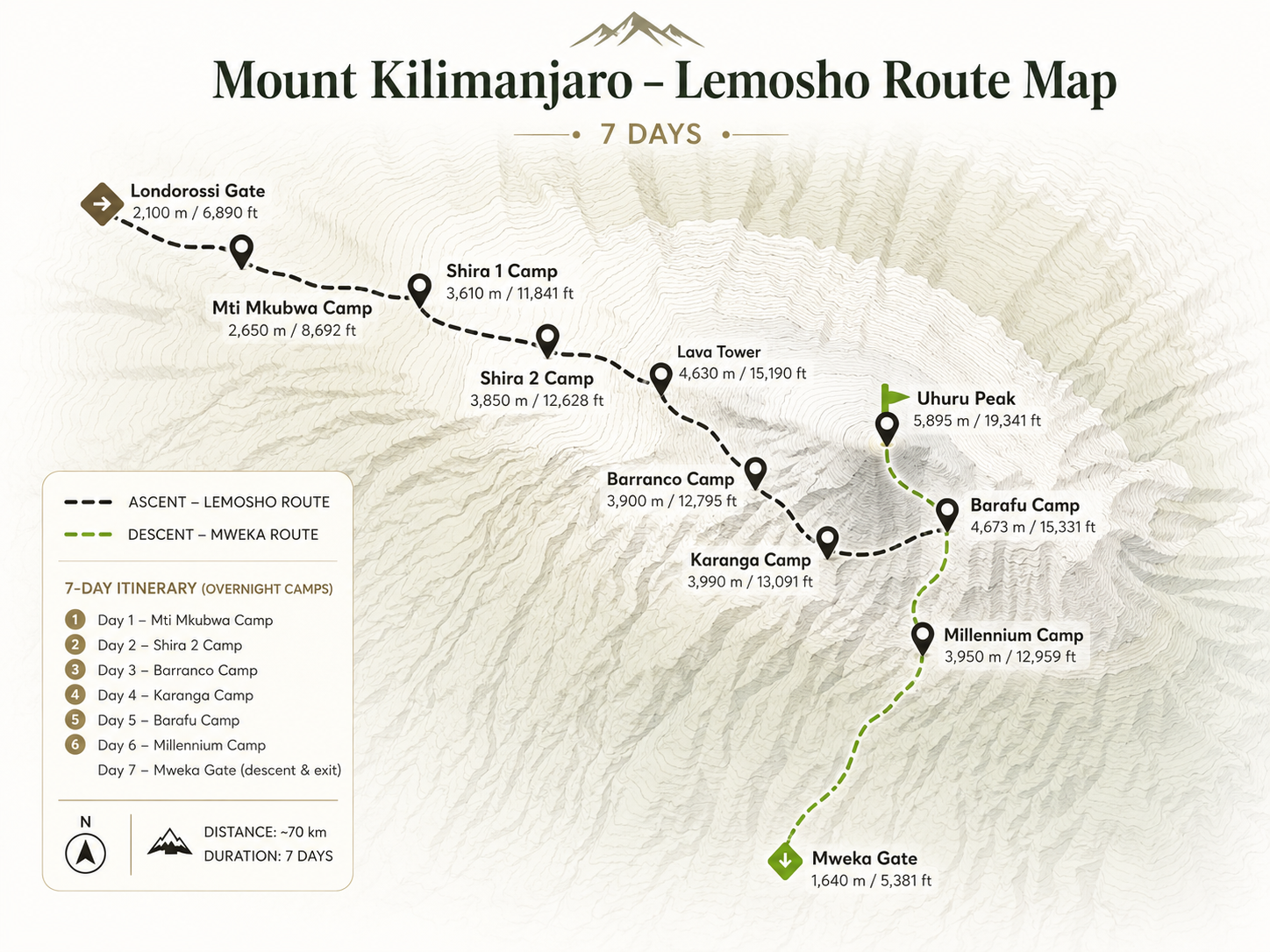
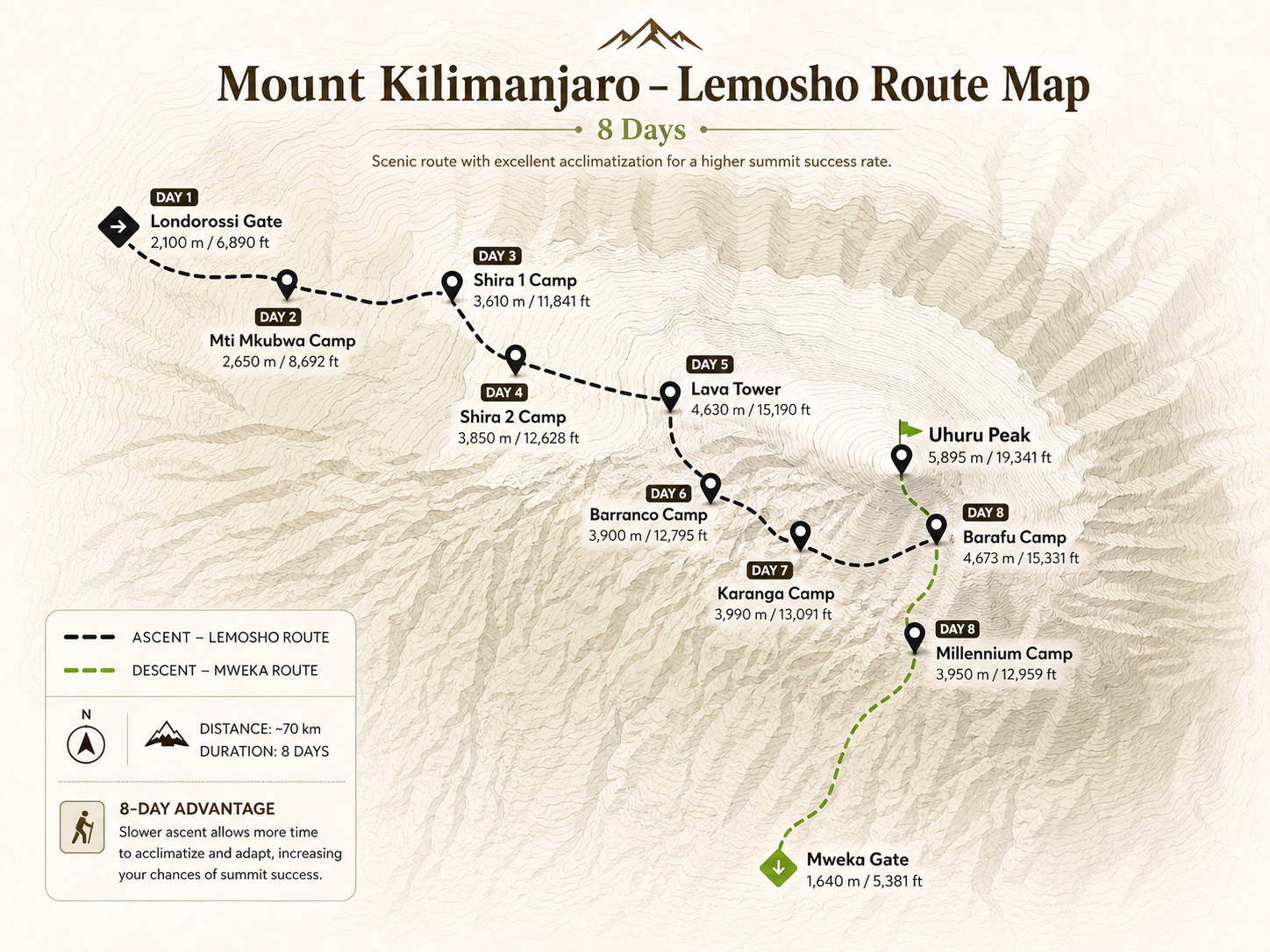
Visual Guide
Elevation Profile
Route Itinerary
Your Lemosho Route adventure begins at Lemosho Gate (2,385m). The remote western trailhead. Haven Trails completes all registration with Tanzania National Parks Authority. This is your last moment at civilization before entering pristine wilderness.
The initial ascent is gentle through dense montane rainforest teeming with colobus monkeys with their haunting calls, and exotic bird species. The forest canopy creates a cool, green sanctuary. After 4-5 hours of hiking through this living cathedral, you arrive at Lemosho Camp (2,650m). Your team prepares a welcome dinner, and you settle into your expedition tent for your first night under African skies.
Today you leave rainforest behind and transition dramatically into moorland. The forest opens to grassland scattered with giant lobelias and groundsels. Plants that look like they're from another planet. The first real views of Kibo and Mawenzi peaks appear, dramatically rising above the landscape.
The ascent is steady and climbing becomes noticeable. Shira Camp (3,850m) sits on the spectacular Shira Plateau. A unique volcanic table mountain that few trekkers experience. This remote, windswept plateau offers stunning panoramic views. After dinner, your guides conduct health checks. Rest well; altitude is increasing.
The traverse across Shira Plateau continues with steady climbing. Today's highlight is Lava Tower (3,962m). A distinctive volcanic formation that offers thrilling viewpoints. The accent to the tower is a crucial "climb high, sleep low" acclimatization strategy that dramatically improves summit success.
From Lava Tower, you descend to Barranco Camp (3,976m) nestled beneath the imposing Barranco Wall. A 230-meter volcanic wall. This unique landscape creates an amphitheater of adventure. The rest of the afternoon allows full acclimatization and exploration. Tomorrow, you'll tackle the famous Barranco Wall scramble.
The morning brings the Barranco Wall scramble. The most thrilling moment on the trek! This 230-meter vertical scramble uses hands and feet over volcanic rock. It's steep and exposed but perfectly safe with guide support. Your adrenaline pumps as you climb for about 1-2 hours, with incredible 360-degree panoramic views of Kilimanjaro and the surrounding landscape unfolding as you ascend.
From the wall's top, you continue across the Karanga Valley to Karanga Camp (4,035m). This peaceful camp offers the perfect vantage point for the final push. Rest, hydrate extensively, eat nutritious meals, and prepare for two critical altitude days ahead. Your guides conduct pulse oximetry checks and final health assessments.
Today's ascent to Barafu Camp (4,673m) is the steepest so far. The landscape becomes increasingly barren as vegetation disappears completely. You're entering the alpine desert zone. Volcanic scree, rocks and thin air. Breathing becomes noticeably harder and altitude effects become very apparent. This is your body's final test before the summit push.
Barafu Camp sits on the high volcanic plateau, your final camp before the summit. Early afternoon arrival allows maximum rest. Your guides prepare you for the midnight summit push: final health checks, equipment verification, and a hearty early dinner around 5 PM. Rest as much as possible between 7-11 PM before the wake-up call and your assault on Uhuru Peak.
The summit push begins at midnight or 1 AM. With headlamps cutting through the darkness and freezing air, you climb the steep volcanic scree slope in a relay formation with your guides setting the pace. The ascent is relentless. Slow, steady, one step after another. After 5-7 hours of pure determination, you reach Gilman's Point (5,681m) on the crater rim at sunrise. The moment is surreal: you're standing on the edge of Kilimanjaro's crater with glaciers gleaming beside you.
Continue 1 hour around the crater rim to Uhuru Peak (5,895m). Africa's highest point! This is your triumph. Stand at the roof of Africa as the sun bathes the plains below in golden light. Celebrate, take photos and honor your incredible achievement.
After 30-45 minutes at the summit, you begin the long descent to Mweka Camp (3,068m). A challenging but exhilarating descent. Arriving at Mweka Camp in the afternoon, your team celebrates with songs, dances and stories. Rest deeply tonight; you've summited Kilimanjaro!
Your final day brings you back to civilization. After breakfast, the descent from Mweka Camp to Mweka Gate (1,640m) follows a lush forest trail. The return to the green world is a transition from the stark alpine landscape back to nature's richness. Your legs feel the descent, but your spirit soars with the knowledge of what you've achieved.
At Mweka Gate, your Haven Trails team presents your official Kilimanjaro Summiting Certificate. Proof that you conquered Africa's highest peak! Celebrate with your guides and porters who made this impossible dream possible. Transfer to your hotel in Moshi for a well-deserved hot shower, rest and celebration. You are now a Kilimanjaro summiter!
Your Lemosho Route adventure begins at Lemosho Gate (2,385m). The remote western trailhead with pristine wilderness access. Haven Trails completes all registration with Tanzania National Parks Authority. This is your transition from civilization to adventure.
The initial ascent is gentle through dense montane rainforest teeming with colobus monkeys, their haunting calls echoing through the green canopy, and exotic bird species. After 4-5 hours of hiking, you arrive at Lemosho Camp (2,650m). Your team prepares a welcome dinner, and you settle into your expedition tent for your first night under African skies.
Rainforest transitions dramatically to moorland as vegetation transforms completely. Giant lobelias and groundsels dot the landscape like alien plants. First real views of Kibo and Mawenzi peaks appear majestically above the landscape.
Shira Camp (3,850m) sits on the spectacular Shira Plateau. A unique volcanic table mountain offering stunning panoramic views. This remote plateau is a highlight of the Lemosho experience. Your guides conduct health checks and prepare you for the days ahead. Rest well; altitude is increasing meaningfully now.
The traverse across Shira Plateau continues with steady climbing. Today's highlight is Lava Tower (3,962m). A distinctive volcanic formation offering thrilling viewpoints. This ascent is crucial for "climb high, sleep low" acclimatization, dramatically improving summit success.
From Lava Tower, you descend to Barranco Camp (3,976m) nestled beneath the imposing Barranco Wall. A 230-meter volcanic wall creating an amphitheater of adventure. The afternoon allows full acclimatization and exploration. Tomorrow brings the famous Barranco Wall scramble.
The morning brings the Barranco Wall scramble. The most thrilling moment on the trek! This 230-meter vertical scramble uses hands and feet over volcanic rock. Steep and exposed but perfectly safe with guide support. Your adrenaline pumps as 360-degree panoramic views of Kilimanjaro unfold with each meter climbed.
From the wall's top, you continue across Karanga Valley to Karanga Camp (4,035m). This peaceful camp offers perfect vantage for the final push. Rest, hydrate extensively, eat nutritious meals. Your guides conduct pulse oximetry checks and final health assessments.
This critical acclimatization day at Karanga Camp is what makes the 8-day route superior for success rates reaching 95%+! Your guides lead a acclimatization hike exploring the high altitude terrain around the camp, sometimes ascending to nearby ridges. This "climb high, sleep low" principle dramatically improves your body's oxygen utilization and adaptation.
The hike offers dramatic views of the surrounding volcanic landscape and Kibo's slopes. Return to Karanga Camp for a well-earned lunch and full afternoon of rest. Hydrate extensively, eat nutritious meals, rest completely. Your guides conduct detailed pulse oximetry checks and make final preparations for the summit night. This day is THE difference between success and turning back.
Today's ascent to Barafu Camp (4,673m) is steeper than previous days. The landscape becomes increasingly barren as vegetation disappears completely. You're entering the alpine desert zone. Volcanic scree, rocks and thin air. Breathing becomes noticeably harder and altitude effects become very apparent. This is your body's final test before the summit push.
Barafu Camp sits on the high volcanic plateau, your final camp. Early afternoon arrival allows maximum rest. Your guides prepare you for the midnight summit push: final health checks, equipment verification, hearty early dinner around 5 PM. Rest between 7-11 PM before the wake-up call and your assault on Uhuru Peak. You're ready!
The summit push begins at midnight or 1 AM. With headlamps cutting through darkness and freezing air, you climb the steep volcanic scree slope in relay formation. The ascent is relentless. Slow, steady, one step after another. Your acclimatization days have prepared you for this moment. After 5-7 hours of pure determination, you reach Gilman's Point (5,681m) on the crater rim at sunrise. Surreal: standing on the edge of Kilimanjaro's crater with glaciers gleaming beside you.
Continue 1 hour around the crater rim to Uhuru Peak (5,895m). Africa's highest point! This is your triumph. Stand at the roof of Africa as the sun bathes the plains below in golden light. Celebrate, take photos, honor your achievement.
After 30-45 minutes at the summit, you begin the long descent to Mweka Camp (3,068m). Challenging but exhilarating. Arriving in the afternoon, your team celebrates with songs, dances and stories. Rest deeply; you've summited Kilimanjaro!
Your final day brings you back to civilization. After breakfast, the descent from Mweka Camp to Mweka Gate (1,640m) follows a lush forest trail. The return to the green world is transition from stark alpine landscape back to nature's richness. Your legs feel the descent, but your spirit soars with the knowledge of your achievement.
At Mweka Gate, your Haven Trails team presents your official Kilimanjaro Summiting Certificate. Proof you conquered Africa's highest peak! Celebrate with your guides and porters who made this dream possible. Transfer to your hotel in Moshi for a well-deserved hot shower, rest and celebration. You are now a Kilimanjaro summiter!
2026–2027 Prices
| Route / Duration | 1 Person | 2 Persons | 3 Persons | 4 Persons | 5 Persons | 6 Persons |
|---|---|---|---|---|---|---|
| 7 Days | $ 2,533 | $ 2,117 | $ 1,965 | $ 1,891 | $ 1,899 | $ 1,849 |
| 8 Days | $ 2,794 | $ 2,358 | $ 2,190 | $ 2,112 | $ 2,122 | $ 2,070 |
The price is per person.
Overnight Stops
| Camp Name | Altitude | Zone | Night | Notes |
|---|---|---|---|---|
| Lemosho Camp | 2,650m | Rainforest | Night 1 (both) | Expedition tents; rainforest setting; colobus monkeys & birds; communal dining |
| Shira Camp | 3,850m | Shira Plateau | Night 2 (both) | Expedition tents; stunning plateau views; Kibo & Mawenzi visible; health checks |
| Barranco Camp | 3,976m | Alpine Zone | Night 3 (both) | Expedition tents; beneath Barranco Wall; acclimatization hiking; scenic vistas |
| Karanga Camp | 4,035m | Alpine Zone | Night 4 (7-day) / Nights 4-5 (8-day) | Expedition tents; acclimatization day (8-day only); pulse oximetry checks; final preparation |
| Barafu Camp | 4,673m | Alpine Desert | Night 5 (7-day) / Night 6 (8-day) | Final camp; expedition tents; midnight departure to summit; health checks & equipment prep |
| Uhuru Peak ⭐ | 5,895m | Arctic Zone | N/A | Africa's highest point; glaciers & crater; Gilman's Point (5,681m) on rim; sunrise summit |
| Mweka Camp | 3,068m | Forest Zone | Night 6 (7-day) / Night 7 (8-day) | Expedition tents; forest setting; descent day rest; celebration with guides & porters |