


Tanzania Camping 6-Day Safari
Six days. Three legendary ecosystems. One immersive, life-changing African adventure. From Tarangire's ancient baobab forests and elephant herds through the Ngorongoro highlands and deep into the infinite star-drenched plains of the Serengeti all from a tent under the African sky.
Six Days. Three Wilderness Giants. One Tent Under the Stars.
Some safaris skim the surface. This one goes deep. The Tanzania Camping 6-Day Safari immerses you in three of Africa's most iconic wilderness ecosystems Tarangire National Park, the Ngorongoro Conservation Area, and Serengeti National Park spending six nights in the bush with nothing between you and the wild but canvas and stars. This is safari in its truest form: elemental, exhilarating, and impossible to forget.
The journey opens in Tarangire National Park, one of Tanzania's most visually dramatic landscapes and one of its least-crowded gems. A park defined by ancient baobab trees so enormous they seem to belong to a different age of the Earth, and by elephant herds so large they stop traffic on the game drive tracks. Tarangire receives a fraction of the visitors that crowd the Serengeti, yet it supports wildlife densities that rival it. A full day here one of the longest game drives in the Northern Circuit reveals lions, leopards, zebra, wildebeest, giraffe, and a birdlife so rich that ornithologists return season after season.
Night one is in Karatu, the green highland town that sits on the rim of the Ngorongoro Crater highlands a gateway between Tarangire and the vast Serengeti ecosystem to the west. Morning brings the descent through the Ngorongoro Conservation Area: the ancient volcanic caldera, the highland forests of giant fig and podocarpus, the open savannah where Maasai herders move cattle through the same landscapes their ancestors occupied centuries ago. Wildlife spills across the road in transit: elephant families, giraffe, buffalo, the occasional lion resting in the highland grass. You are not yet in the Serengeti, but Africa is already doing everything it does best.
Then the Serengeti arrives. And the world changes. Three full days and four nights inside the planet's most famous wildlife park far more time than any short-stay visitor ever gets allow your guide to explore the park's different zones, from the predator-rich Seronera Valley at the heart of the park to the remote western and northern corridors that day-trippers never reach. Three full Serengeti mornings with the pop-up roof open at first light. Three evenings of campfire and stargazing inside the actual wilderness. Hyenas calling in the dark. Lions roaring from the darkness before dawn. The Milky Way so close you reach for it on your way to bed. Six days. Three parks. One of the most complete camping safari experiences in East Africa.
Three Wild Ecosystems. Infinite Stories.
Tarangire National Park The Land of Baobabs & Elephant Giants
A park of towering ancient baobab trees and Africa's largest elephant concentrations outside Amboseli dramatic, uncrowded, and wildlife-rich in ways that routinely astonish first-time visitors.
Tarangire National Park covers 2,850 square kilometres of iconic East African bushveld in the shadow of Mount Kilimanjaro, bisected by the Tarangire River the only permanent water source in the region during the dry months. That single fact drives one of Africa's most concentrated wildlife spectacles: as the surrounding seasonal swamps dry between June and October, every living thing for hundreds of kilometres converges on the Tarangire River corridor. Elephant herds of fifty, eighty, one hundred individuals wade the shallows. Lion prides stake out the treeline. Leopards rest in the canopy of massive fever trees. Zebra and wildebeest pour through the park in their thousands in a miniature version of the Serengeti migration.
The park's defining visual element is its extraordinary baobab trees some of the largest specimens in East Africa, their swollen water-storing trunks reaching circumferences that require six adults with arms outstretched to encircle. These ancient trees, some estimated at over 1,000 years old, give Tarangire a landscape unlike anywhere else in Tanzania: prehistoric, dramatic, and deeply atmospheric. The park also supports one of the rarest sightings on the Northern Circuit the fringe-eared oryx, the gerenuks and the Ashy starling. More than 550 bird species have been recorded here, making it one of the finest birding destinations in sub-Saharan Africa.
Ngorongoro Conservation Area The Ancient Caldera & Highland Wilderness
A UNESCO World Heritage Site encompassing the world's largest intact volcanic caldera, vast highland forests, open savannah and one of the highest concentrations of wildlife in Africa.
The Ngorongoro Conservation Area is one of Africa's most extraordinary places. Stretching across 8,292 square kilometres of the Crater Highlands in northern Tanzania, it is unique in the world: a multi-use conservation area where wildlife, Maasai pastoral communities and tourists coexist across the same landscape. At its heart sits the Ngorongoro Crater the world's largest intact volcanic caldera, formed three million years ago when a volcano larger than Kilimanjaro collapsed inward, creating a self-contained ecosystem of 304 square kilometres on the crater floor alone.
Within the crater, approximately 25,000 large mammals live in a year-round resident population at one of the highest densities anywhere in Africa. Lions, elephants, buffalo, zebra, wildebeest, eland, hyenas, jackals, cheetahs and the critically endangered black rhino all share this ancient bowl. The NCA also forms a critical wildlife corridor between the Serengeti ecosystem to the west and the eastern Rift Valley meaning the drive through the NCA to Serengeti is itself a wildlife experience of the first order. Giraffe graze the highland woodland. Elephant families cross the road ahead. Maasai warriors move cattle through landscapes their ancestors have occupied for centuries.
Serengeti National Park The Endless Plains & Great Migration
Africa's most iconic wilderness. Where the world's greatest wildlife spectacle unfolds in real time and the Big Five roam across 14,763 square kilometres of infinite open savannah.
Tanzania's oldest and largest national park, the Serengeti was designated a UNESCO World Heritage Site in 1981. Its name comes from the Maasai word "Siringet" meaning "the land that runs on forever." And on the open plains, watching the horizon in every direction with no roads, no fences, no end, the name becomes literal truth. The Serengeti is home to the Great Wildebeest Migration: the largest overland movement of mammals on Earth. Between 1.5 and 2 million wildebeest, 500,000 zebra and 250,000 Thomson's gazelle follow the rains in a continuous 800-kilometre loop driven entirely by grass and water.
The Serengeti is magnificent year-round, regardless of migration phase. The Seronera Valley at the park's heart is one of the most reliably productive predator zones in Africa: permanent water, dense acacia woodland and open grassland create the ideal conditions for lions, leopards, cheetahs, hyenas and African wild dogs. With four nights inside the park far more than the average visitor you are part of this ecosystem from first light to the moment you fall asleep to hyenas calling under an impossible sky of stars.
When to Go
The Tanzania Camping 6-Day Safari is rewarding year-round. Each season offers a distinct experience across Tarangire, Ngorongoro and the Serengeti. Below is a guide to what each period delivers.
Moments That Will Stay With You Forever
Your first game drive delivers an Africa that feels ancient and raw. Tarangire's enormous elephant herds some of the largest in Tanzania move between ancient baobab trees that dwarf the Land Cruiser. Matriarchs lead their families with unhurried authority. The young ones tumble in the red dust. The baobab silhouettes at sunset are among the most iconic photographs East Africa produces.
Unzip your tent at first light to birdsong, cool dawn air and the possibility that the pride of lions your guide found yesterday evening is still somewhere close. No walls, no buffers just you and one of the planet's greatest wildlife theatres from the moment you open your eyes. Three consecutive Serengeti mornings make this experience fully your own.
The drive through the Ngorongoro Conservation Area on Day 2 is no mere transit. Giraffe gather in acacia woodland, elephant families cross the road ahead, Maasai warriors move cattle through ancient landscapes. This is one of Africa's most remarkable landscapes and it is yours alone to read at your guide's unhurried pace on the way to the Serengeti.
The Seronera Valley is one of the most reliably productive predator zones in Africa. Your guide works the rocky outcrops, sausage trees and river courses at first light to find lion prides resting after a night hunt. Fifteen lions in the golden morning light cubs wrestling, adults watching with languid authority is a sight without equal anywhere on Earth.
The world's largest overland migration of mammals. 1.5 to 2 million wildebeest in continuous seasonal movement across the Serengeti ecosystem. From the explosive calving season in the south to the chaotic Mara River crossings in the north your guide positions you for the season's defining spectacle across three full days of Serengeti exploration.
Your cook prepares a hot lunch in the bush while you sit on a camp chair at a folding table with the Serengeti plains unrolling to every horizon. A giraffe watches from 50 metres. A zebra herd grazes nearby. There is no restaurant in the world with a view remotely close to this and on a 6-day safari, you enjoy it multiple times.
The Serengeti's open grassland is one of the last places on Earth where cheetahs hunt in daylight across open ground. Your guide scans termite mounds at first light. A cheetah sits perfectly still, yellow eyes sweeping the plain for prey. You watch from 20 metres in complete silence. The fastest land animal on Earth, coiled and alert yours to observe for as long as it allows.
At 1,500 metres altitude with zero light pollution for 300 kilometres in every direction, the Serengeti offers one of the most astonishing night skies on Earth. Stars dense enough to read by. The Milky Way blazing overhead in a river of light. Hyenas calling in the darkness and the distant bass rumble of a lion not in a documentary, but outside your tent, for four consecutive nights.
The Itinerary
PRE
Pre-Arrival Day Welcome to Tanzania
Your Tanzania adventure begins the moment you step through the arrivals hall. Whether you land at Kilimanjaro International Airport (JRO) or Julius Nyerere International Airport in Dar es Salaam, your Haven Trails representative is waiting with a sign bearing your name and a warm "Karibu Tanzania!" Welcome to Tanzania. From the very first handshake, you are in capable hands. The drive from the airport to your accommodation winds through the outskirts of the gateway city, past red laterite roads, roadside markets piled high with fresh produce, and views of Kilimanjaro's snow-capped summit glowing in the late afternoon light. Tanzania is not just its wildlife. It is a country of 65 million people and an ancient, layered culture and the journey from the airport gives you your first sense of that extraordinary fabric.
After check-in and time to freshen up, your expert safari guide sits down with you for a comprehensive pre-departure briefing over tea or coffee. This is far more than an itinerary review. Your guide a certified naturalist with thousands of hours in the field walks you through all six days in detail: the three parks, their distinct ecosystems, the seasonal wildlife movements, the predator behaviour patterns you will learn to read, and what to watch for at each location. You inspect the custom 4x4 Land Cruiser that will be your home on the road: pop-up roof for 360-degree unobstructed game viewing and photography, forward-facing window seats, individual USB charging ports for cameras and phones, a cooler stocked with drinks, binoculars and a first aid kit. You discuss your interests photography, birding, specific animals so your guide can tailor every game drive from Day 1. Tomorrow, Tarangire begins.
1
Tarangire National Park Full-Day Game Drive · Overnight Karatu
Before first light, the camp stirs and the safari begins in earnest. An early departure as the eastern sky begins to pale your Land Cruiser rolling south through the quiet pre-dawn roads toward Tarangire National Park. The park gate opens with the sunrise and your guide drives straight in without hesitation, heading immediately toward the Tarangire River corridor where the morning's first action is already underway. A family of elephants fifteen individuals including three calves barely weeks old stands in the shallows, the matriarch assessing your vehicle with calm authority before returning to her business. This is Tarangire at its most elemental: ancient, undisturbed, extraordinary.
The full day in Tarangire is one of the great wildlife experiences on the entire Northern Circuit. The combination of the Tarangire River as a permanent water source, the surrounding woodland, the open grassland plains and the giant baobab landscape creates a diversity of habitats and a diversity of wildlife that rivals any park in Africa for concentrated viewing. Your guide navigates the network of game tracks with an expert knowledge built over years in this specific landscape: reading dry river-bed crossings for fresh elephant footprints, scanning the massive baobab canopy for resting leopards, identifying the distant silhouettes of giraffes against the tree line. Lions are reliably found here often resting in the shade of the very baobabs they used as territorial markers the night before. Zebra move in their hundreds. Buffalo herds lumber through the midday heat. And always, always, the elephants: in pairs, in family groups, in herds of sixty that take ten minutes to pass in front of the vehicle.
Lunch is a picnic in the bush your cook serving a proper hot meal in the shade of a magnificent fig tree while the river life continues around you. Hippos grunt from the water. A fish eagle cries overhead. In the afternoon, your guide ventures into the park's more remote grassland zones, searching for cheetah and the rarer species that Tarangire harbours the fringe-eared oryx, the greater kudu with their spectacular spiral horns, and the endemic Tarangire red-billed hornbill that nests in the baobab hollows. As the sun drops and the light turns gold, you exit the park and transfer to Karatu the green highland town on the rim of the Ngorongoro highlands where your campsite awaits with dinner already prepared.
2
Ngorongoro Conservation Area ? Serengeti National Park Into the Endless Plains
Before dawn, the alarm sounds and the Land Cruiser heads into the Ngorongoro Conservation Area one of Africa's most remarkable and biologically significant landscapes. The NCA covers 8,292 square kilometres of highland forest, open savannah, ancient volcanic terrain and the crater rim itself. Even in transit toward the Serengeti, the wildlife viewing is extraordinary. The highland woodland is giraffe and elephant country at this hour families of both moving through the early morning mist that sits low in the acacia forest and clings to the slopes of the Crater Highlands. The open grassland teems with zebra and wildebeest. Maasai herders move their cattle in long lines through landscapes that look unchanged since the Rift Valley first cracked open the East African plateau millions of years ago.
Your guide drives slowly and deliberately through the NCA, scanning constantly with the expertise of someone who has read this landscape in every season and every light condition. Buffalo herds move across the slopes of the Crater Highlands, their massive horns gleaming in the early sun. Elephant families cross the track ahead, the matriarch pausing to assess the Land Cruiser before leading her family into the acacia woodland at a dignified, unhurried pace. The occasional lion is spotted resting in the highland grass different in colouration and behaviour from the Serengeti animals, adapted to the cooler, more forested highland habitat. The drive continues west, descending through the highlands and into the Great Rift Valley floor before climbing again toward the Serengeti boundary.
And then, with the suddenness of a curtain being raised, the Serengeti opens. Flat, golden, treeless and infinite. The sky doubles in size. Your guide slows without being asked, giving everyone a moment to simply absorb the scale of the world that has just revealed itself. The afternoon game drive in the Serengeti is your first introduction to Africa's greatest wilderness. By the time the last light fades and your camp crew has dinner waiting over the fire, you understand already why people return to the Serengeti again and again for the rest of their lives.
3
Full-Day Serengeti National Park Predators, Herds & the Open Plains
4:45am. Your guide's quiet knock on the tent canvas. The stars above the Serengeti at 1,500 metres are extraordinary at this hour dense, close, casting a faint milky wash across the sleeping plains. You dress in layers, take a mug of hot coffee from the camp stove, and climb into the Land Cruiser as the roof opens with a soft hydraulic hiss. The vehicle moves through the darkness at walking pace, headlights off, your guide navigating by starlight and years of field knowledge. This is the Serengeti at its most elemental: a wilderness that belongs entirely to the animals until the day reasserts itself.
The first full day in the Serengeti is one of the most wildlife-rich days many guests have ever experienced. Your guide works methodically through the landscape. Checking known lion territories near rocky outcrops and kopjes. Scanning the open grassland for cheetahs on elevated ground. Reading animal behaviour the alarm call of a guinea fowl, the direction in which impalas are looking, the way zebras are grouping to determine where predators are active. The Seronera Valley's permanent water and dense riverine vegetation draw everything. Lion prides. Leopards high in sausage trees with kills in the branches. Elephant herds moving with purposeful calm toward the river. Hyena clans loud and competitive at a carcass in the first light.
Lunch is a picnic in the bush. Your cook unpacks the hamper in the shade of a broad acacia, sets a folding table on the Serengeti plain, and serves a proper hot meal while the wildlife continues its ancient business around you. A giraffe watches from 40 metres. A zebra herd grazes nearby. There is no restaurant on Earth with a view close to this. The afternoon game drive explores different areas of the park terrain and target animals chosen in real time based on fresh sightings from the guide radio network. As evening approaches, you return to camp as the Serengeti turns gold, bronze and then deep amber. Dinner over the fire, and a night sky that refuses to be ignored.
4
Full-Day Serengeti National Park Deep Into the Ecosystem
Your second consecutive Serengeti dawn. By now something has shifted in how you see this landscape. Your eyes have calibrated to a different scale. You scan instinctively, automatically sorting movement from stillness at distances that seemed impossible when you arrived. You notice animal behaviour that passed you by on Day 3. Your guide sees this and smiles it is one of the most reliable things that happens on a multi-day camping safari in the Serengeti: the longer you stay, the more you see. Today's drives venture deeper into areas that day-visitors never reach. The remote western corridor, the kopje country of the central plains, or the vast northern Serengeti if the migration has drawn everything toward the Mara River.
The Serengeti ecosystem is one of the most biologically diverse on Earth. Today's game drives reveal layers of the park that were invisible in transit on Day 2. The ancient granite kopjes rising from the plains like surfacing whales some of the oldest exposed rock on Earth, weathered over 600 million years provide elevated platforms for lion prides surveying their territory and leopard caches hidden in deep crevices. The open short-grass plains hold secretary birds stalking with extraordinary mechanical purpose. A family of warthogs bolts across the track, tails vertical. Hundreds of Thomson's gazelle graze in perfect synchrony. And always, the wildebeest: columns moving toward water, laggards trotting to catch up, the whole vast breathing organism of the migration following its ancient seasonal logic.
Track predators and herbivores while learning about the park's unique ecology from your professional guide a naturalist who can explain the relationship between a termite mound, a cheetah's hunting strategy and the height of the grass in one seamless narrative. Tonight's campfire burns particularly bright, the conversation running late as the Serengeti recounts its day in the sounds of the bush. Hyenas vocalize in the middle distance. An elephant moves in the dark somewhere to the east. You fall asleep to this symphony, knowing one more full day in the greatest park on Earth still lies ahead.
5
Full-Day Serengeti National Park Wildlife Behaviour & Photography
Your third consecutive full day in the Serengeti. A privilege that money cannot easily buy on a standard itinerary and one that reveals a dimension of Africa that single-night visitors never get to see. By now you know this landscape. Your guide knows your interests precisely. The morning drive is targeted, purposeful, and built on three consecutive days of accumulated local intelligence: fresh lion sightings radioed in from the guide network before dawn, a cheetah coalition tracked to a particular kopje, a leopard whose morning movement pattern has been noted across two days. This morning, you go looking with intention.
The day's game drives explore additional areas of the park maximizing opportunities to observe wildlife behaviour and create extraordinary photography moments. Your guide positions the vehicle with a photographer's eye: sidelighting in the morning, the Serengeti plain filling the background, the animal at the perfect distance. For guests interested in wildlife behaviour, today is about watching the interactions the submission displays within a lion pride, the way a cheetah mother teaches her cubs to stalk, the hierarchy of a hyena clan at a kill. The Serengeti is endlessly educational for anyone willing to observe with patience. Your guide interprets everything, translating the language of the bush into a narrative that gives meaning to every movement you witness.
Dinner tonight is the last one inside the Serengeti your fourth consecutive campfire under the most spectacular night sky in East Africa. Your guide pours a final mug of tea and points to Scorpius rising above the horizon, tells you which direction the lions are likely to move tonight based on where the wildebeest are grazing, and falls quiet for a moment as the sounds of the bush fill the space around the fire. This, more than any single sighting, is what you will remember longest: the conversation inside the wilderness itself.
6
Serengeti National Park ? Departure The Final Game Drive
Your final Serengeti dawn. The alarm sounds one last time and there is that particular mix of gratitude and reluctance grateful for everything the Serengeti has offered across three full days in the bush, reluctant to let go of the world that has become, in six short days, more vivid and more real than the one you came from. You step outside into the cold, clear air and look in every direction at the darkness of the plains. Somewhere out there, lions are finishing a night hunt. Hyenas are finishing a feast. Wildebeest are already moving with the first grey light. You take your coffee and climb into the Land Cruiser one last time, savouring the weight of the pop-up roof sliding open above you.
The final morning game drive delivers what the Serengeti always delivers to those who pay it proper attention: something unexpected, something that couldn't have been planned. Perhaps a pair of bat-eared foxes standing in the long grass, their enormous ears swivelling toward sounds no human can detect. Perhaps a leopard observed for ten minutes in perfect morning light as it descends from a sausage tree with unhurried grace. Perhaps simply the sight of a thousand wildebeest moving at a canter across the open plain, their thunder felt in your chest, the dust rising gold behind them in the early sun a scene unchanged since the first humans walked this land, and still capable of stopping breath and conversation equally.
After a final camp breakfast, warm farewells with your camp crew, and the Land Cruiser turns east. The Serengeti retreats in the side mirrors. Your guide begins the transfer to your preferred drop-off location airport, hotel, or onward connection timing the journey around your departure schedule. Along the way, the landscapes of rural Tanzania unfold: small-scale farms, roadside markets, schoolchildren in uniforms waving from the roadside. The journey from the wild plains of the Serengeti back to the world you came from is itself a reminder of what Tanzania has chosen to protect 38% of its land set aside for nature and all those who need it. Your safari is complete. The Serengeti is not.
The animals continue. The plains continue. The bush continues. You carry the Serengeti and Tarangire, and the ancient highlands of Ngorongoro with you from this point forward. And that, as every returning traveller knows, makes coming back not a question of if, but of when.
Camping Accommodation Inside the Parks
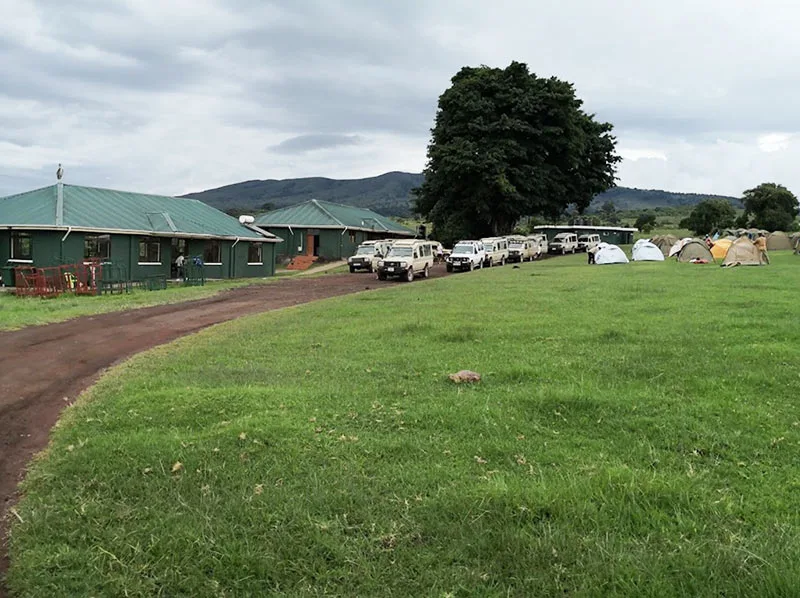
After a full day of game driving in Tarangire, your camp in the lush highland town of Karatu provides the perfect overnight base before the long drive through the Ngorongoro Conservation Area and into the Serengeti. Karatu sits at altitude in the fertile highlands, offering cooler temperatures and peaceful surroundings. Your cook prepares a warm dinner in camp, and a good night's sleep sets you up for the most dramatic day of the safari ahead.
The evening after your Tarangire game drive is a time for reflection over the campfire recounting the elephant encounters, the baobab landscapes, the lions resting in the afternoon shade. Karatu's camp facilities include shared ablution blocks managed to a good standard. From here, Day 2's early departure takes you directly into the heart of the Ngorongoro Conservation Area and onward to the Serengeti.
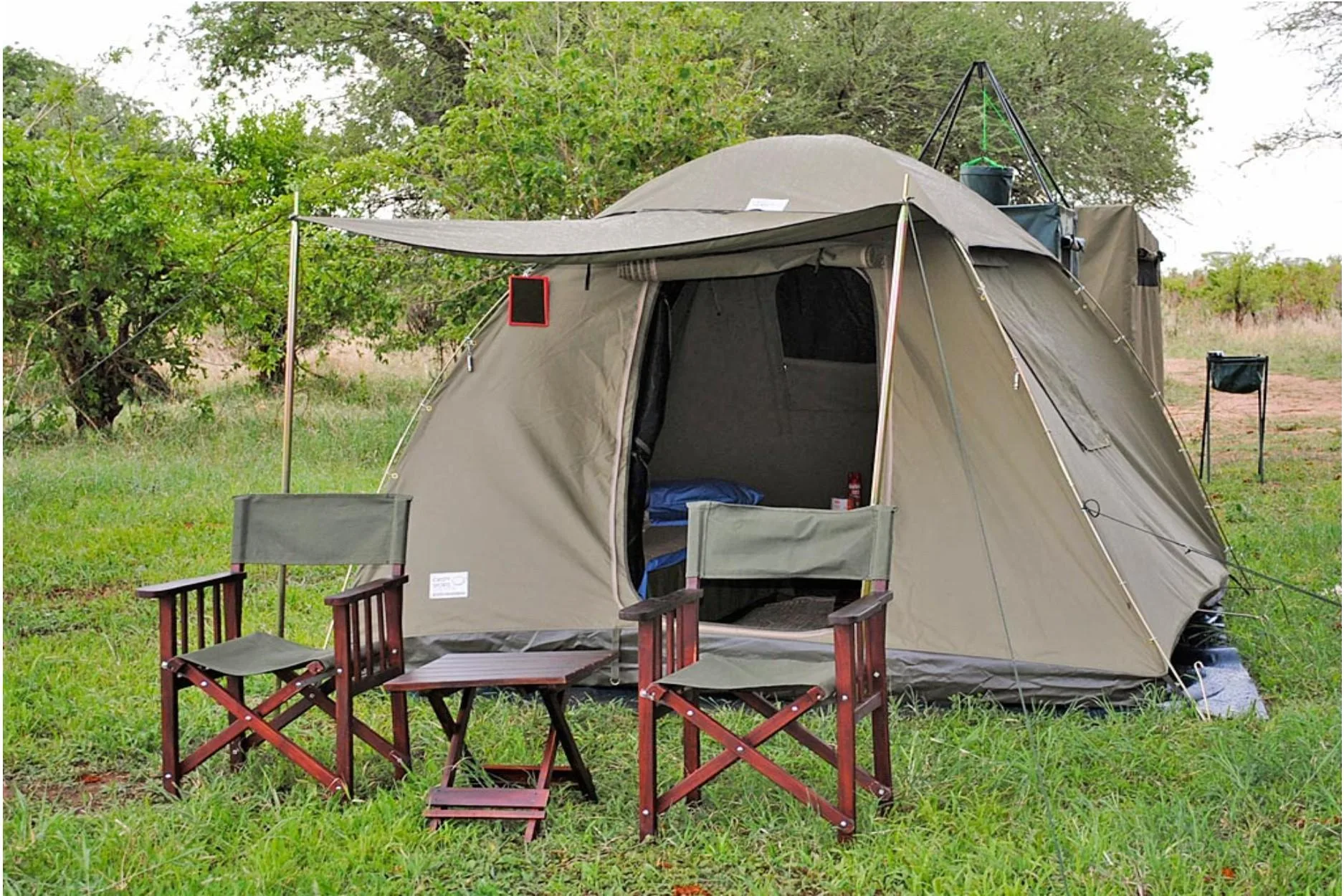
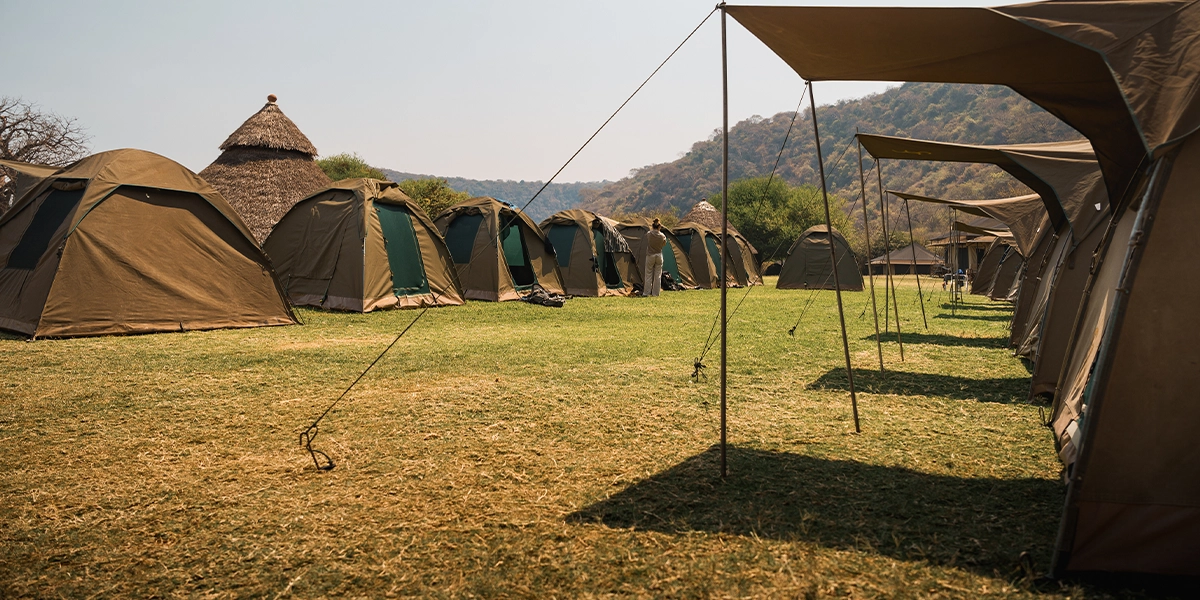
Four nights sleeping inside the Serengeti. The Milky Way blazing overhead, hyenas circling in the darkness, lions roaring at dawn on the plain. Your chef prepares all meals in camp: hot breakfast before the morning game drive, a packed lunch for the bush, and a full camp dinner under the stars. There is no more authentic way to experience the Serengeti than four consecutive nights inside the park itself.
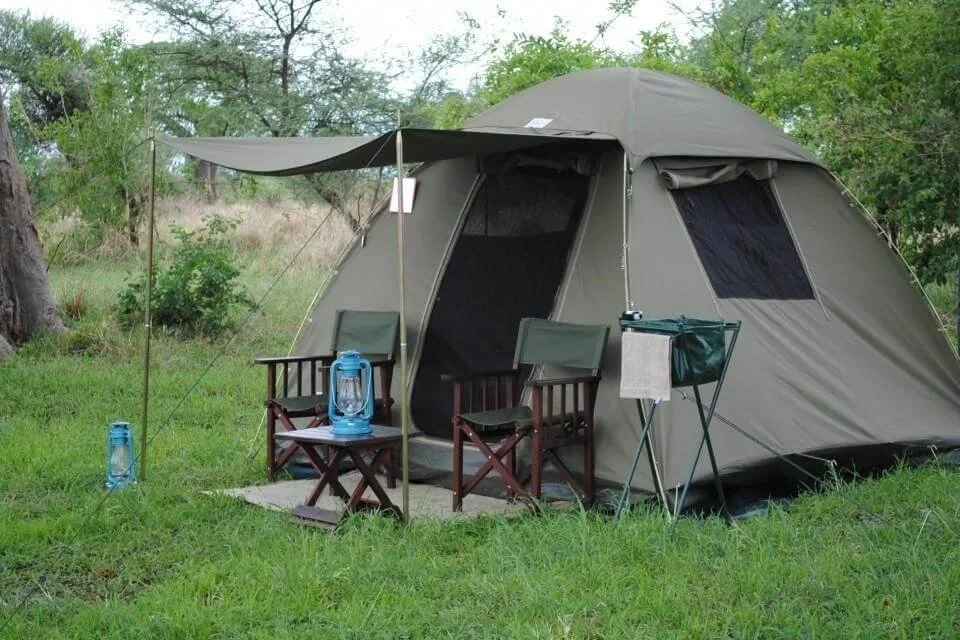
Positioned in the Seronera Valley the Serengeti's most wildlife-rich corridor and one of Africa's finest predator zones. Fall asleep to the sounds of lions and hyenas hunting in the darkness. Wake at first light and drive straight into prime game country without leaving camp. With four nights here across this itinerary, you have time to fully settle into this extraordinary ecosystem and experience it with a depth that shorter stays never allow.
What Your Camping Experience Includes
This safari is camping-only throughout all five nights. If you prefer lodge or luxury tented camp accommodation, Haven Trails offers a range of Northern Tanzania itineraries with Silver, Gold and Platinum lodge options. Explore our full safari catalogue or contact us at info@haventrails.com or WhatsApp +255 713 334154.
Why Haven Trails Adventures
Every Haven Trails guide holds a Professional Tourist Guide Certification and has completed a minimum of 1,000 guided field hours before leading any client. Our guides don't simply drive you to animals they read the land, interpret behaviour, share ecology, track seasonal patterns and make every sighting a story worth telling. Many guests describe their guide as the single highlight of the entire trip.
Every safari departs in a custom-fitted 4x4 Land Cruiser with a 360-degree pop-up roof for unobstructed photography, forward-facing window seats, individual USB charging ports, a stocked cooler with drinks, binoculars, a first aid kit and a radio linked to the park-wide guide network. A maximum of 6 guests per vehicle. Never a crowded bus safari.
We are based in Moshi, Tanzania not a booking platform in London or New York. Our team is in Tarangire, Ngorongoro and the Serengeti every week, tracking seasonal wildlife movements in real time, building direct relationships with park rangers and TANAPA wardens, and repositioning game drives based on live conditions. You benefit from intelligence that no international operator can match.
All Haven Trails guides carry satellite communication devices and emergency first aid supplies in camp. We maintain evacuation protocols for every park on the circuit in partnership with Flying Doctors Tanzania. All clients receive emergency contact cards, and our 24/7 Moshi operations centre monitors every active safari throughout the trip.
This 6-day camping itinerary is a framework, not a formula. Every detail is adjusted for your group: travel dates for optimal seasonal wildlife positioning, group size, pace, dietary requirements, special interests such as photography, birding or cultural experiences, and any additional combinations such as a Zanzibar beach extension or a Kilimanjaro climb before or after the safari.
Haven Trails prioritises Tanzanian-owned suppliers, community-run support services and conservation-conscious partnerships. A portion of every booking supports local ranger training through the Kilimanjaro Conservation Fund. Travelling responsibly is not a feature it is our operating principle.
Inclusions & Exclusions
- Airport arrival and departure transfers
- All national park and conservation area fees (Tarangire, NCA, Serengeti)
- Full-time expert English-speaking professional guide
- Custom 4x4 Land Cruiser with 360° pop-up roof
- All camping accommodation Karatu (1 night) & Serengeti (4 nights)
- Tents, sleeping mats and pillows
- All meals as per itinerary (B, L, D from Day 1 onwards)
- Camp setup and breakdown by experienced crew
- Dedicated camp cook for all in-camp meals
- Bottled water & soft drinks in vehicle during game drives
- Emergency evacuation support and 24/7 operations contact
- Safari certificate of completion
- International flights to/from Tanzania
- Tanzania tourist visa (USD 50 most nationalities)
- Travel insurance (strongly recommended)
- Pre-arrival day accommodation (own arrangement)
- Pre-arrival day meals (own arrangement)
- Alcoholic beverages
- Guide and camp crew gratuities (discretionary)
- Optional hot air balloon ride (~USD 600/person)
- Personal items and souvenirs
- Medical and dental expenses
- Prescription antimalarials (consult your doctor)