De meeste safarigasten arriveren voor het eerst met een mix van opwinding en angst. Zenuwachtig zien ze misschien niet genoeg, onzeker over de etiquette, overweldigd door de logistiek. Bijna allemaal vertrekken ze met de wens dat ze daar meer tijd hadden doorgebracht. Deze gids gaat eerlijk in op de praktische zorgen en zorgt ervoor dat u als een voorbereide, zelfverzekerde en nieuwsgierige reiziger arriveert. De beste versie van een safarigast.
Verwachtingen van dieren in het wild: wat u wel en niet zult zien
De belangrijkste mentale voorbereiding op een eerste safari is deze: de parken van Tanzania zijn geen dierentuinen. De dieren zijn wild, onbeheerd en vrij om overal te zijn, verspreid over honderden vierkante kilometers. Geen enkele operator, hoe ervaren ook, kan garanderen dat er een leeuw op de weg zit als u aankomt. Wat een goed geplande safari in Tanzania te bieden heeft. En wat maakt het anders dan elke andere bestemming op aarde. Is er een uitzonderlijk hoge kans op buitengewone waarnemingen van een grote diversiteit aan soorten.
Op een goed gestructureerde 5-7-daagse Northern Circuit-safari (Serengeti, Ngorongoro Crater, Tarangire) ziet de overgrote meerderheid van de gasten leeuwen, luipaarden, olifanten, buffels, giraffen, zebra's, wildebeesten, hyena's, nijlpaarden, krokodillen, cheeta's, wrattenzwijnen en tientallen vogelsoorten. Waarnemingen van zwarte neushoorns in de Ngorongoro-krater zijn mogelijk. De enige wilde populatie in Oost-Afrika. Maar niet gegarandeerd. De krater is groot en de neushoornpopulatie is klein.
Elke ervaren safarigast zal je hetzelfde vertellen: de momenten die hij zich het meest herinnert, waren nooit de momenten die hij had gepland. Het is niet het luipaard op de route. Het is een honingsdas die om zeven uur 's ochtends een mangoest over de weg sleept, of een neushoornvogel waar je bijna langs reed of het moment waarop een stierolifant besloot dat je voertuig te dichtbij was en je hem van gedachten zag veranderen. Safari beloont aanwezigheid, niet agenda. Kom nieuwsgierig naar alles, niet alleen naar de hoofdsoorten.
Het beheren van verwachtingen in verschillende parken
Niet alle parken bieden dezelfde ervaring; als u begrijpt waar elk park het beste in is, kunt u waarderen wat u ziet, in plaats van u af te vragen wat u mist.
| Park | Beroemd om | Realistic First-Timer Expectation |
|---|---|---|
| Serengeti | Grote migratie, dichtheid van leeuwen en cheeta's, uitgestrekte open vlaktes | Meerdere leeuwen, waarschijnlijk waarnemingen van cheeta's, enorme kuddes gnoes en zebra's. Misschien wel de meest overweldigende natuurervaring ter wereld |
| Ngorongoro Crater | Hoogste dichtheid van wilde dieren in één compact gebied Big Five per dag | Vrijwel gegarandeerd leeuw, olifant, buffel, nijlpaard, hyena; uitstekende luipaardkans; zwarte neushoorn mogelijk; flamingo's op het sodameer |
| Tarangire | Largest elephant herds in Afrika, ancient baobab trees | Olifantenkuddes van 50-200 dieren komen vaak voor; prachtige wilde dieren het hele jaar door; uitzonderlijk vogelleven; minder druk dan de Serengeti |
| Lake Manyara | Boomklimmende leeuwen, flamingo's, weelderig bos, compact en schilderachtig | Goed vogelleven en algemene fauna; het beste als introductiepark of add-on in plaats van als primaire bestemming |
| Ruaha / Selous | Afgelegen wildernis, wilde honden, minder toeristen | Uitstekende natuur en rauwere ervaring. Het beste voor bezoekers die voor de tweede keer op safari gaan of voor mensen die specifiek op zoek zijn naar afgelegen ligging en exclusiviteit |
| Haven Trails beveelt het Northern Circuit (Serengeti + Ngorongoro + Tarangire) aan voor gasten die voor het eerst op safari gaan. Deze combinatie levert het grootste soortenbereik en de hoogste waarnemingskans op in Afrika. | ||
De Big Five: een veldgids voor beginners
De term ‘Grote vijf’ werd niet bedacht door natuurbeschermers, maar door 19e-eeuwse jagers op groot wild. Het verwees naar de vijf gevaarlijkste en moeilijkste dieren om te voet te jagen. Vandaag beschrijft het de vijf meest iconische safaridieren van Afrika. Hier leest u wat u over elk moet weten voordat u ze tegenkomt.
Lion
Best: Serengeti & Ngorongoro
Leeuwen slapen 18 tot 20 uur per dag. Meest actief bij zonsopgang en zonsondergang. Als je een trots in rust aantreft, kan je gids langzaam rondcirkelen. Ze wachten op activiteit. Geduld wordt beloond. Het gebrul 's nachts vanuit het kamp is onvergetelijk.
Leopard
Best: Serengeti (kopjes & riverine trees)
De meest ongrijpbare van de vijf. Het radionetwerk van uw gids is uw grootste troef. Waarnemingen van luipaarden worden direct gedeeld. Zoek naar de staart die aan acaciatakken hangt. Dageraad en zonsondergang zijn belangrijke vensters. Praat niet luid in de buurt van een luipaard.
Elephant
Best: Tarangire & Ngorongoro
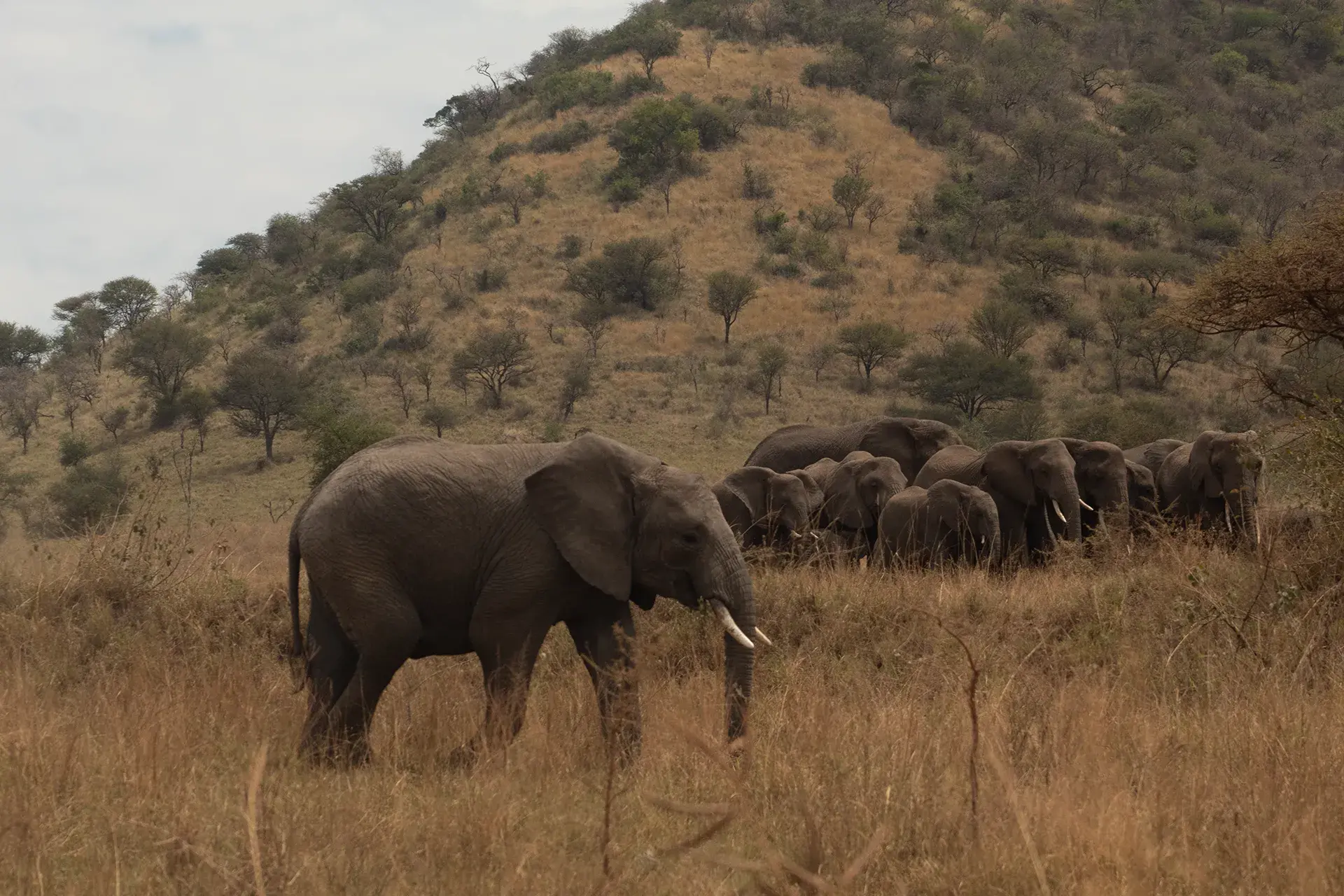
Het emotioneel krachtigste dier op safari. Let op het klapperen met de oren (temperatuurregeling), het aanraken van de romp (sociale binding) en de bewegingen van de matriarch (zij leidt). Maak nooit lawaai in de buurt van een kudde met kalveren. Er worden valse beschuldigingen gedaan wanneer voertuigen te dichtbij komen.
Black Rhino
Ngorongoro Crater only (in Oost-Afrika)
De zeldzaamste en meest ernstig bedreigde van de vijf. De Ngorongoro-krater herbergt de enige overgebleven wilde zwarte neushoornpopulatie van Oost-Afrika. Ze zijn eenzaam, slechtziend maar hebben een uitstekende neus en worden vaak bij zonsopgang in de buurt van water gezien. Een neushoorn spotten is echt bijzonder. Vier het.
Cape Buffalo
Alle Northern Circuit-parken
De meest onderschatte van de vijf. En statistisch gezien de gevaarlijkste in Afrika. Buffels zijn sociaal, intelligent en verrassend formidabel. Het is deze uitdrukking die hen hun reputatie oplevert: een buffel ziet er altijd uit alsof hij overweegt om aan te vallen. Oude eenzame stieren worden "dagga-jongens" genoemd en mogen nooit worden onderschat.
Bij enkele van de meest bijzondere natuurmomenten in Tanzania zijn dieren betrokken die niet op de Big Five-lijst staan. Jacht op cheeta's, waarnemingen van wilde honden, een servalkat in het lange gras, neushoornvogels op parade, het pure schouwspel van duizend flamingo's die opvluchten uit Lake Manyara. Dit zijn ervaringen die gasten achteraf vaak hoger inschatten dan hun Big Five-waarnemingen. Kom open voor alles en de Afrikaanse savanne zal je bij elke bocht verrassen.
Gamedrive-etiquette: de regels die u en de dieren beschermen
De etiquette voor gamedrives is geen bureaucratisch volgen van regels. Het is de reeks gedragingen die dieren kalm houdt, u veilig houdt en de ervaring voor elke toekomstige bezoeker beschermt. Als u begrijpt waarom deze regels bestaan, zijn ze gemakkelijk instinctief te volgen.
De Afrikaanse natuur heeft grotendeels geleerd een geparkeerd voertuig niet als een bedreiging te zien. Het silhouet en de geur van het voertuig zijn vertrouwd en neutraal. Hierdoor kan je gids op vijf meter afstand van een troep leeuwen stoppen en blijven de leeuwen slapen. Het moment waarop een mens boven de daklijn uitstijgt. Het blootleggen van de onmiskenbaar rechtopstaande menselijke vorm. De berekening verandert volledig. Laag in het voertuig blijven is geen beperking. Het is datgene dat de hele buitengewone nabijheid mogelijk maakt.
Een opmerking over kampetiquette in het donker
Safarikampen en lodges bevinden zich in of grenzend aan niet-omheinde wildernis. Dieren trekken 's nachts door het kamp. Het is gebruikelijk en niet alarmerend. Elk kamp heeft protocollen: volg de begeleider na het eten naar je tent, gebruik de meegeleverde zaklamp of radio om een personeelsescorte op te roepen, loop nooit alleen in het donker tussen gebouwen. Dit is geen theater. Nijlpaarden, hyena's en olifanten dwalen 's nachts echt door de campings. De geluiden die je vanuit je bed hoort, zijn echt. Ze zijn ook een van de meest diepgaande ervaringen die de bush kan bieden.
Wat te dragen op safari: de complete kledinggids
Safari-kleding is een gebied waarop veel nieuwelingen de stijl overdrijven en de functie onderschatten. Het doel is niet om er uit te zien als een filmset; het is om comfortabel te zijn binnen een enorm temperatuurbereik, onzichtbaar voor insecten en niet bedreigend voor dieren in het wild. Hier is de eerlijke gids.
- Khaki, beige, tan, olive green, stone grey
- Loose-fit, lightweight long-sleeved shirts
- Converteerbare afritsbroek (korte broek + broek in één)
- Fleece of licht donsjack voor ochtendritten
- Hoed met brede rand en kinband (wind is echt)
- Lichtgewicht wandelschoenen of wandelschoenen
- Wool or synthetic hiking socks (3-4 pairs)
- Buff/nekhoes (stof tijdens ritten in het droge seizoen)
- White or cream visible, gets dirty instantly, attracts tsetse flies
- Bright colours (rood, oranje, geel, roze). Laat dieren in het wild schrikken, bergwandeling bijtende insecten aan
- Dark navy or black attract tsetse flies specifically
- Cotton clothing zwaar als het nat is, langzaam droogt, koud als het vochtig is
- Zware jeans (heet, beperkend, langzaam drogend)
- Sterke parfum of sterk geurende producten op schijven
- Overmatige sieraden (vervetapen gaan op onderzoek uit)
- Lange broek en laag met lange mouwen in de schemering (muggenuren)
- Licht donsjack kampavonden kunnen verrassend koud zijn
- Schoenen met gesloten neus in het kamp (schorpioenen en insecten op de grond)
- Comfortabele kampeerschoenen voor looppaden van tent naar diner
- SPF 50+ zonnebrandcrème elke 2 uur opnieuw aanbrengen op open stations
- SPF lip balm
- UV-beschermende zonnebril (gereflecteerde schittering van savanne is intens)
- Lichtgewicht zonnehandschoenen indien gevoelig voor handverbranding
- Bedekken is effectiever dan zonnebrandcrème in direct zonlicht
Bijna iedere ervaren safarigast meldt dat hij aanzienlijk te veel heeft ingepakt. Je zit het grootste deel van de dag in een voertuig. Je draagt afwisselend dezelfde 3-4 outfits. De meeste lodges bieden tegen een kleine vergoeding een wasservice op dezelfde dag aan. De ideale safarigarderobe bestaat uit 3-4 tops, 2 broeken (waarvan één converteerbaar), 1 fleece, 1 jas, 3-4 sokken, 3-4 ondergoed en 1 paar kampeerschoenen. Deze past in een handbagage. Dat is ideaal, omdat voor safaritransfers met kleine vliegtuigen strikte gewichtslimieten gelden (doorgaans 15 kg totaal, alleen zachte tas).
Safari-fotografie: tips die daadwerkelijk een verschil maken
Om bijzondere safarifoto's mee naar huis te nemen, heb je geen professionele cameraapparatuur nodig. Je moet wel een paar principes begrijpen over licht, timing en beweging die van toepassing zijn, of je nu fotografeert met een smartphone of een telelens.
- Fotografeer tijdens de gouden uren, niet rond de middag. De beste safarifotografie vindt plaats in de eerste 90 minuten na zonsopgang en de laatste 90 minuten voor zonsondergang. Het licht vanuit een lage hoek geeft dieren dimensie en warmte, vermindert harde schaduwen en kleurt de savanne goudkleurig. Het middaglicht is vlak, hard en niet vleiend. Gebruik de middagrust om de beelden te bekijken en de batterijen op te laden, niet om nieuwe te maken.
- Burst-modus is je vriend. Dieren bewegen onvoorspelbaar en snel. Zet je camera of smartphone in de burst-modus en maak meerdere foto's op het moment van actie. Een leeuw die zijn kop draait, een cheetah midden in zijn pas, een olifant die water spettert. Eén frame op de tien zal perfect zijn. Vrij verwijderen; opslag is goedkoop.
- Focus op het oog, niet op het lichaam. Bij elke meeslepende natuurfoto zijn de ogen van het onderwerp scherp in beeld. Als u autofocus gebruikt, zorg er dan voor dat uw scherpstelpunt op het dichtstbijzijnde zichtbare oog is vergrendeld voordat u gaat fotograferen. Een wazig lichaam met een scherp oog leest als opzettelijk. Het omgekeerde gebeurt nooit.
- Houd uw camera gereed, niet in de tas. De mogelijkheden voor wilde dieren duren slechts enkele seconden. Houd uw camera tijdens elke rit op schoot of om uw nek. Het shot waarvoor je het inpakt, is het shot waarvoor het luipaard materialiseert.
- Stabiliseren tegen het voertuig. Gebruik uw cameratas, een opgerolde jas of een zitzak die tegen het raamkozijn of de dakrand wordt gedrukt om uw camera op lange brandpuntsafstanden te stabiliseren. Een telelens van 300-500 mm versterkt elke trilling. Zelfs 100 mm-opnamen profiteren van ondersteuning op hobbelige wegen.
- Weersta de drang om beelden voortdurend te beoordelen. De meest voorkomende fotografiefout op safari is tijd besteden aan het bekijken van de laatste opname terwijl het volgende buitengewone moment plaatsvindt. Schiet, controleer even en richt je blik weer op het dier.
- Neem veel meer opslagruimte en batterijen mee dan u verwacht nodig te hebben. Bij koude nachten zijn de batterijen sneller leeg dan verwacht. De meeste first-timers vullen meerdere geheugenkaarten. Neem twee keer zoveel mee als je denkt nodig te hebben en een powerbank om op te laden tussen de ritten door.
Moderne vlaggenschip-smartphones maken werkelijk uitstekende natuurfoto's bij goed licht op gematigde afstanden. De beperking is bereik. Een optische zoom van 5x dekt veel situaties, maar worstelt over open Serengeti-vlaktes op 300 meter afstand. Als u een smartphone gebruikt, is positie belangrijker dan wat dan ook. Vraag uw gids om het voertuig voor elke waarneming zo veilig mogelijk te positioneren. In de Ngorongoro-krater en Tarangire, waar dieren vaak binnen 10-20 meter van voertuigen komen, kunnen smartphone-resultaten verbluffend zijn.
Geld, connectiviteit en praktische realiteit
Geld op Safari
De kernregel: breng Amerikaanse dollars in biljetten van na 2006. Oudere biljetten en grote coupures van vóór 2006 worden in Tanzania vaak geweigerd. Kleine coupures ($1, $5, $10, $20) zijn essentieel voor fooien en kleine aankopen. Je krijgt niet altijd wisselgeld van een biljet van $100. De meeste lodges accepteren grote creditcards (Visa en Mastercard), maar rekenen 3-5% verwerkingskosten. Geldautomaten zijn beschikbaar in Arusha en Moshi, maar ontbreken volledig in nationale parken. Plan je contante geldbehoefte voordat je de parken ingaat.
| Expense | Aanbevolen Amount | Notes |
|---|---|---|
| Gids/chauffeurtip | $ 15-25 USD per persoon per dag | Betaal aan het einde van de reis of de voorkeur van de dagelijkse gids varieert. Cash only. |
| Tip van het kamp-/lodgepersoneel | $ 5-10 USD per persoon per dag | Betaald in de gemeenschappelijke fooienbox bij de receptie van de lodge, uitgedeeld aan al het personeel. |
| Optional balloon safari | $500-650 USD per persoon | Reserveer vooraf via Havenpaden. Elke cent waard. Inclusief bushontbijt. |
| Souvenirs & market shopping | Begroting van $ 50-200 USD | Bij voorkeur contant. Afdingen is verwacht en normaal op markten. Vriendelijk onderhandelen is onderdeel van de cultuur. |
| E-visum voor Tanzania | $50 USD (meeste nationaliteiten) | Solliciteer online op immigratie.go.tz voordat u op reis gaat. Amerikanen betalen $ 100 vanwege wederkerigheid. |
| Toegang tot het park (inbegrepen) | Inbegrepen in Havenpaden packages | Serengeti: $82 USD/dag; Ngorongoro: $100-$150/dag. Al opgenomen in je reisroute. |
| Reken op $200-400 USD per persoon aan extra contant geld bovenop je pakketprijs, voor fooien, bijkomende kosten en vrije uitgaven. | ||
Connectiviteit: het geschenk van offline zijn
De meeste lodges en kampen bieden standaard Wi-Fi in de gemeenschappelijke ruimtes, maar de snelheid en betrouwbaarheid variëren enorm. Diepe Serengeti-kampen hebben mogelijk helemaal geen connectiviteit. Mobiele data via lokale simkaarten (Vodacom en Airtel Tanzania hebben de beste dekking) werken in sommige gebieden, maar niet in de parken. Het eerlijke advies van elke ervaren safarigast: vertel uw gezin uw reisschema, stel een out-of-office in en bereid u voor op dagenlang onbereikbaar zijn. De kwaliteit van aanwezigheid die voortkomt uit echte ontkoppeling is een van de meest onderschatte geschenken van safari. De olifanten hebben ook geen wifi. En het lijkt erop dat ze het goed doen.
Health, Water & Food on Safari
Drink uitsluitend gebotteld of gefilterd water. Drink nergens in Tanzania kraanwater, ook niet om tanden te poetsen. Alle gerenommeerde lodges bieden standaard gefilterd of gebotteld water; uw gids zal tijdens elke rit water in het voertuig vervoeren. De kwaliteit van het safarivoedsel is consistent hoger dan de meeste starters verwachten. Lodges zijn erg trots op hun keuken en houden uitgebreid rekening met dieetbeperkingen, indien vooraf aangemeld. Volg uw malariaprofylaxe consequent vanaf de dag die uw arts voorschrijft tot en met de volledige duur na de reis.
De Safari-mentaliteit: zes verschuivingen die alles veranderen
Het verschil tussen een goede safari en een levensveranderende safari zit vaak minder in wat je ziet en meer in hoe je mentaal aankomt. Deze zes mentaliteitsveranderingen scheiden consequent de gasten die door Tanzania zijn getransformeerd, van degenen die er alleen maar van genoten.
Geef de checklist vrij
De gast die arriveert om de Grote vijf af te vinken, mist de honingdas, de geschilderde wolf en de roller met lila borst die een meter van het raam landt. Kom met nieuwsgierigheid, niet met een scorekaart. De dieren die je verrassen, zijn vaak de dieren die je het langst onthoudt.
Omarm de langzame momenten
Safari is geen doorlopende hoogtepuntenrol. Er zijn lange ritten over open vlaktes waar niets zichtbaar is. Dit is geen verspilde tijd. Ze zijn het landschap zelf, de schaal van Afrika, de stilte van een wereld die bestond voordat de mensen er een naam aan gaven. Laat de stilte komen.
Vertrouw volledig op uw gids
Je gids leest de bush zoals je een gezicht leest. In een taal die is opgebouwd uit jarenlange aandacht. Als ze het voertuig plotseling stoppen, is daar een reden voor. Als ze langs iets rijden dat er interessant uitziet, is daar een reden voor. Stel uit, stel vragen en luister. Hun kennis is het daadwerkelijke product dat u hebt gekocht.
Look in All Directions
Iedere gast staart naar de leeuw terwijl een neushoornvogel langs de andere kant van het voertuig loopt. De vogel waar je niet naar kijkt, is vaak de buitengewone. Scan de grond, de lucht, de boomgrens en de verre horizon in gelijke mate. De savanne presenteert zich vanuit alle richtingen tegelijk.
Disconnect to Be Present
De gast die elk moment via een scherm fotografeert en de gast die met eigen ogen kijkt, hebben fundamenteel verschillende ervaringen met dezelfde waarneming. Maak je foto's. Maar laat de camera soms zakken, leg de telefoon neer en laat de leeuw je werkelijke zicht vullen. Sommige momenten zijn te groot voor een scherm.
Wees vroeg en blijf laat
De gasten die zich verzetten tegen de wake-up call van 05.45 uur missen het beste gamedrift van de dag. Degenen die vragen om wat langer bij een waarneming te blijven, zien de cheetah de moord plegen. Vroege ochtenden en geduldig wachten zijn hoe de buitengewone momenten gebeuren. Ze komen vrijwel nooit op tijd aan.
Fouten die nieuwe Safari-gasten het vaakst maken
- Een te korte route boeken. Vier dagen is niet genoeg. Vijf is de grens. Zes tot acht dagen op het Northern Circuit geven je de diepte, het ritme en de opgebouwde kennis van het bekijken van hetzelfde landschap over meerdere ritten. De eerste dag is oriëntatie. De magie begint meestal op dag twee of drie, terwijl je oog de struik leert lezen.
- Prioriteit geven aan kosten boven routekwaliteit. Een budgetsafari in de juiste parken is veel beter dan een middenklassesafari in de verkeerde. De parken zelf. Serengeti, Ngorongoro, Tarangire. Zijn de niet-onderhandelbare variabele. Accommodatie kan worden aangepast; de parkselectie zou dat niet moeten zijn.
- De telefoniste niet vooraf op de hoogte stellen van dieetwensen. Safarikeukens kunnen, mits vooraf aangemeld, rekening houden met vrijwel alle dieetbeperkingen. Ze kunnen geen wonderen verrichten op de dag van aankomst in een afgelegen kamp op 200 km van de dichtstbijzijnde stad. Vertel het aan Haven Trails tijdens het boeken, niet op de dag van aankomst.
- Het dragen van de verkeerde kleuren. Donkerblauwe en zwarte kleding trekt specifiek tseetseevliegen aan, die een pijnlijk merkbare beet veroorzaken. Naast de tseetseevlieg veranderen felle kleuren het gedrag van dieren van dichtbij. Neutrale kleuren zijn geen esthetische voorkeur; ze zijn een praktisch hulpmiddel.
- Leaving binoculars at home. Een 8×42 verrekijker transformeert de safari-ervaring door dieren op afstand zichtbaar en dieren van dichtbij buitengewoon te maken. Het detail dat je met een goede verrekijker op een leeuwengezicht op 200 meter kunt zien. Elke snorhaar, elk litteken, de kleur van de ogen. Is iets dat een camera op dit moment niet voor u kan vastleggen.
- Haast je langs de ‘gewone’ dieren. De eerste keer dat je een zebra ziet, zul je versteld staan. Op dag drie kijken veel gasten er nauwelijks naar. Maar een zebrahengst die bij de drinkplaats vecht, of een veulen dat bij zonsopgang tegen de flank van zijn moeder wordt gedrukt, is werkelijk buitengewoon. Je moet gewoon blijven kijken. De gewone dieren doen voortdurend ongewone dingen.
- Niet genoeg water drinken tijdens gamedrives. De combinatie van hoogte, droge lucht, stoffige wegen, blootstelling aan de zon en opwinding zorgt sneller voor uitdroging dan de meeste mensen verwachten. Drink consequent tijdens elke rit, zelfs als u geen dorst heeft. Uitdroging veroorzaakt hoofdpijn, vermoeidheid en prikkelbaarheid die de ervaring aanzienlijk verslechteren.
Veelgestelde vragen
Klaar voor je eerste safari? Laten we het samen bouwen.
Haven Trails Adventures is gespecialiseerd in nieuwe safarigasten. We houden groepen klein, ervaren gidsen en routes in een goed tempo. Zo komt u geïnformeerd aan en vertrekt u omkleed. Neem contact op en we zullen iets buitengewoons bouwen rond uw dates en interesses.
Plan My First Safari ? WhatsAppen ons Now