


Zanzibar: stranden, cultuur en verborgen juweeltjes | Tanzania Reis met…
Waarom Zanzibar anders is dan elke andere strandbestemming
Zanzibar: stranden, cultuur en verborgen juweeltjes | Tanzania Reis met…
Zanzibar is een semi-autonome regio van Tanzania, gelegen in de Indische Oceaan, ongeveer 40 kilometer uit de kust van het vasteland. Het hoofdeiland, genaamd Unguja, is waar bijna alle bezoekers naartoe gaan. Het tweede eiland, Pemba, is een afgelegen duikbestemming voor degenen die op zoek zijn naar extreme rifkwaliteit zonder drukte. Together, they cover approximately 2,645 kme e less than 0.3% of Tanzania's total area e yet they contribute nearly a billion US dollars annually to the Tanzanian economy through tourism alone.
In tegenstelling tot de Atlantische en Stille Oceaan ligt de Indische Oceaan rond Zanzibar warm, kalm en buitengewoon helder. Het gebrek aan industriële afvoer en de intacte koraalrifsystemen rond de noordkust en het Mnemba-atol zorgen ervoor dat je snorkelt in enkele van de laatste echt ongerepte rifomgevingen op aarde. Groene schildpadden, spinnerdolfijnen, walvishaaien en honderden soorten rifvissen maken dit een onderwaterwereld die vergelijkbaar is met de Koraaldriehoek.
Als post-safari- of post-Kilimanjaro-bestemming fungeert Zanzibar als het perfecte slothoofdstuk van de Tanzania Triple. After days of game drives or summit nights, the transition to a Strand bed, warm water, and the sound of the dhow sails catching the kusi wind is one of travel's great emotional releases. Havenpaden organises Zanzibar extensions from our base in Moshi e typically 4e7 nights is the sweet spot.
Stone Town: het hart van het eiland
Geen bezoek aan Zanzibar is compleet zonder minimaal twee nachten in Stone Town. The historic quarter of Zanzibar City sits on the western edge of the island and covers barely one square kilometre e but that single kilometre is one of the most dense concentrations of living history in Afrika. Stone Town earned its UNESCO World Heritage designation in 2000, and wandering its lanes makes the reason immediately obvious.
De stad is een tastbaar bewijs van het buitengewone verleden van het eiland: a thousand years of Swahili coastal civilisation, Omani Arab rule from the 17th century onwards, Persian merchant influence, Indian trader communities, Portuguese fortifications, and British colonial administration have all left unmistakable marks on the architecture, the food, the language, and the culture. Narrow alleys too tight for cars lead you past four-storey Arab merchant houses with carved wooden doors that are themselves masterworks of craft e some with hundreds of brass studs, others with coral-carved frames that date back to the 1800s.
Stone Town heeft meer dan 560 ingewikkeld gesneden houten deuren, en lokale historici kunnen de oorsprong van een gebouw dateren aan de hand van de deurstijl. Indiase deuren hebben rechthoekige frames en gedetailleerd geometrisch houtsnijwerk. Omaanse Arabische deuren hebben ronde bogen en koperen noppen. The studs, borrowed from an Indian Ocean tradition, were originally intended to repel war elephants e a reminder that even a door in Zanzibar is a history lesson.
Essential Stone Town Experiences
- Forodhani Gardens Nacht Market e The waterfront gardens come alive after dark with grills loaded with octopus, prawns, kingfish, samosas, and the famous Zanzibar "pizza" (a stuffed savoury crepe). Bestel een glas vers geperst suikerrietsap met gember en limoen. This is the most atmospheric and delicious $5 you will spend in Afrika.
- Het oude fort (Ngome Kongwe) e Het fort, gebouwd door de Omani's in de jaren 1690 op de plaats van een Portugese kerk, is het oudste nog bestaande gebouw in Stone Town. Gratis toegang, er worden nu 's avonds culturele optredens georganiseerd. Spend 30e60 minutes exploring the ramparts and interior courtyard.
- De slavenmarkt en de Anglicaanse kathedraal e De ontnuchterende plek van de voormalige slavenmarkt van Zanzibar, ooit de grootste in de Indische Oceaan. The Anglican cathedral was built in 1879 by the Universities' Mission to Central Afrika specifically on the site to mark abolition. De ondergrondse slavenkamers blijven intact. This is not a comfortable experience e it is an essential one.
- Rooftop Sunset Views e Verschillende historische gebouwen in Stone Town hebben bars en restaurants op het dak met een panoramisch uitzicht over de haven. Om 17.30 uur arriveren om de dhows af te tekenen tegen de zonsondergang is het klassieke Stone Town-avondritueel.
- Darajani Market e The covered central market where locals shop for fish, spices, produce, and household goods. Go early morning (7e9 AM) when it is at its most vibrant. De naastgelegen vismarkt, waar de dhow-vangst 's nachts wordt gesorteerd en bij zonsopgang wordt geveild, is een van de meest levendige plekken op het eiland.
- Emerson Spice Hotel Rooftop Tea House e Set in a beautifully restored 19th-century merchant's house, the rooftop tea house offers perhaps the best single bekijken in Stone Town e across the roofline of white coral-stone buildings to the Indian Ocean. Reserveren voor avondthee en diner is essentieel.
The Beaches of Zanzibar: A Complete Gids
Not all of Zanzibar's beaches are created equal e and this is the most important thing to understand before you Reserveer. Tide, wind direction, season, and your preferred activity all determine which part of the island is right for you. Hier is een eerlijke uitsplitsing per locatie.
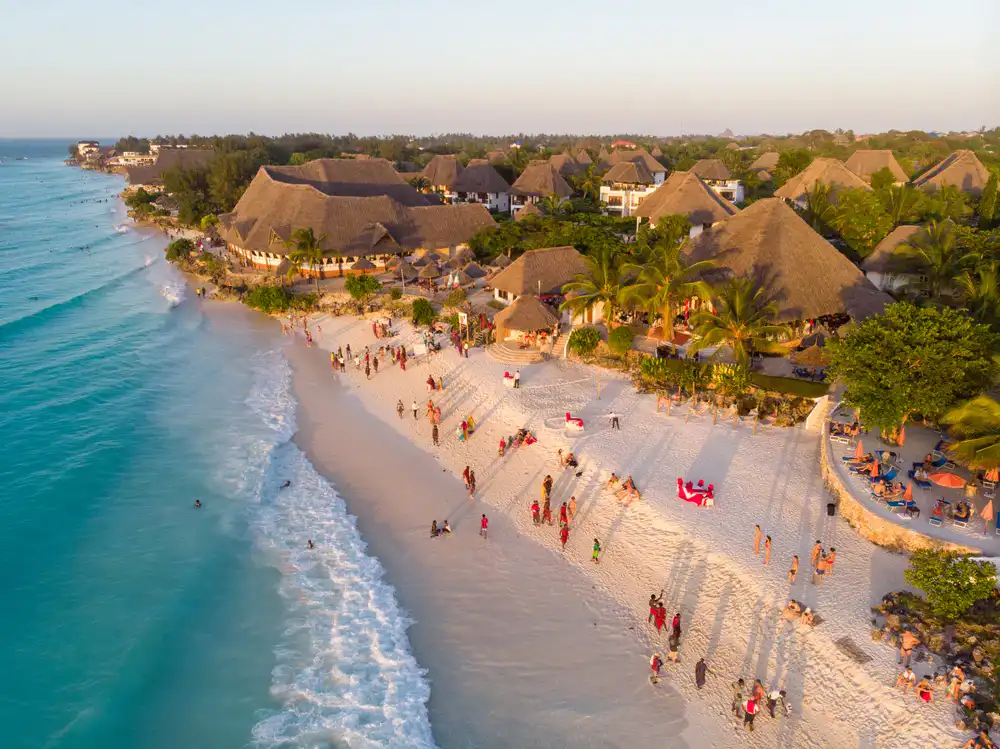
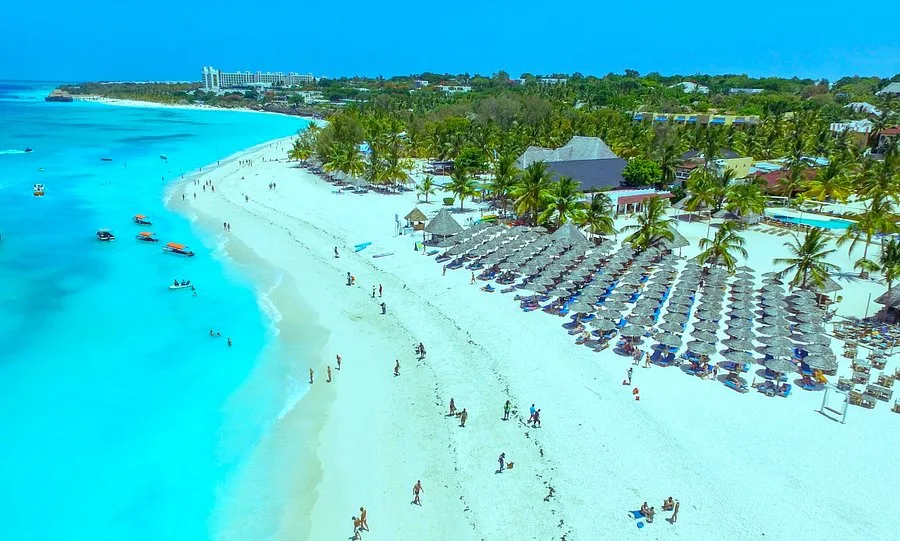
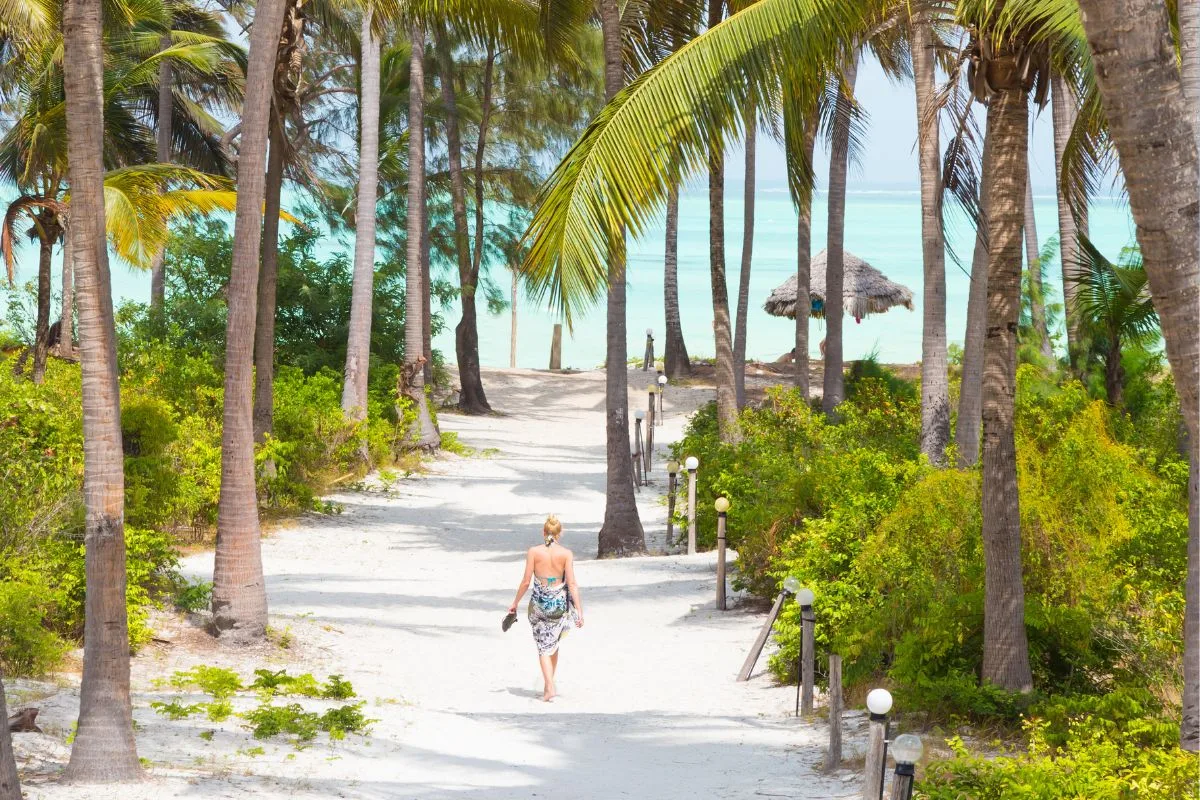
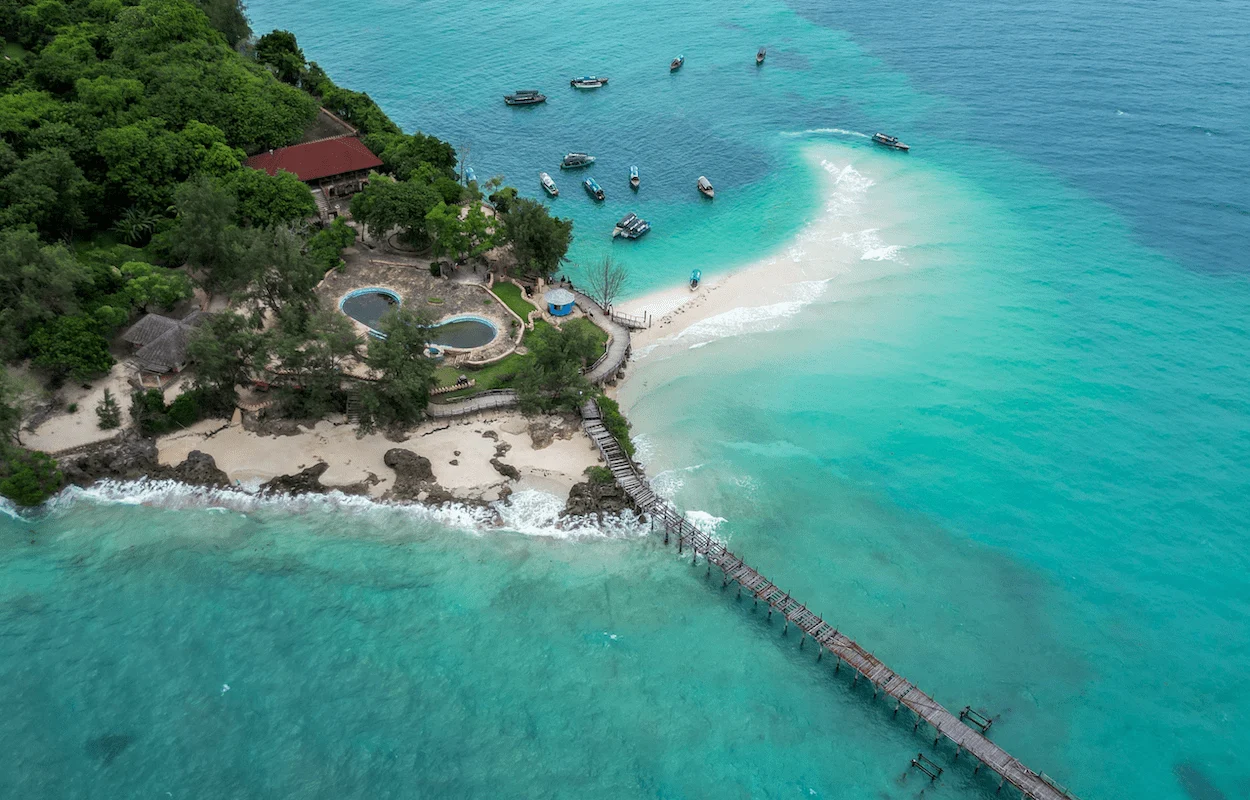
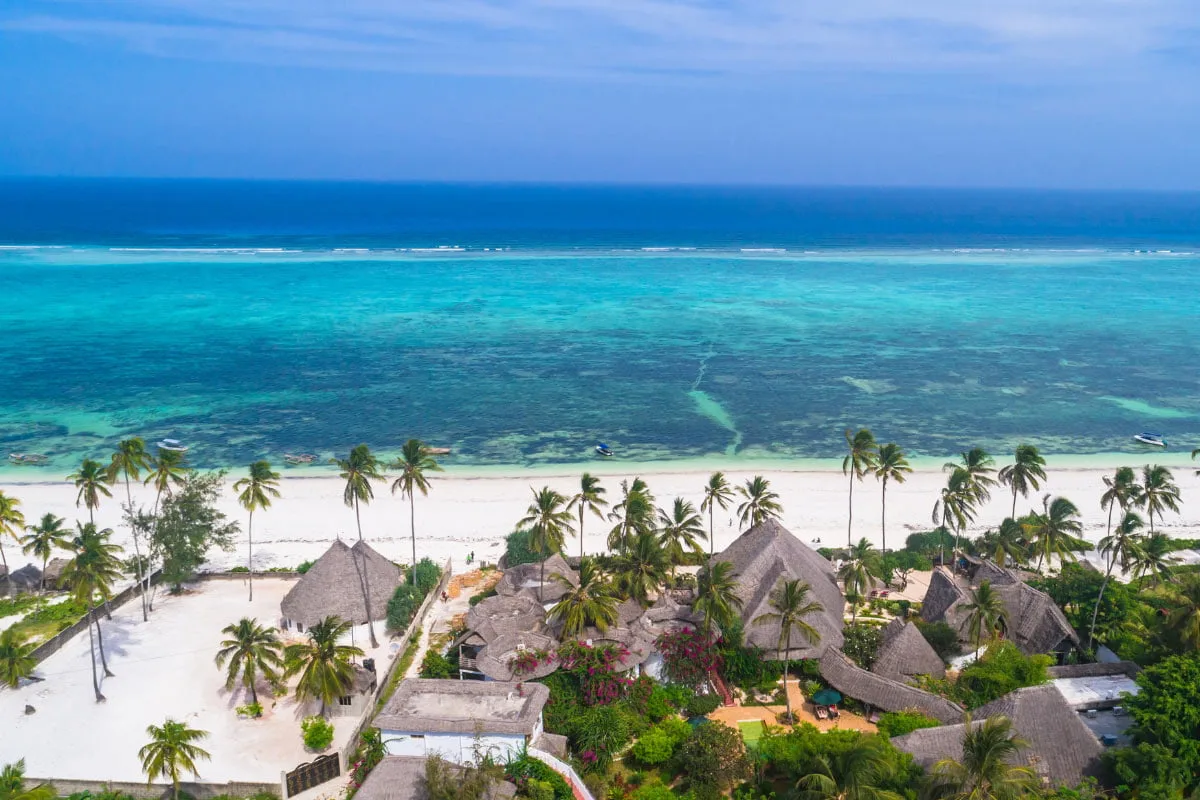
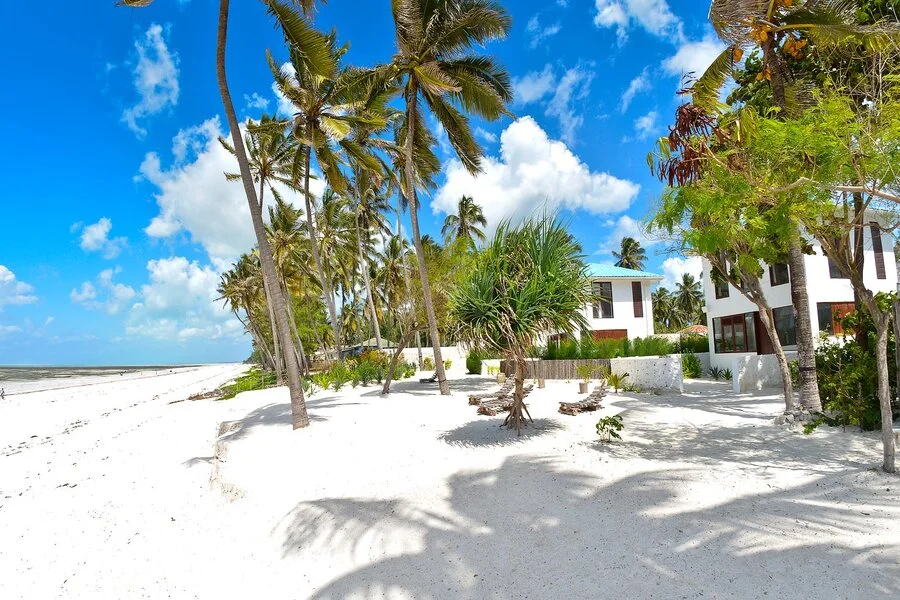
On Zanzibar's east coast (Paje, Jambiani, Matemwe), tidal variation can be extreme e the water withdraws hundreds of metres at low tide, leaving shallow mudflats. Controleer altijd de plaatselijke getijdentabel voordat u boekt en vraag uw accommodatie naar het strand bij eb. The north coast (Nungwi, Kendwa) is largely free of this issue e the bay's topography keeps water present at all tidal states, which is why it is the safest choice for casual swimming.
Wat te doen op Zanzibar: ervaringen die de moeite waard zijn
Mnemba Atoll Snorkelling
Een beschermd zeegebied voor de noordoostkust met een buitengewone dichtheid aan groene schildpadden, dolfijnen, rifvissen en koraal. De beste onderwaterervaring in Tanzania. Dag trips depart from Matemwe and Nungwi. Best JuneeOctober for visibility.
Rondleiding kruidenboerderij
Zanzibar dankt de naam "Spice Island" aan zijn eeuwenlange kruidnagel-, kaneel-, nootmuskaat-, kardemom- en vanilleteelt. Een uitstap van een halve dag naar de kruidenboerderij in het binnenland neemt je mee langs actieve plantages waar gidsen elk kruid demonstreren. De geur alleen al is de moeite waard. After the rains (MayeJune) is the most aromatic time.
Jozani Forest & Red Colobus Monkeys
Jozani Chwaka Bay Nationaal Park is Zanzibar's only national park. Its 50 kme of indigenous forest is home to the Zanzibar red colobus monkey e found nowhere else on Earth. Easy 1e2 hour guided walks through mahogany, fig, and palm forest. Ga vroeg in de ochtend, wanneer de apen het meest actief zijn bij het bladerdak.
Sunset Dhow Cruise
Een traditionele houten dhow die vanuit de haven van Nungwi of Stone Town vertrekt terwijl de lucht goud en roze kleurt, is een van de meest ongecompliceerde geneugten van reizen. Typically 2e2.5 hours, includes sundowners and snacks. De meest romantische Zanzibar-ervaring, vooral voor pasgetrouwden. Reserveer private for couples.
Kitesurfing at Paje
Consistent kusi trade winds of 15e25 knots over a flat, shallow lagoon make Paje Strand one of the world's premier kitesurfing spots. Meerdere erkende scholen bieden beginnerslessen tot geavanceerde coaching. JuneeSeptember is peak season. Windsurfers en kajakkers delen de lagune op dagen met lichtere wind.
Dolphin Watching at Kizimkazi
Kizimkazi aan de zuidkust is de thuisbasis van groepen spinner- en tuimelaars. Een privé dhow-vertrek in de vroege ochtend voordat de drukke rondvaartboten arriveren, geeft je een echt andere ervaring. OctobereFebruary is calmest for seas. Vermijd indien mogelijk de drukke standaardrondleidingen.
Gevangeniseiland (Changuu)
A short boat ride from Stone Town, Changuu Island was originally intended as a detention facility e never used as such. Tegenwoordig staat het bekend om zijn kolonie Aldabra-reuzenschildpadden, waarvan sommige meer dan 200 jaar oud zijn. A pleasant half-dagtocht that pairs well with a Stone Town morning. Ga midweek voor minder drukte.
Scuba Diving e Mnemba & Pemba
De wateren van Zanzibar bevatten meer dan 500 vissoorten in intacte koraalformaties. Mnemba Atoll (day trips from the main island) is Oost-Afrika's finest dive site. Voor gevorderde duikers bieden de muren en kanalen van Pemba Island dieprifduiken van wereldklasse die kunnen wedijveren met enkele van de beste in de Indische Oceaan. Peak visibility JulyeOctober.
Verborgen juweeltjes: wat de meeste bezoekers nooit vinden
De toeristische route van Zanzibar is versleten in Nungwi, Stone Town, Prison Island, Mnemba. Deze zijn allemaal werkelijk uitstekend, maar het eiland heeft verschillende ervaringen die de meeste bezoekers nooit bereiken. Dit zijn degenen die de moeite waard zijn om voor te plannen.
Kuza Cave & Cultural Centre e Paje
Een natuurlijke ondergrondse grot met een zoetwaterzwembad, omgeven door eeuwenoude koraalstenen muren en mangrovewortels. Kuza combineert de grotervaring met een echt cultureel gemeenschapsprogramma, gerund door lokale Zanzibari-vrouwen. Het culturele centrum binnen biedt kookdemonstraties, traditionele muziek en ambachtelijke workshops. Het staat niet op de meeste standaard reisroutes en dat is precies waarom het de moeite waard is om uit te zoeken.
Mwaka Kogwa Festival e Makunduchi
Each July, the village of Makunduchi on Zanzibar's southeast coast hosts Mwaka Kogwa, the Shirazi New Year e a unique festival rooted in ancient Persian (Shirazi) tradition. Men engage in ritual banana-leaf fights, fires are lit to symbolise the burning of the past year, and women sing and parade through the village in elaborate dress. Er is bijna geen toeristische infrastructuur eromheen. If your dates align, this is one of the most authentic cultural events in Oost-Afrika.
Pongwe & Pingwe e Het rustige zuidoosten
De stranden van Pongwe en Pingwe, op het zuidoostelijke schiereiland, worden dramatisch minder bezocht dan Paje en Jambiani, een paar kilometer naar het noorden. Een handvol boetiekaccommodaties hier biedt werkelijk geïsoleerde strandverblijven met privétoegang tot het rif en bijna geen andere bezoekers. The famous Rock Restaurant e set on a coral outcrop that becomes an island at high tide e is nearby in Michamvi, and worth the pilgrimage for lunch or dinner.
Chumbe Island koraalpark
Het meest bijzondere succesverhaal van Zanzibar op het gebied van natuurbehoud, gelegen op slechts 12 km ten zuiden van Stone Town. Chumbe Island is a strictly protected reef sanctuary and forest reserve e one of the few truly pristine shallow-water reef environments remaining in the western Indian Ocean. Dag visits are limited to preserve the ecosystem. De koraaltuin, zichtbaar vanaf de oppervlakte, is het mooiste snorkelgebied van heel Zanzibar. Advance reservering is essential.
Zanzibar International Film Festival (ZIFF) e July
Oost-Afrika's largest film festival transforms Stone Town into a ten-day cultural event each July, featuring over 100 films from across Afrika and the diaspora, alongside live music in the fort, dhow races in the harbour, and art exhibitions through the old quarter. De overlap met het droge hoogseizoen maakt het een uitzonderlijke reden om uw bezoek in juli te plannen.
De meeste ervaren Zanzibar-bezoekers raden een reisroute met drie zones aan: 1e2 nights in Stone Town (cultural foundation), 2e3 nachten aan de noordkust (Nungwi/Kendwa voor ontspannen zwemmen en Mnemba-dagtocht) dan 2e3 nachten aan de zuidoostkust (Paje/Jambiani for a quieter, more authentic final chapter). This arc gives you the full spectrum of what the island offers e history, marine life, and genuine Zanzibari pace.
Eten, cultuur en de Zanzibar-tafel
Zanzibar's cuisine is one of the Indian Ocean's great culinary traditions e a layered fusion of Swahili coastal cooking, Omani Arab spicing, Indian subcontinental technique, and the island's extraordinary spice harvest. It is genuinely unlike anything on the mainland and unlike anything else in Oost-Afrika.
| Dish / Drink | Wat het is | Waar u het kunt vinden |
|---|---|---|
| Zanzibar Pizza | Een gevulde, gebakken hartige crêpe, meestal gevuld met ei, gehakt, groenten of zeevruchten, gevouwen in envelopstijl op een steiltang | Forodhani Nacht Market, Stone Town |
| Urojo (Zanzibar Mix) | Een zure, kurkuma-gele kokossoep met cassavechips, aardappelbhajia, gekookt ei en vlees. Het onofficiële nationale gerecht van Zanzibar | Darajani-marktgebied, lokale lunchplekken |
| Grilled Octopus | Vers gevangen octopus, gemarineerd in tamarinde en chili, gegrild op open houtskool. Gevonden op het hele eiland, maar het beste op avondmarkten | Forodhani-markt, strandrestaurants van Paje |
| Pilau & Biryani | Diep gekruide rijstgerechten geparfumeerd met Zanzibari-kruidnagel, kaneel en kardemom, de Arabische en Indiase invloed op zijn lekkerst | Lokale restaurants, huiselijke lunchplekken |
| Sugarcane Juice | Vers geperst suikerriet met gember en limoen, geserveerd op ijs. Het bepalende straatdrankje van Zanzibar bestel je op elke markt | Forodhani Gardens, street vendors everywhere |
| Mkate wa Sinia | A traditional coconut bread baked in a wide clay dish over hot coals e sweet, caramelised, and served warm. Best eaten at sunrise | Bakkerijen en kraampjes op straat in de ochtend, Stone Town |
| De meeste restaurantmaaltijden in Zanzibar kosten $ 5e$ 20 USD. Dineren in een resort aan het strand kost doorgaans $ 30e $ 60 per persoon voor het diner. De avondmarkt is altijd de beste prijs en vaak het beste eten. | ||
De bevolking van Zanzibar bestaat voor meer dan 99% uit moslims, en de culturele identiteit van het eiland is nauw verbonden met het islamitische erfgoed. Wanneer u Stone Town of een ander dorp bezoekt, bedekken schouders en knieën e flowing linen trousers, long shirts, kimonos, and maxi dresses are both appropriate and comfortable in the heat. Op stranden en in toeristische resorts is standaard strandkleding volkomen acceptabel. Deze kleine daad van respect wordt zeer gewaardeerd door de lokale bevolking en verandert de manier waarop je wordt ontvangen.
Beste tijd om Zanzibar te bezoeken: maand na maand
Zanzibar is het hele jaar door warm, maar het seizoen dat u kiest, bepaalt de kwaliteit van uw strand, de zichtbaarheid op zee, de windomstandigheden en het bezoekersaantal op manieren die de algehele ervaring aanzienlijk beïnvloeden. Hier is het eerlijke seizoensbeeld.
Wanneer bezoeken en waarom
Clear skies, calm seas, 25e30eC. Beste zichtbaarheid bij duiken en snorkelen (30m+ bij Mnemba). Kusi wind perfect voor kitesurfen bij Paje. ZIFF festival in July. Rode colobusapen meest actief in Jozani. Reserveer 3e6 months ahead.
Slightly warmer (28e35eC), glassy flat seas with visibility 30m+. Kalmste duik van het jaar. Sauti za Busara muziekfestival in februari. Minder druk dan het hoogseizoen. Green turtles present year-round.
Korte, scherpe buien, meestal 's ochtends of 's avonds. Veel dagen zijn deels zonnig en volledig functioneel. Lagere accommodatieprijzen, minder drukte. Stone Town, Spice Rondleidingen en Jozani Forest zijn allemaal grotendeels onaangetast gebleven.
Tanzania's zwaarste regenval en aanhoudende regenbuien die dagenlang mogelijk zijn. Ruwe zee, slecht zicht, veel watertochten opgeschort. Accommodatie 30e50% goedkoper. Concentreer u tijdens uw bezoek op Stone Town en kruidenboerderijen. AprilMei zijn de maanden met het hoogste risico voor een strandvakantie.
September en begin oktober worden door ervaren bezoekers van Zanzibar beschouwd als de allerbeste weken van het jaar. De drukte in het hoogseizoen begint af te nemen, de prijzen dalen lichtjes, maar het weer, het zicht op de zee en de activiteit van het zeeleven blijven op hun best. Het broedseizoen voor schildpadden is actief bij Mnemba. De kusi-wind verdwijnt in een koele, zachte bries. Als je flexibel bent, mik dan op de tweede helft van september.
Praktische informatie: hoe kom je er, hoe kom je er en wat moet je inpakken
Getting to Zanzibar
By air (recommended): Precision Air, Coastal Aviation en Air Tanzania vliegen meerdere keren per dag van Kilimanjaro (JRO), Arusha (ARK) en Dar es Salaam (DAR) naar Zanzibar's Abeid Amani Karume Airport (ZNZ). De vliegtijd vanaf Arusha bedraagt ongeveer 1 uur. Havenpaden arranges all domestic flights as part of combined Tanzania itineraries. De luchthaven ligt op 20 minuten met de transfer van Stone Town.
Met de veerboot: Er varen reguliere veerboten tussen Dar es Salaam en Stone Town in ongeveer 2 uur. Zeeomstandigheden kunnen dit ruw en onbetrouwbaar maken, vooral tijdens overgangsseizoenen. Vliegen wordt sterk aanbevolen voor de meeste bezoekers, vooral gezinnen en mensen die vatbaar zijn voor reisziekte.
Vervoer over het eiland
Between zones, taxis and private transfers are the most reliable option e agree on price before you get in. For getting around Stone Town, it is entirely walkable (the entire old city covers about 1 kme). Dala dalas (gedeelde minibussen) zijn de goedkoopste manier om tussen steden te reizen, maar rijden op eilandtijd. Scooter- en fietsverhuur is overal beschikbaar voor onafhankelijke ontdekkingsreizigers.
Wat moet je inpakken voor Zanzibar?
- Rifveilige SPF 50+ zonnebrandcrème
- Rashguard of UV-shirt (om te snorkelen)
- Lichtgewicht strandsandalen
- Snorkelmasker (basis, goed voor Mnemba)
- Droge tas voor boottochten
- Underwater camera or phone case
- Long linen trousers or maxi skirt
- Loose linen shirt or tunic (shoulders covered)
- Lichte sjaal of omslagdoek voor moskeeën/markten
- Comfortabele wandelschoenen of sandalen
- Kleine dagrugzak voor ronddwalen in Stone Town
- USD cash (post-2006 notes preferred)
- Malariaprofylaxe (Zanzibar is malariagebied)
- DEET insectenwerend middel (muggen in de schemering)
- Antihistamines (coral / sea creature grazes)
- Oral rehydration salts
- All personal prescription medications
- Reisverzekeringsdocumenten
- Passport (6+ months validity)
- E-visum voor Tanzania (immigration.go.tz)
- ZIC Zanzibar verzekering (indien nodig)
- Yellow fever certificate (if applicable)
- Havenpaden reservering confirmation
- No plastic bags e banned in Tanzania since 2019
Veelgestelde vragen
Voeg Zanzibar toe aan uw Tanzania-reis
Havenpaden builds seamless Safari ? Kilimanjaro ? Zanzibar-routes vanuit onze basis in Moshi. Let us handle the domestic flights, the lodge bookings, and every transfer e so you focus entirely on the experience.
Uw Zanzibar-extensie plannen? ?? WhatsAppen ons Now