


Poucos destinos no mundo concentram tanto em uma pequena ilha. Zanzibar é mil anos de civilização em camadas, o melhor mergulho com snorkel do Oceano Índico, seis praias distintas, cada uma com um caráter completamente diferente, uma herança de especiarias que deu nome à ilha e uma cidade de pedra que ganha o status de UNESCO todos os dias. Este guia cobre tudo isso. Incluindo os lugares que a maioria dos visitantes nunca chega.
Por que Zanzibar é diferente de qualquer outro destino de praia
Muitas vezes as pessoas chegam a Zanzibar esperando férias na praia e partem depois de vivenciar algo muito mais difícil de descrever. A magia da ilha não está em nenhuma característica isolada. Está na densidade. A 45 minutos de carro do seu resort de praia, você pode caminhar pelos mesmos becos que comerciantes árabes, mercadores persas e sultões de Omã caminharam por mil anos. O recife a trezentos metros da costa rivaliza com as Maldivas em biodiversidade. A comida na mesa do mercado noturno à sua frente é uma fusão centenária da culinária suaíli, indiana e árabe que você não encontrará em nenhum outro lugar do planeta.
Zanzibar é uma região semiautônoma da Tanzânia, localizada no Oceano Índico, a cerca de 40 quilômetros da costa continental. A ilha principal, chamada Unguja, é para onde vão quase todos os visitantes. A segunda ilha, Pemba, é um destino de mergulho remoto para quem procura extrema qualidade de recife sem multidões. Juntos, cobrem aproximadamente 2.645 km². Menos de 0,3% da área total da Tanzânia. No entanto, contribuem anualmente com quase mil milhões de dólares americanos para a economia da Tanzânia, apenas através do turismo.
Ao contrário do Atlântico e do Pacífico, o Oceano Índico que rodeia Zanzibar é quente, calmo e extraordinariamente claro. A falta de escoamento industrial e os sistemas de recifes de corais intactos ao redor da costa norte e do Atol de Mnemba significam que você está praticando mergulho com snorkel em alguns dos últimos ambientes de recifes genuinamente imaculados do planeta. Tartarugas verdes, golfinhos-rotadores, tubarões-baleia e centenas de espécies de peixes de recife fazem deste um mundo subaquático equivalente ao Triângulo de Coral.
Como destino pós-safári ou pós-Kilimanjaro, Zanzibar funciona como o capítulo final perfeito da Tríplice Tanzânia. Depois de dias de safáris ou noites de cume, a transição para um leito de praia, a água morna e o som das velas do dhow pegando o vento kusi é uma das grandes liberações emocionais da viagem. Haven Trails organiza extensões de Zanzibar a partir de nossa base em Moshi. Normalmente, 4 a 7 noites é o ponto ideal.
Stone Town: o coração da ilha
Nenhuma visita a Zanzibar está completa sem pelo menos duas noites em Stone Town. O bairro histórico da cidade de Zanzibar fica no extremo oeste da ilha e cobre apenas um quilómetro quadrado. Mas esse único quilómetro é uma das mais densas concentrações de história viva em África. Stone Town ganhou a designação de Patrimônio Mundial da UNESCO em 2000 e vagar por suas ruas torna o motivo imediatamente óbvio.
A cidade é um registo tangível do passado extraordinário da ilha: mil anos de civilização costeira suaíli, o domínio árabe de Omã a partir do século XVII, a influência mercantil persa, as comunidades de comerciantes indianos, as fortificações portuguesas e a administração colonial britânica deixaram marcas inconfundíveis na arquitectura, na comida, na língua e na cultura. Vielas estreitas e apertadas demais para carros levam você a passar por casas de comerciantes árabes de quatro andares com portas de madeira entalhada que são obras-primas de artesanato. Alguns com centenas de tachas de latão, outros com molduras esculpidas em coral que datam de 1800.
Stone Town tem mais de 560 portas de madeira esculpidas e os historiadores locais podem datar a origem de um edifício pelo estilo da porta. As portas indianas têm molduras retangulares e entalhes geométricos detalhados. As portas árabes de Omã têm arcos arredondados e tachas de latão. Os pinos, emprestados de uma tradição do Oceano Índico, destinavam-se originalmente a repelir elefantes de guerra. Um lembrete de que até uma porta em Zanzibar é uma lição de história.
Essential Stone Town Experiences
- Forodhani Gardens Noite Market. Os jardins à beira-mar ganham vida à noite com grelhados carregados de polvo, camarão, peixe-rei, chamuças e a famosa "pizza" de Zanzibar (um saboroso crepe recheado). Peça um copo de caldo de cana recém-espremido com gengibre e limão. Estes são os US$ 5 mais atmosféricos e deliciosos que você gastará na África.
- O Velho Forte (Ngome Kongwe). Construído pelos Omanis na década de 1690 no local de uma igreja portuguesa, o forte é o edifício mais antigo de Stone Town. A entrada é gratuita e agora abriga apresentações culturais noturnas. Passe de 30 a 60 minutos explorando as muralhas e o pátio interno.
- O Mercado de Escravos e a Catedral Anglicana. O local preocupante do antigo mercado de escravos de Zanzibar, que já foi o maior do Oceano Índico. A catedral anglicana foi construída em 1879 pela Missão das Universidades na África Central, especificamente no local para marcar a abolição. As câmaras subterrâneas de escravos permanecem intactas. Esta não é uma experiência confortável. É essencial.
- Rooftop Sunset Views. Vários edifícios históricos em Stone Town possuem bares e restaurantes na cobertura com vista panorâmica do porto. Chegar às 17h30 para observar a silhueta dos dhows contra o pôr do sol é o clássico ritual noturno de Stone Town.
- Darajani Market. O mercado central coberto, onde os habitantes locais compram peixes, especiarias, produtos agrícolas e utensílios domésticos. Vá de manhã cedo (7h às 9h), quando o clima está mais vibrante. O mercado de peixe ao lado, onde as capturas noturnas do dhow são separadas e leiloadas ao amanhecer, é um dos locais com maior vida visceral da ilha.
- Emerson Spice Hotel Rooftop Tea House. Situada em uma casa de comerciante do século XIX lindamente restaurada, a casa de chá na cobertura oferece talvez a melhor vista de Stone Town. Do outro lado da linha do telhado de edifícios brancos de pedra coral até o Oceano Índico. A reserva para o chá da tarde e o jantar é essencial.
As praias de Zanzibar: um guia completo
Nem todas as praias de Zanzibar são iguais. E esta é a coisa mais importante a entender antes de reservar. Maré, direção do vento, estação do ano e sua atividade preferida determinam qual parte da ilha é ideal para você. Aqui está uma análise honesta, local por local.
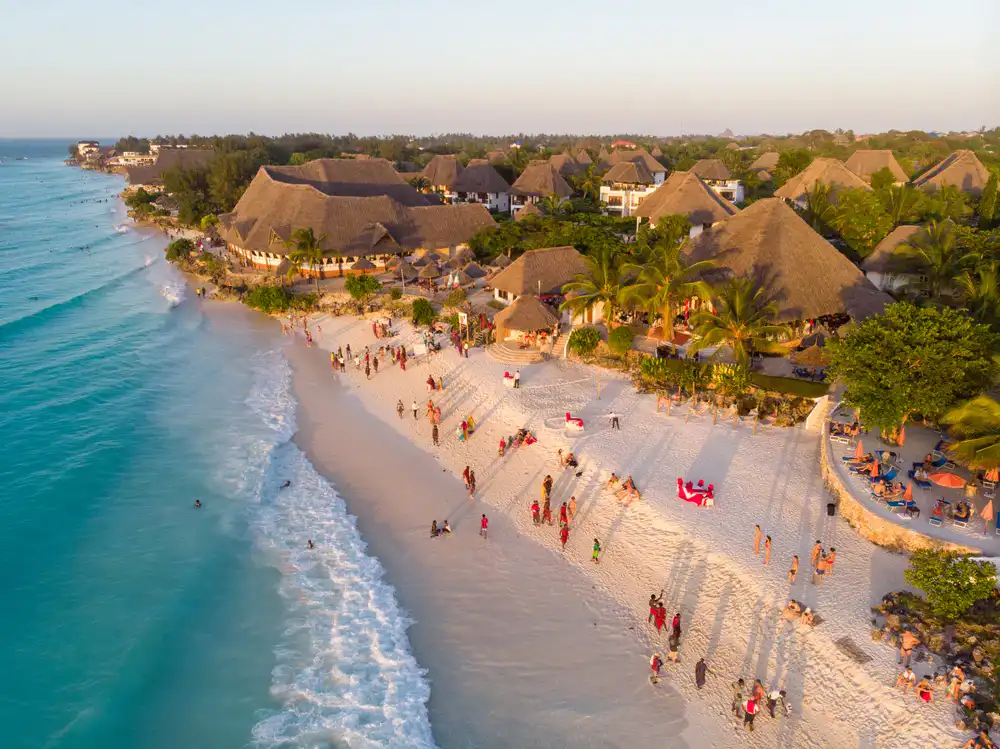
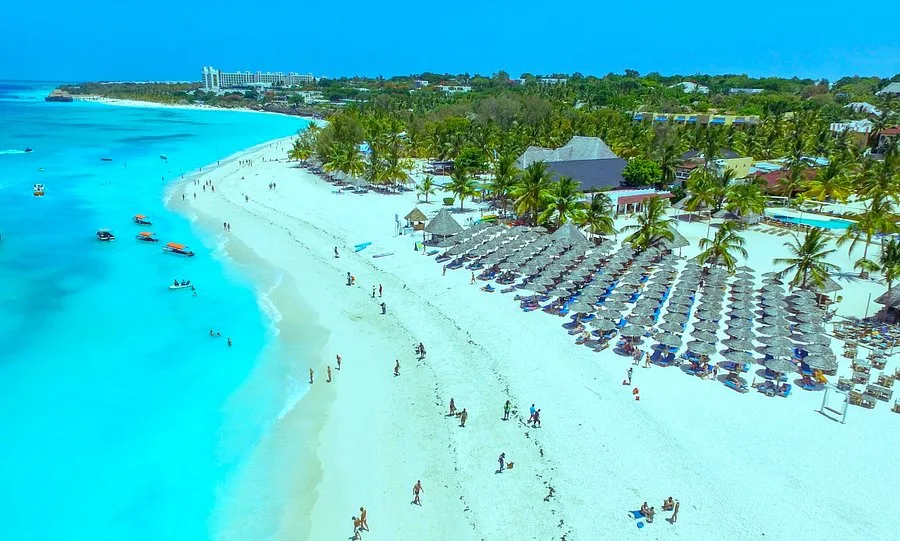
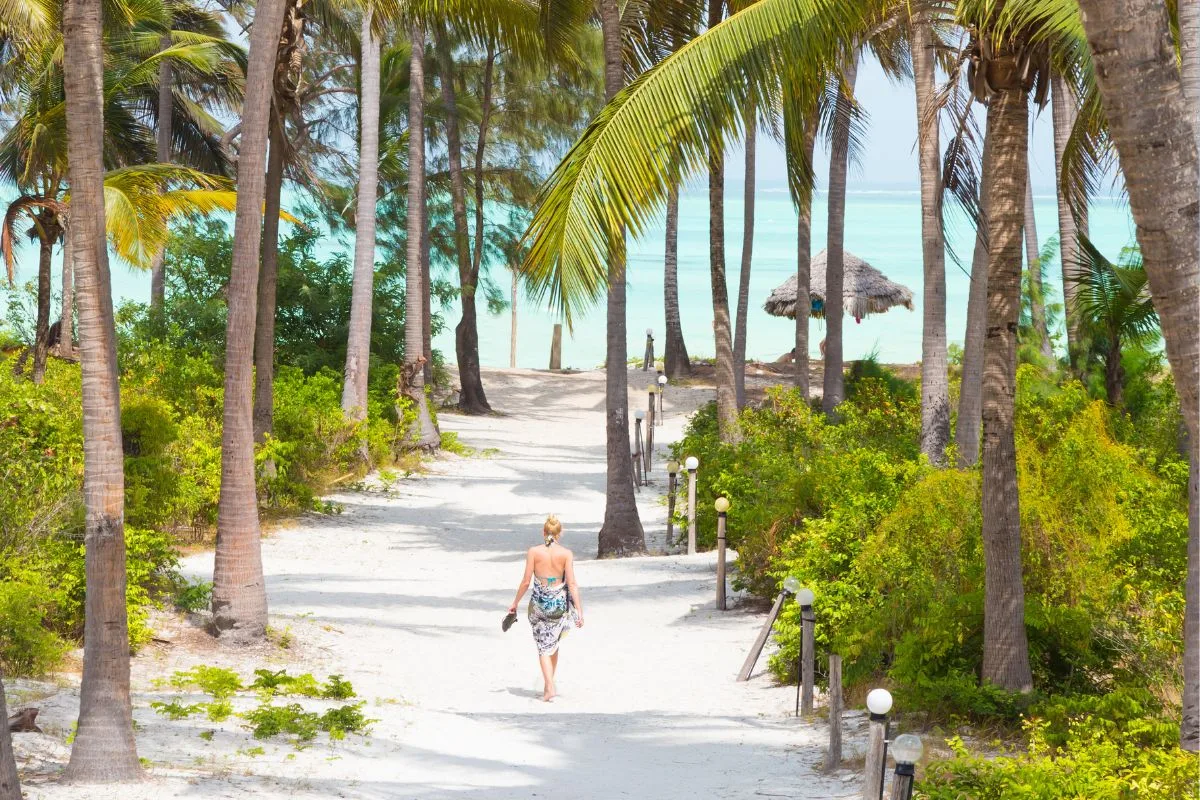
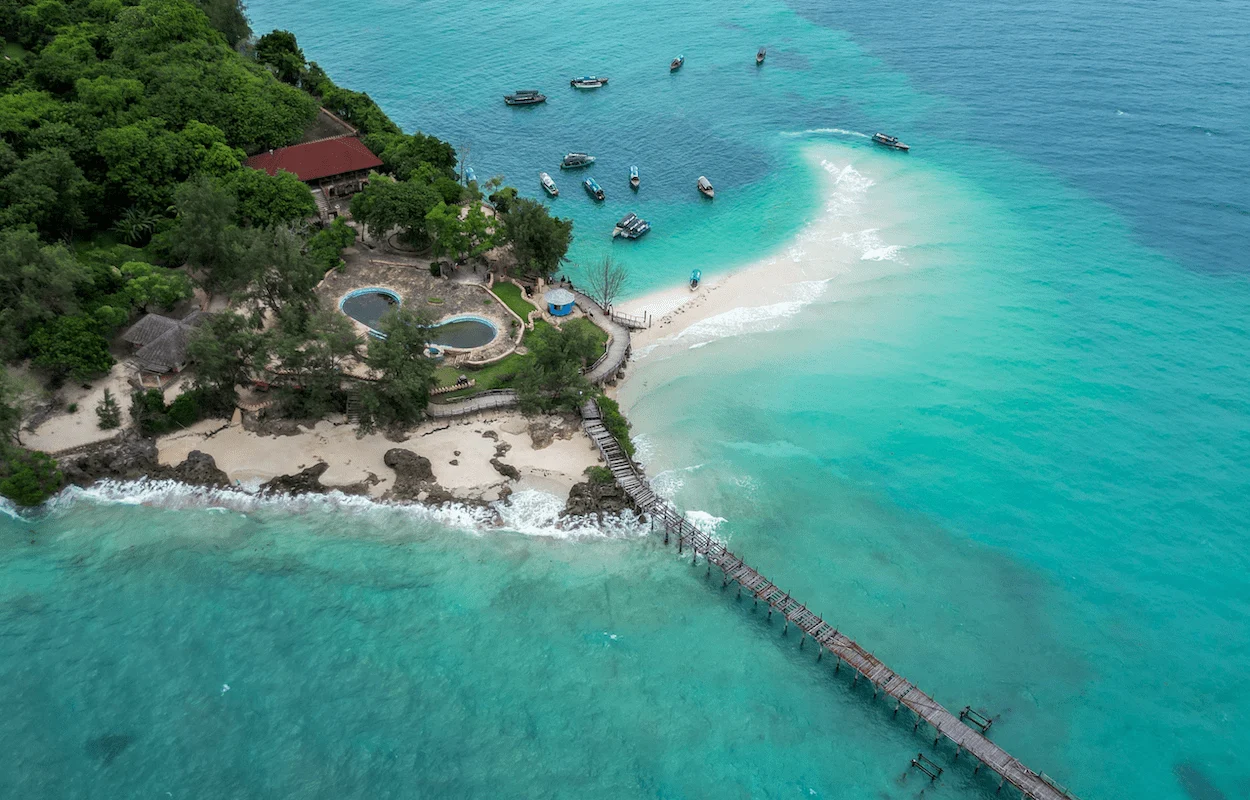
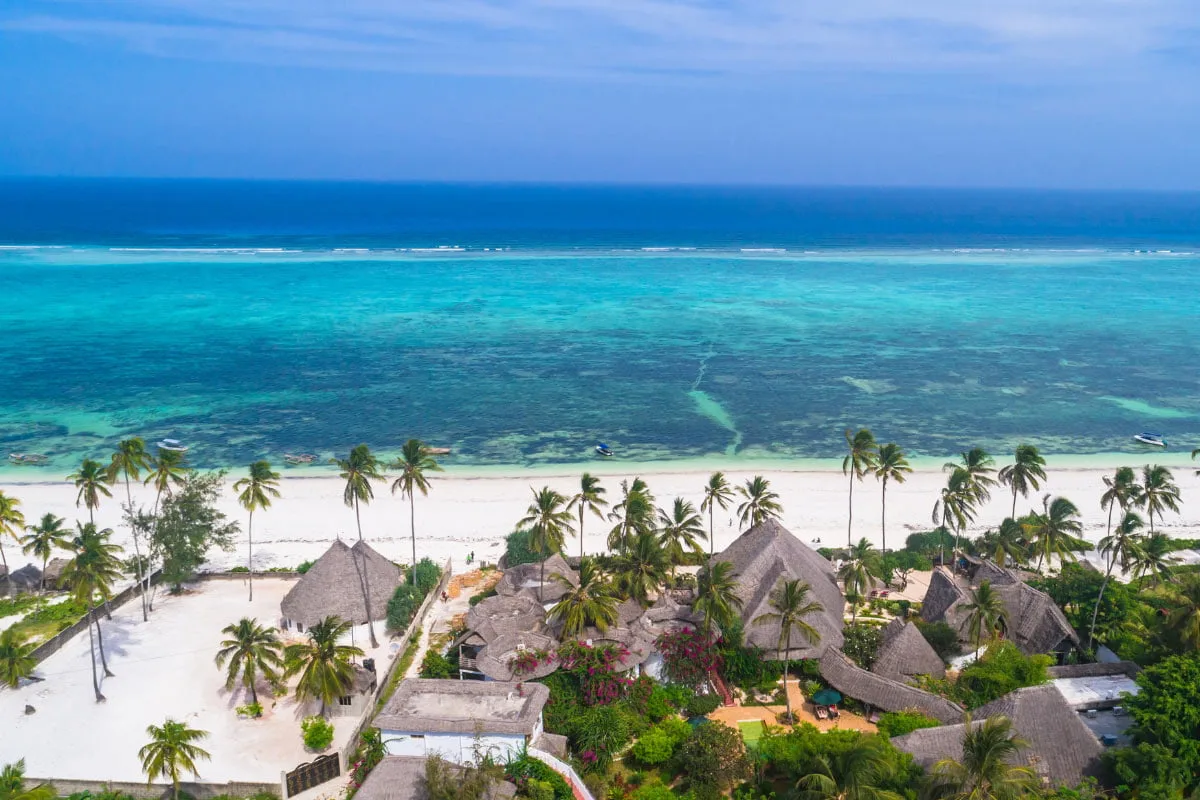
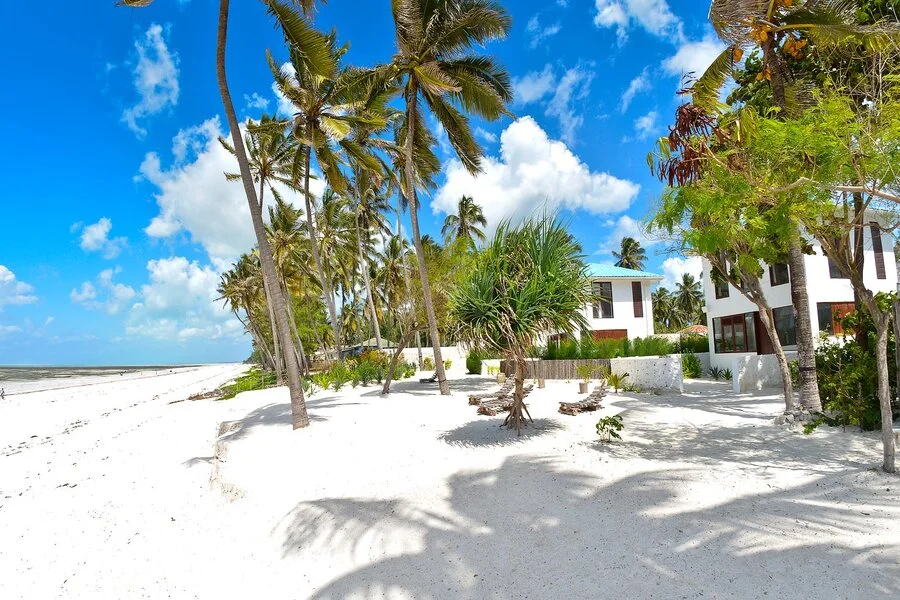
Na costa leste de Zanzibar (Paje, Jambiani, Matemwe), a variação das marés pode ser extrema. A água recua centenas de metros na maré baixa, deixando lodaçais rasos. Verifique sempre a tabela de marés local antes de reservar e pergunte ao seu alojamento sobre a praia na maré baixa. A costa norte (Nungwi, Kendwa) está praticamente livre deste problema. A topografia da baía mantém a água presente em todos os estados das marés, por isso é a escolha mais segura para natação casual.
O que fazer em Zanzibar: experiências que valem o seu tempo
Mnemba Atoll Snorkelling
Uma área marinha protegida na costa nordeste com extraordinária densidade de tartarugas verdes, golfinhos, peixes de recife e corais. A melhor experiência subaquática na Tanzânia. Passeios de um dia partem de Matemwe e Nungwi. Melhor junho-outubro para visibilidade.
Excursão pela Fazenda de Especiarias
Zanzibar ganhou o nome de "Ilha das Especiarias" devido aos séculos de cultivo de cravo, canela, noz-moscada, cardamomo e baunilha. Um passeio de meio dia por fazendas de especiarias no interior leva você por plantações ativas, onde guias demonstram cada tempero. A fragrância por si só já vale a pena. Depois das chuvas (maio-junho) é a época mais aromática.
Jozani Forest & Red Colobus Monkeys
O Parque Nacional Jozani Chwaka Bay é o único parque nacional de Zanzibar. Seus 50 km² de floresta indígena abrigam o macaco colobus vermelho de Zanzibar. Não encontrado em nenhum outro lugar da Terra. Caminhadas guiadas fáceis de 1 a 2 horas pela floresta de mogno, figueiras e palmeiras. Vá de manhã cedo, quando os macacos estão mais ativos no dossel.
Sunset Dhow Cruise
Um tradicional dhow de madeira saindo do porto de Nungwi ou Stone Town enquanto o céu fica dourado e rosa é um dos prazeres mais descomplicados da viagem. Normalmente de 2 a 2,5 horas, inclui drinques e lanches. A experiência mais romântica de Zanzibar, especialmente para casais em lua de mel. Reserve privado para casais.
Kitesurfing at Paje
Ventos alísios kusi consistentes de 15-25 nós sobre uma lagoa plana e rasa fazem da Praia de Paje um dos principais pontos de kitesurf do mundo. Várias escolas licenciadas oferecem aulas desde iniciantes até treinamento avançado. Junho a setembro é a alta temporada. Windsurfistas e canoístas compartilham a lagoa em dias de vento mais fraco.
Dolphin Watching at Kizimkazi
Kizimkazi, na costa sul, é o lar de grupos residentes de golfinhos-rotadores e golfinhos-nariz-de-garrafa. Uma partida particular de dhow no início da manhã, antes da chegada dos lotados barcos de turismo, proporciona uma experiência genuinamente diferente. Outubro-fevereiro é o mais calmo para os mares. Evite os passeios padrão lotados, se possível.
Prison Island (Changuu)
A uma curta viagem de barco de Stone Town, a Ilha Changuu foi originalmente planejada como um centro de detenção. Nunca usado como tal. Hoje é famosa por sua colônia de tartarugas gigantes Aldabra, algumas com mais de 200 anos. Uma agradável viagem de meio dia que combina bem com uma manhã em Stone Town. Vá no meio da semana para menos multidões.
Scuba Diving Mnemba & Pemba
As águas de Zanzibar contêm mais de 500 espécies de peixes em formações de corais intactas. O Atol de Mnemba (passeios de um dia saindo da ilha principal) é o melhor local de mergulho da África Oriental. Para mergulhadores avançados, as paredes e canais da Ilha de Pemba oferecem mergulho profundo em recifes de classe mundial que rivaliza com alguns dos melhores do Oceano Índico. Visibilidade máxima de julho a outubro.
Joias escondidas: o que a maioria dos visitantes nunca encontra
A rota turística de Zanzibar tornou-se desgastada. Nungwi, Stone Town, Ilha Prisão, Mnemba. Todos são genuinamente excelentes, mas a ilha tem várias experiências que a maioria dos visitantes nunca alcança. Esses são aqueles para os quais vale a pena planejar.
Kuza Cave & Cultural Centre Paje
Uma caverna subterrânea natural com uma piscina de água doce, emoldurada por antigas paredes de pedra de coral e raízes de mangue. Kuza combina a experiência da caverna com um programa cultural comunitário genuíno administrado por mulheres locais de Zanzibar. O centro cultural interno oferece demonstrações de culinária, música tradicional e oficinas de artesanato. Não está na maioria dos itinerários turísticos padrão. É exatamente por isso que vale a pena procurar.
Mwaka Kogwa Festival Makunduchi
Todo mês de julho, a vila de Makunduchi, na costa sudeste de Zanzibar, recebe Mwaka Kogwa, o Ano Novo Shirazi. Um festival único enraizado na antiga tradição persa (Shirazi). Os homens envolvem-se em lutas rituais de folhas de bananeira, fogueiras são acesas para simbolizar a queima do ano passado e as mulheres cantam e desfilam pela aldeia em trajes elaborados. Quase não há infraestrutura turística ao seu redor. Se as suas datas estiverem alinhadas, este é um dos eventos culturais mais autênticos da África Oriental.
Pongwe Pingwe O Sudeste Silencioso
As praias de Pongwe e Pingwe, no sudeste da península, são dramaticamente menos visitadas do que Paje e Jambiani, alguns quilómetros a norte. Algumas propriedades boutique aqui oferecem estadias na praia genuinamente isoladas, com acesso privado aos recifes e quase nenhum outro visitante. O famoso Restaurante Rock. Situado num afloramento de corais que se transforma numa ilha na maré alta. Fica perto de Michamvi e vale a peregrinação para almoçar ou jantar.
Chumbe Island Coral Park
A história de sucesso de conservação mais extraordinária de Zanzibar, localizada a apenas 12 km ao sul de Stone Town. A Ilha Chumbe é um santuário de recifes e reserva florestal estritamente protegido. Um dos poucos ambientes de recife de águas rasas verdadeiramente imaculados que permanecem no oeste do Oceano Índico. As visitas diurnas são limitadas para preservar o ecossistema. O jardim de corais, visível da superfície, é o melhor local para mergulho com snorkel em toda Zanzibar. A reserva antecipada é essencial.
Zanzibar International Film Festival (ZIFF) July
O maior festival de cinema da África Oriental transforma Stone Town num evento cultural de dez dias todo mês de julho, apresentando mais de 100 filmes de toda a África e da diáspora, ao lado de música ao vivo no forte, corridas de dhow no porto e exposições de arte no bairro antigo. A sobreposição com o pico da estação seca torna-o um motivo excepcional para programar sua visita para julho.
Os visitantes mais experientes de Zanzibar recomendam um itinerário de três zonas: 1-2 noites em Stone Town (fundação cultural), 2-3 noites na costa norte (Nungwi/Kendwa para natação descontraída e passeio de um dia em Mnemba), depois 2-3 noites na costa sudeste (Paje/Jambiani para um capítulo final mais tranquilo e autêntico). Este arco oferece todo o espectro do que a ilha oferece. História, vida marinha e ritmo genuíno de Zanzibar.
Comida, Cultura e Mesa de Zanzibar
A culinária de Zanzibar é uma das grandes tradições culinárias do Oceano Índico. Uma fusão em camadas da culinária costeira suaíli, temperos árabes de Omã, técnica subcontinental indiana e a extraordinária colheita de especiarias da ilha. É genuinamente diferente de tudo no continente e diferente de tudo na África Oriental.
| Dish / Drink | O que é | Onde encontrar |
|---|---|---|
| Zanzibar Pizza | Um saboroso crepe recheado e frito. Normalmente recheado com ovo, carne picada, vegetais ou frutos do mar, dobrado em forma de envelope em uma chapinha | Forodhani Noite Market, Stone Town |
| Urojo (Zanzibar Mix) | Uma sopa azeda de coco amarelo-cúrcuma com chips de mandioca, batata bhajia, ovo cozido e carne. O prato nacional não oficial de Zanzibar | Área do Mercado Darajani, locais para almoço |
| Grilled Octopus | Polvo recém pescado, marinado em tamarindo e pimenta, grelhado em carvão aberto. Encontrado em toda a ilha, mas melhor nos mercados noturnos | Mercado Forodhani, restaurantes na praia de Paje |
| Pilau & Biryani | Pratos de arroz profundamente condimentados, perfumados com cravo de Zanzibar, canela e cardamomo. A influência árabe e indiana no seu mais delicioso | Restaurantes locais, locais para almoço caseiro |
| Sugarcane Juice | Cana-de-açúcar recém-prensada com gengibre e limão, servida com gelo. A bebida de rua que define Zanzibar. Encomende em todos os mercados | Forodhani Gardens, street vendors everywhere |
| Mkate wa Sinia | Um tradicional pão de coco assado em uma grande travessa de barro sobre brasas. Doce, caramelizado e servido quente. Melhor comido ao nascer do sol | Padarias e barracas de rua matinais, Stone Town |
| A maioria das refeições nos restaurantes de Zanzibar custa entre US$ 5 e US$ 20. As refeições em resorts à beira-mar normalmente custam entre US$ 30 e US$ 60 por pessoa para o jantar. O mercado noturno é sempre o melhor valor. E muitas vezes a melhor comida. | ||
Mais de 99% da população de Zanzibar é muçulmana e a identidade cultural da ilha está profundamente ligada à sua herança islâmica. Ao visitar Stone Town ou qualquer vilarejo, cubra ombros e joelhos. Calças esvoaçantes de linho, camisas longas, quimonos e maxi vestidos são adequados e confortáveis no calor. Nas praias e em zonas turísticas, o vestuário de praia normal é perfeitamente aceitável. Este pequeno ato de respeito é profundamente apreciado pelos habitantes locais e transforma a forma como você é recebido.
Melhor época para visitar Zanzibar: mês a mês
Zanzibar é quente o ano todo, mas a estação escolhida determina a qualidade da praia, a visibilidade marinha, as condições do vento e os níveis de multidão de maneiras que afetam significativamente a experiência geral. Aqui está a imagem sazonal honesta.
Quando visitar e por quê
Céu limpo, mar calmo, 25-30°C. Melhor visibilidade para mergulho e snorkel (30m+ em Mnemba). Vento Kusi perfeito para kitesurf em Paje. Festival ZIFF em julho. Macacos colobus vermelhos mais ativos em Jozani. Reserve com 3 a 6 meses de antecedência.
Ligeiramente mais quente (28-35°C), mar plano e vítreo com visibilidade de 30m+. Mergulho mais calmo do ano. Festival de música Sauti za Busara em fevereiro. Menos lotado que a alta temporada. As tartarugas verdes estão presentes o ano todo.
Aguaceiros curtos e fortes. Principalmente de manhã ou à noite. Muitos dias são parcialmente ensolarados e totalmente funcionais. Taxas de acomodação mais baixas, menos multidões. Stone Town, passeios de especiarias e Floresta Jozani praticamente não foram afetados.
As chuvas mais fortes da Tanzânia. Possibilidade de chuvas prolongadas por dias. Mar agitado, pouca visibilidade, muitos passeios aquáticos suspensos. Alojamento 30-50% mais barato. Concentre-se em Stone Town e nas fazendas de especiarias se estiver visitando. Abril-maio são os meses de maior risco para férias na praia.
Setembro e início de outubro são considerados pelos visitantes experientes de Zanzibar como as melhores semanas do ano. As multidões na alta temporada começam a diminuir, os preços diminuem um pouco, mas o clima, a visibilidade do mar e a atividade da vida marinha permanecem no seu melhor. A temporada de incubação das tartarugas está ativa em Mnemba. O vento kusi está se transformando em uma brisa fresca e suave. Se você tiver flexibilidade, planeje para a segunda quinzena de setembro.
Informações práticas: como chegar, se locomover e o que levar na mala
Getting to Zanzibar
By air (recommended): Precision Air, Coastal Aviation e Air Tanzânia voam várias vezes ao dia de Kilimanjaro (JRO), Arusha (ARK) e Dar es Salaam (DAR) para o Aeroporto Abeid Amani Karume de Zanzibar (ZNZ). O tempo de vôo de Arusha é de aproximadamente 1 hora. Trilhas do Paraíso organiza todos os voos domésticos como parte de itinerários combinados na Tanzânia. O aeroporto fica a 20 minutos de Stone Town por transferência.
By ferry: As balsas regulares operam entre Dar es Salaam e Stone Town em aproximadamente 2 horas. As condições do mar podem tornar esta situação difícil e pouco fiável, especialmente durante as estações de transição. Voar é fortemente recomendado para a maioria dos visitantes, especialmente famílias e aqueles com tendência a enjôos.
Locomovendo-se pela ilha
Entre zonas, táxis e transferências privadas são a opção mais confiável. Combine o preço antes de entrar. Para se locomover em Stone Town, é totalmente acessível a pé (toda a cidade velha cobre cerca de 1 km²). Dala dalas (microônibus compartilhados) são a forma mais barata de viajar entre as cidades, mas funcionam no horário da ilha. O aluguel de scooters e bicicletas está amplamente disponível para exploradores independentes.
O que levar na mala para Zanzibar
- Protetor solar FPS 50+ seguro para recifes
- Protetor contra erupção cutânea ou camisa UV (para mergulho com snorkel)
- Sandálias de praia leves
- Máscara de snorkel (básica, boa para Mnemba)
- Saco seco para passeios de barco
- Underwater camera or phone case
- Long linen trousers or maxi skirt
- Loose linen shirt or tunic (shoulders covered)
- Lenço leve ou envoltório para mesquitas/mercados
- Sapatos ou sandálias confortáveis para caminhar
- Mochila pequena para passear por Stone Town
- USD cash (post-2006 notes preferred)
- Profilaxia da malária (Zanzibar é zona de malária)
- Repelente de insetos DEET (mosquitos ao entardecer)
- Antihistamines (coral / sea creature grazes)
- Oral rehydration salts
- All personal prescription medications
- Documentos de seguro de viagem
- Passport (6+ months validity)
- Tanzânia e-visa (immigration.go.tz)
- Seguro ZIC Zanzibar (se necessário)
- Yellow fever certificate (if applicable)
- Trilhas do Paraíso reserva confirmation
- Nenhum saco plástico é proibido na Tanzânia desde 2019
Perguntas frequentes
Adicione Zanzibar à sua viagem pela Tanzânia
Haven Trails cria Safari perfeito? Kilimanjaro? Itinerários de Zanzibar a partir de nossa base em Moshi. Cuidemos dos voos domésticos, das reservas de alojamento e de todos os transfers. Então você se concentra inteiramente na experiência.
Planeje sua extensão para Zanzibar? WhatsApp Now