
Moshi and Arusha can both be useful before Kilimanjaro, but the right base depends on the operator, starting gate, airport and wider holiday route. Choose a hotel that supports a calm briefing and equipment check rather than deciding only from a town's reputation.
Use the base your operator can support efficiently for the confirmed route, while checking comfort and transfers. Moshi often fits a mountain-focused stay; Arusha can fit a wider northern safari sequence. Compare hotel-to-gate logistics and the briefing arrangement for your actual booking.
Choose the base around the mountain operation
Moshi and Arusha are useful towns for different holiday sequences, but the operator, starting gate and onward route determine the practical hotel choice. A mountain-focused stay may favour one arrangement, while a wider northern safari can favour another. Request the exact pickup and briefing plan. The best base makes preparation and recovery easier rather than simply matching a familiar recommendation.
| Detail | What it means for your trip |
|---|---|
| Route access | Actual hotel-to-starting-gate journey. |
| Briefing | Where the guide meets you and gear is inspected. |
| Storage | Non-trekking luggage and its later collection. |
| Recovery | Final hotel, food, washing and airport transfer. |
The route determines the useful transfer
Different starting gates create different journeys. Ask for the departure time and door-to-gate arrangement from each proposed hotel. Do not use one town-to-gate estimate for every route, and check whether registration or another vehicle transfer is included in the first day's schedule.
Ask for the starting gate by name. Marangu, Machame and western or northern approaches do not all create the same town transfer. Include registration and any subsequent movement in the first-day sequence. A generic distance to Kilimanjaro is not enough to select a hotel.
Briefing and rental inspection matter
Choose a base where you can meet the team, check equipment and resolve missing items without rushing. Ask how rental gear is supplied and inspected. A comfortable room is useful, but it does not replace a clear pre-climb meeting and a practical way to address fit or condition problems.
A base is useful when rental equipment can be tried and replaced before departure. Ask whether the briefing takes place at the hotel, an office or another location. Do not assume a comfortable resort solves a practical gear-access problem if the team is based elsewhere.
The wider itinerary can favour Arusha
If the climb connects to a northern safari, Arusha may be convenient for the broader sequence. That should still be tested against the actual mountain departure and any equipment storage. Avoid moving hotels merely to match a generic recommendation when your operator already provides a sensible coordinated arrangement.
If continuing to safari, ask where the safari vehicle meets you and how stored luggage joins it. Changing towns can be sensible when it supports the next route, but unnecessary hotel moves consume time. Coordinate the whole sequence with the actual providers rather than booking each hotel independently from a general town ranking.
Recovery and airport access
After descent, choose a hotel that supports washing, food and rest before onward travel. Confirm where stored luggage is collected and the airport transfer, especially if you use a different final hotel. A town choice should make these handovers simpler rather than introduce an extra journey at the most tired part of the trip.
After descent, choose a usable room and confirmed bag handover. A final hotel near the next transfer may be convenient, but comfort and arrival timing matter too. Protect a recovery night where needed instead of treating the gate-to-airport movement as the only relevant journey.
Airport codes are part of the itinerary
Read the three-letter codes on each confirmation rather than relying on a broad destination name. JRO and ARK describe different airports; DAR and ZNZ also require their own terminal and transfer arrangements. Ask whether baggage must be collected and rechecked, especially when services are on separate tickets or a small-aircraft safari sector follows an international arrival.
A connection needs time for the actual handover: arrival procedures, bags, transport where necessary, check-in and loading. A short flight duration does not eliminate those steps. Keep the safari guide or transfer provider informed of changed flight details, and confirm which supplier assists when a delay affects another reservation. If an important international departure follows a safari flight, consider an overnight or a more generous connection plan. The value of a smooth itinerary is not only arriving quickly, but avoiding a sequence where a small delay removes every remaining option.
Treat sleeping equipment as one system
The shelter, sleeping bag, mat and dry clothing work together. A bag's extreme temperature label is not the same as a comfort specification, and a warm bag cannot fully compensate for an unsuitable mat underneath. Ask what is supplied, what is rented and what has been checked for condition before accepting a camp-equipment list.
Fit matters too: test whether you can close the bag comfortably and keep the gear you need nearby. Protect insulation from moisture, change out of damp walking clothes and organise the next departure before trying to sleep. Hut accommodation changes the shelter and sharing arrangements, but does not automatically provide heat, privacy or hotel facilities. Discuss persistent sleep difficulty or other wellbeing concerns with the guide. The point is a usable resting routine across several nights, not a premium equipment label that looks reassuring on a quotation but has never been inspected.
One coordinated base can simplify several tasks
Imagine your operator can brief, fit rentals and store bags at one hotel, then return you there after descent. That arrangement may be more useful than a nominally closer alternative requiring separate trips for every task. If the safari begins from another town, ask the team to design one deliberate move rather than repeating journeys before and after the climb.
- Ask which base serves the confirmed route efficiently.
- Compare hotel comfort and briefing arrangements.
- Confirm rentals and luggage storage.
- Plan the post-climb hotel and airport transfer together.
Which option fits your priorities?
| Option | Who it suits | The main compromise |
|---|---|---|
| Moshi-based preparation | Travellers focused on the mountain and operator's local arrangements | Check the route-specific gate transfer. |
| Arusha-based preparation | Visitors coordinating a wider northern itinerary | Protect briefing and equipment access. |
| Operator-coordinated hotel sequence | Travellers wanting simple pre/post-climb handovers | Confirm room, storage and airport inclusions. |
Compare complete hotel and transfer inclusions
Ask whether nights, meals, airport pickup, gate transport, storage and the final transfer are included. A lower room rate outside the operator's sequence can add vehicle costs. Price the actual room category and occupancy, not only the town name, and confirm checkout or late-arrival arrangements.
Neither town is universally best for every route. The starting gate, operator and wider itinerary determine the practical choice.
How to use this guide to plan a better trip
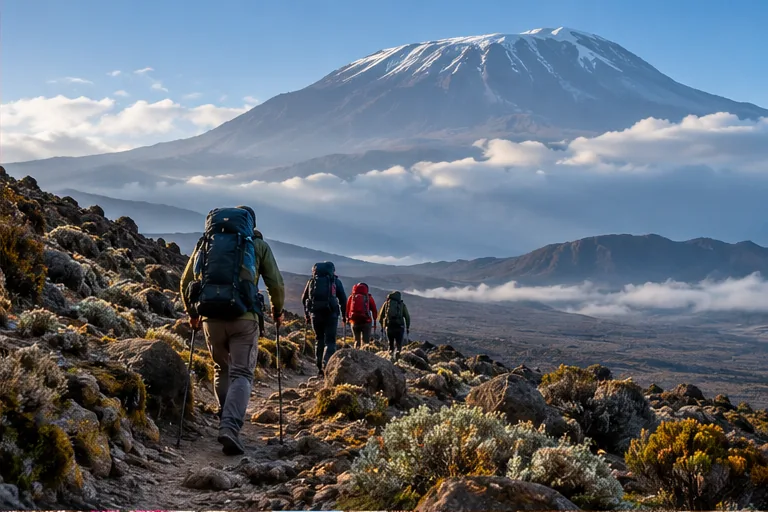
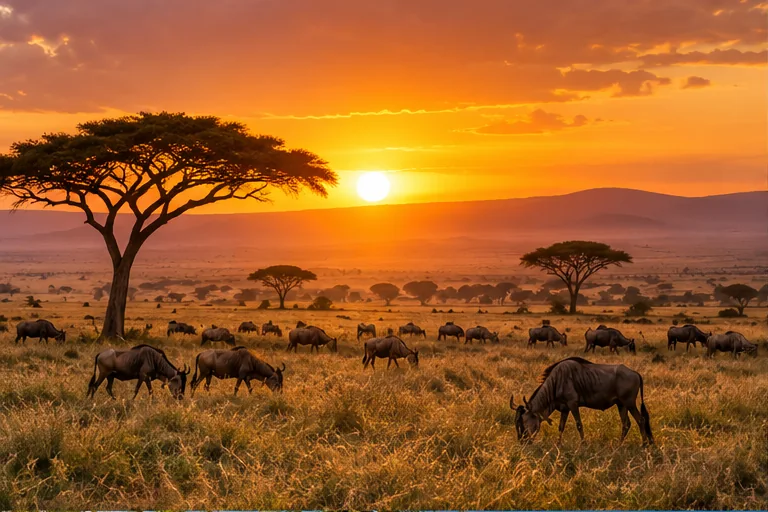
The details behind Where to Stay Before Kilimanjaro: Moshi vs Arusha become more useful when they are translated into real decisions: where time is spent, what must be confirmed before travel, and which details can remain flexible. Use the following field guide alongside the destination information above.
Turn a list of attractions into a realistic day
Check your starting town, road conditions, estimated travel time and the natural time of day for the main experience. A place that looks close on a map can require a substantial round trip; add time for parking, walking, local entry procedures and an unrushed lunch. Prioritise the experience you care about most and treat the second stop as optional when the day is already full. If you are continuing to a mountain trek or safari, protect the rest you need before an early departure. Well-paced days allow conversations with guides and residents that a tightly scheduled itinerary often misses.
Understand access, safety and local customs
Ask whether you need a local guide, which paths or viewpoints are open, what footwear suits the terrain and whether swimming or a water-based activity is permitted. Conditions can change with rain, heat or local operations; a published photograph is not a current safety assessment. When you visit a community, seek consent for portraits, use agreed local guides where appropriate and make any community payment or contribution transparent. A respectful interaction should benefit residents and leave you with more than a quick stop for souvenirs.
Solve the small logistics before departure
Find out if you need cash, the form of payment accepted, mobile coverage at the destination, drinking-water availability and a convenient place to use the restroom. Confirm who will meet you and whether a transfer is included in the price. For intercity travel, allow buffers around airport check-in or onward buses; for small-group excursions, ask when the operator expects to return to town. Save offline directions and a local contact number, and communicate dietary requirements or mobility needs before you depart rather than at the trailhead or vehicle.
Make space for local knowledge
A good travel day is not simply the greatest number of sights completed. Leave room to learn why a landscape, food, craft or tradition matters to the people who live nearby. Ask your guide what changes between seasons and which activities have the greatest community value. Where an activity touches wildlife, forests or water sources, favour providers who follow protective rules and keep visitors at a respectful distance. When the timetable allows, a spontaneous extra conversation or a quiet viewpoint can become the moment you remember most.
Score the choices using the same criteria: total travel hours, experience quality, comfort, real cost, safety provisions and how well each suits your available days. A comparison is only useful when both options are described on the same basis. If possible, get two quotations with matching assumptions.
Four decisions that change the experience
Use these prompts as a quick decision worksheet. Each one is linked to a detailed section in this guide, so you can revisit the evidence instead of making a choice from a short sales description.
Choose the base around the mountain operation
Moshi and Arusha are useful towns for different holiday sequences, but the operator, starting gate and onward route determine the practical hotel choice.
Explore this considerationThe route determines the useful transfer
Different starting gates create different journeys. Ask for the departure time and door-to-gate arrangement from each proposed hotel.
Explore this considerationBriefing and rental inspection matter
Choose a base where you can meet the team, check equipment and resolve missing items without rushing. Ask how rental gear is supplied and inspected.
Explore this considerationThe wider itinerary can favour Arusha
If the climb connects to a northern safari, Arusha may be convenient for the broader sequence. That should still be tested against the actual mountain departure and any equipment storage.
Explore this considerationQuestions worth sending before you book
Good planning emails are specific. You do not need a complicated spreadsheet; you need written answers to the points that could change your comfort, budget or available time. These questions help you turn the advice in this article into an itinerary or booking that is genuinely suitable for you.
- How does your suggested plan handle choose the base around the mountain operation for my exact travel dates?
- What would change if the route determines the useful transfer became difficult because of weather, availability or my preferred pace?
- Could you explain how you approach briefing and rental inspection matter and what is included in the price?
- Which alternative would you recommend if the main experience is unavailable, and what would that mean for transfers or costs?
- Can you list the total price, the important exclusions, deposit and cancellation rules, and any permits or fees that might change?
- What information do you need from me about mobility, ages, dietary requirements, interests and onward travel to make the plan more suitable?
Ask for a thoughtfully paced itinerary.
Send your travel month, number of guests, approximate budget and two experiences you care about most. You can use the questions above as a starting point.
Bring the details together before you decide
Your ideal version of Where to Stay Before Kilimanjaro: Moshi vs Arusha depends on your time, priorities and the conditions you will actually encounter. Start with the three questions below, then use the checklist to spot details that are often missing from a short description.
Choose the base around the mountain operation
Moshi and Arusha are useful towns for different holiday sequences, but the operator, starting gate and onward route determine the practical hotel choice.
Read this section ↗The route determines the useful transfer
Different starting gates create different journeys. Ask for the departure time and door-to-gate arrangement from each proposed hotel.
Read this section ↗Briefing and rental inspection matter
Choose a base where you can meet the team, check equipment and resolve missing items without rushing. Ask how rental gear is supplied and inspected.
Read this section ↗Practical checks for this type of journey
- Check opening hours, access rules and whether a knowledgeable guide is needed.
- Allow for the full road and walking time, not only the distance on a map.
- Ask about footwear, weather alternatives, payment methods and local permissions.
- Support respectful, locally led experiences and ask permission before taking portraits.
Score the choices using the same criteria: total travel hours, experience quality, comfort, real cost, safety provisions and how well each suits your available days. A comparison is only useful when both options are described on the same basis. If possible, get two quotations with matching assumptions.
Questions travellers actually ask
Is Moshi always the best base?
No. The route, operator and wider holiday determine the useful arrangement.
Are ARK and JRO interchangeable for hotel transfers?
No. Confirm the airport code and the actual ground journey.
What matters more than the hotel's brochure?
Briefing, equipment access, storage, recovery and coordinated transfers.
Make the decision with the whole trip in mind
Choose the place that supports the climb's practical tasks. An organised hotel sequence matters more than winning a broad Moshi-versus-Arusha argument.
Sources and further reading
Official and specialist references are linked below. Suggested schedules and worked budgets are clearly identified as planning examples; confirm date-sensitive operating conditions with the relevant provider.
- Kilimanjaro International Airport: official information
- TANAPA: Kilimanjaro National Park
- Tanzania Tourist Board: Kilimanjaro regional travel programme
Research reviewed on .
Turn the guide into a trip that fits you
Share your dates and priorities with Haven Trails for a suitable itinerary and a written breakdown of inclusions.
Discuss your itinerary Read more guides