
Materuni and Chemka answer different day-trip wishes. Compare a waterfall walk with village and coffee context against a spring outing where water access and swimming suitability lead the plan. The better choice depends on your interest and the conditions of the day.
Choose Materuni for a walk and a hosted cultural element when included. Choose Chemka when a spring setting and a locally assessed swimming plan fit your party. If combining them, check whether the added transfers still leave enough time to enjoy both.
Choose between a trail-led and water-led day
Materuni combines a waterfall approach with possible hosted coffee activities; Chemka centres on a spring setting and any permitted water programme. The distinction is not which photograph looks clearer. Ask what you will spend time doing, how the route works and which conditions matter. A non-swimmer and an enthusiastic walker may want a different day from a confident swimmer seeking a relaxed setting.
| Detail | What it means for your trip |
|---|---|
| Materuni | Walking route, footing and an agreed hosted programme. |
| Chemka | Current access, water suitability and supervision. |
| Weather | Rain can alter paths and journeys; water conditions need separate checks. |
| Combination | Two sites must still leave time for lunch and the return. |
Materuni: the walk is part of the visit
Ask about the approach and return, gradients and wet footing. The waterfall is not just a drive-up photo stop. Confirm whether coffee preparation, lunch and community guiding are included, and allow enough time to listen to hosts without being hurried straight back to the vehicle.
Ask about the path both toward and away from the waterfall. Descending to an attractive viewpoint can conceal the climb back. If coffee is included, ask whether it is a meaningful host-led session or a short demonstration; the programme should leave time to understand the process rather than rush it.
Chemka: assess the water experience
Clarify entry, facilities, changing arrangements and swimming support. Water clarity does not tell you everything about depth or current. A non-swimmer should ask what can be enjoyed comfortably without entering the water, and the group should follow staff advice about suitable boundaries on the day.
For Chemka, explain swimming confidence and ask about current water rules and conditions. Shade and facilities can influence the day even if you do not swim. Do not treat the familiar hot springs label as a promise about temperature, shallowness or suitability for everyone.
Weather changes the comparison
Rain can affect footpaths, roads and comfort at either destination. Ask what the guide does if the original plan is unsuitable. If you mainly want dry walking or relaxed swimming, choose based on current conditions rather than a fixed ranking that ignores how the day is actually developing.
A rainy day can make a waterfall visually impressive while making footing less comfortable. The guide should explain current conditions and a suitable alternative. Choosing Chemka instead does not remove the need to assess the water; each site has its own suitability questions.
A combination can dilute both stops
Map the transfers and meal break before choosing a two-site outing. If the schedule becomes mostly driving and rushed changing, one destination may be better value. Travellers preparing for Kilimanjaro should protect time for rest and the main climb briefing even when the day trip seems attractive.
Plot the actual transfers between the hotel and both sites. If the combination leaves only brief stops, select one and spend the saved time on interpretation, lunch or rest. A private vehicle can offer flexibility but cannot shorten the physical distance or the party's need for breaks.
Forest walking has a different rhythm from savanna driving
A forest trail can feel demanding because of humidity, roots, mud and repeated changes in gradient even when the distance sounds modest. Ask about the return climb, not only the downhill approach to a waterfall or viewpoint. Wear footwear suited to the actual footing and keep rain protection available before the weather turns.
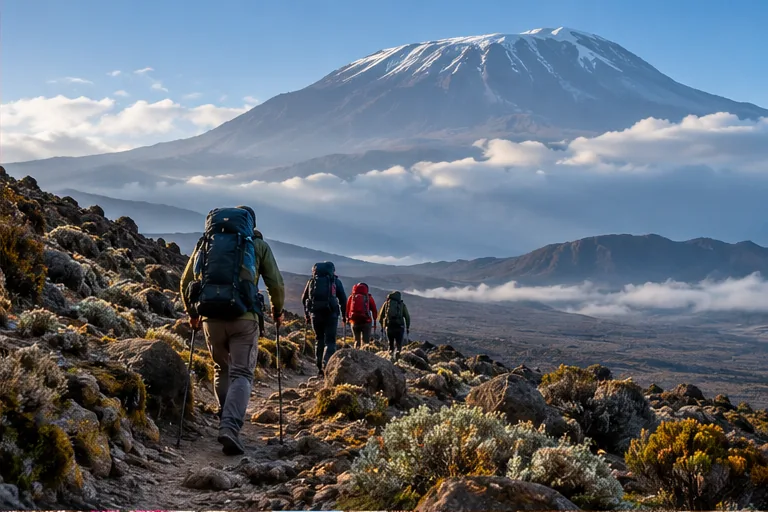
Pause with the guide to listen and look into the canopy. Birds and primates are not always visible immediately, and pushing continuously to the headline viewpoint can miss much of the habitat's interest. Carry the agreed water and allow time for rest in suitable places. Access rules still apply: a stream or pool mentioned in an old itinerary is not automatically open for swimming today. A lower mountain or forest outing should be judged by its actual terrain and conditions rather than assumed easy because it does not end at a famous summit.
Fit the outing into the day before and the day after
A day trip often sits between a long arrival, a safari departure or a mountain briefing. Ask what energy and time you actually have, then select the main experience accordingly. The shortest drive is not always the easiest walk, and a gentle-looking waterfall approach may have a substantial climb on the return.
Draw a schedule that includes transport, entry or registration, the activity, lunch and the final return. Keep time for equipment checks or luggage collection if another journey follows. A combination of two attractions is worthwhile only when the transfers leave enough time at both. Otherwise one unhurried outing can be more informative and enjoyable than two rushed stops. Weather can change paths and road conditions, so choose a guide with a practical alternative. The holiday improves when an optional outing supports the rest of the trip rather than consuming the rest or preparation period it depends on.
Choose by the party's interests
For travellers keen on walking and hosted food culture, a well-paced Materuni programme may be the better fit. For a party comfortable with the spring setting and looking for water time, Chemka may suit. If interests differ, discuss a comfortable option for those not participating in the main activity rather than making them wait without shade or facilities.
- Choose the kind of experience you want most.
- Check current walking or swimming conditions.
- Confirm guiding, entry, lunch and coffee inclusions.
- Compare the combination with one relaxed visit.
Which option fits your priorities?
| Option | Who it suits | The main compromise |
|---|---|---|
| Materuni | Visitors interested in walking, waterfall scenery and a hosted programme | Wet footing and return effort need attention. |
| Chemka | Travellers wanting a spring outing | Confirm swimming suitability and facilities. |
| Combined day | Visitors comfortable with extra transfers | Protect time at both stops and a realistic hotel return. |
Compare the actual programme, not the destination name
Ask about hotel transport, guiding, host or site charges, food and optional purchases. A combined price can look efficient while delivering less time at each place. Confirm the date-specific programme and current access before comparing a single-site quote with a two-site offer.
A combined day is not automatically better value if transfers remove most of the time you wanted at either destination.
How to use this guide to plan a better trip
The details behind Materuni Waterfalls vs Chemka Hot Springs: Which Should You Visit? become more useful when they are translated into real decisions: where time is spent, what must be confirmed before travel, and which details can remain flexible. Use the following field guide alongside the destination information above.
Turn a list of attractions into a realistic day
Check your starting town, road conditions, estimated travel time and the natural time of day for the main experience. A place that looks close on a map can require a substantial round trip; add time for parking, walking, local entry procedures and an unrushed lunch. Prioritise the experience you care about most and treat the second stop as optional when the day is already full. If you are continuing to a mountain trek or safari, protect the rest you need before an early departure. Well-paced days allow conversations with guides and residents that a tightly scheduled itinerary often misses.
Understand access, safety and local customs
Ask whether you need a local guide, which paths or viewpoints are open, what footwear suits the terrain and whether swimming or a water-based activity is permitted. Conditions can change with rain, heat or local operations; a published photograph is not a current safety assessment. When you visit a community, seek consent for portraits, use agreed local guides where appropriate and make any community payment or contribution transparent. A respectful interaction should benefit residents and leave you with more than a quick stop for souvenirs.
Solve the small logistics before departure
Find out if you need cash, the form of payment accepted, mobile coverage at the destination, drinking-water availability and a convenient place to use the restroom. Confirm who will meet you and whether a transfer is included in the price. For intercity travel, allow buffers around airport check-in or onward buses; for small-group excursions, ask when the operator expects to return to town. Save offline directions and a local contact number, and communicate dietary requirements or mobility needs before you depart rather than at the trailhead or vehicle.
Make space for local knowledge
A good travel day is not simply the greatest number of sights completed. Leave room to learn why a landscape, food, craft or tradition matters to the people who live nearby. Ask your guide what changes between seasons and which activities have the greatest community value. Where an activity touches wildlife, forests or water sources, favour providers who follow protective rules and keep visitors at a respectful distance. When the timetable allows, a spontaneous extra conversation or a quiet viewpoint can become the moment you remember most.
Score the choices using the same criteria: total travel hours, experience quality, comfort, real cost, safety provisions and how well each suits your available days. A comparison is only useful when both options are described on the same basis. If possible, get two quotations with matching assumptions.
Four decisions that change the experience
Use these prompts as a quick decision worksheet. Each one is linked to a detailed section in this guide, so you can revisit the evidence instead of making a choice from a short sales description.
Choose between a trail-led and water-led day
Materuni combines a waterfall approach with possible hosted coffee activities; Chemka centres on a spring setting and any permitted water programme. The distinction is not which photograph looks clearer.
Explore this considerationMateruni: the walk is part of the visit
Ask about the approach and return, gradients and wet footing. The waterfall is not just a drive-up photo stop.
Explore this considerationChemka: assess the water experience
Clarify entry, facilities, changing arrangements and swimming support. Water clarity does not tell you everything about depth or current.
Explore this considerationWeather changes the comparison
Rain can affect footpaths, roads and comfort at either destination. Ask what the guide does if the original plan is unsuitable.
Explore this considerationQuestions worth sending before you book
Good planning emails are specific. You do not need a complicated spreadsheet; you need written answers to the points that could change your comfort, budget or available time. These questions help you turn the advice in this article into an itinerary or booking that is genuinely suitable for you.
- How does your suggested plan handle choose between a trail-led and water-led day for my exact travel dates?
- What would change if materuni: the walk is part of the visit became difficult because of weather, availability or my preferred pace?
- Could you explain how you approach chemka: assess the water experience and what is included in the price?
- Which alternative would you recommend if the main experience is unavailable, and what would that mean for transfers or costs?
- Can you list the total price, the important exclusions, deposit and cancellation rules, and any permits or fees that might change?
- What information do you need from me about mobility, ages, dietary requirements, interests and onward travel to make the plan more suitable?
Ask for a thoughtfully paced itinerary.
Send your travel month, number of guests, approximate budget and two experiences you care about most. You can use the questions above as a starting point.
Bring the details together before you decide
Your ideal version of Materuni Waterfalls vs Chemka Hot Springs: Which Should You Visit? depends on your time, priorities and the conditions you will actually encounter. Start with the three questions below, then use the checklist to spot details that are often missing from a short description.
Choose between a trail-led and water-led day
Materuni combines a waterfall approach with possible hosted coffee activities; Chemka centres on a spring setting and any permitted water programme. The distinction is not which photograph looks clearer.
Read this section ↗Materuni: the walk is part of the visit
Ask about the approach and return, gradients and wet footing. The waterfall is not just a drive-up photo stop.
Read this section ↗Chemka: assess the water experience
Clarify entry, facilities, changing arrangements and swimming support. Water clarity does not tell you everything about depth or current.
Read this section ↗Practical checks for this type of journey
- Check opening hours, access rules and whether a knowledgeable guide is needed.
- Allow for the full road and walking time, not only the distance on a map.
- Ask about footwear, weather alternatives, payment methods and local permissions.
- Support respectful, locally led experiences and ask permission before taking portraits.
Score the choices using the same criteria: total travel hours, experience quality, comfort, real cost, safety provisions and how well each suits your available days. A comparison is only useful when both options are described on the same basis. If possible, get two quotations with matching assumptions.
Questions travellers actually ask
Is Materuni entirely a short photo stop?
Not in a meaningful walking and hosted programme. Ask about the full route and time allocation.
Does Chemka suit non-swimmers automatically?
Confirm comfortable facilities and an appropriate plan without water participation.
Can weather change the choice?
Yes. Evaluate path and water conditions separately with current local guidance.
Make the decision with the whole trip in mind
Pick the activity you genuinely want to experience and give it room. A focused day with suitable conditions usually teaches and relaxes more than a rushed two-place itinerary.
Sources and further reading
Official and specialist references are linked below. Suggested schedules and worked budgets are clearly identified as planning examples; confirm date-sensitive operating conditions with the relevant provider.
- Tanzania Tourist Board: Kilimanjaro regional travel programme
- Tanzania Tourist Board: cultural tourism programme
Research reviewed on .
Turn the guide into a trip that fits you
Share your dates and priorities with Haven Trails for a suitable itinerary and a written breakdown of inclusions.
Discuss your itinerary Read more guides