
Ramadan can change the rhythm of a Zanzibar holiday without making the island an interchangeable resort bubble. Many residents are observing a significant religious month. Plan meals, public behaviour and outings respectfully, with current guidance from the hotel and local providers rather than assumptions drawn from another year.
Confirm local dates and operating arrangements, dress appropriately away from resort settings and respect public eating and drinking guidance. Hotel dining and town services can differ. Keep the programme adaptable and do not assume every restaurant or excursion follows ordinary hours.
Ramadan planning checks
| Detail | What it means for your trip |
|---|---|
| Dates | Local confirmation for the travel year. |
| Meals | Hotel and outing arrangements specified. |
| Behaviour | Respectful public dress and eating guidance. |
| Hours | Current bookings rather than assumed ordinary operation. |
Dates and daily rhythm need local confirmation
Ramadan follows the Islamic calendar and observed dates can depend on local announcements. Avoid inserting one unverified future-year date range into a booking. Ask what the month means for the actual programme: daytime meals, evening services and any holiday-period changes. A global calendar is an initial planning aid, not confirmation of every local arrangement.
Organise meals before a town or village outing
FCDO advises avoiding public eating and drinking outside hotels or restaurants during Ramadan. Ask the hotel how meals are provided and where a suitable stop is available during an outing. Do not assume an ordinary street-food or market programme operates unchanged. Visitors with particular dietary or care needs should discuss a respectful practical arrangement rather than improvise publicly.
Respect is visible in dress and participation
Use modest clothing in town, villages and religious areas according to local guidance. A beach holiday does not make swimwear appropriate everywhere. Photography and invitations remain separate permissions. If offered an evening meal or cultural explanation, listen to the host's preferences and avoid treating observance as entertainment staged for visitors.
Evening atmosphere is not an all-services guarantee
The timing around the end of the daily fast can affect restaurants, transport and people's attention. Confirm reservations and pickup arrangements without pressuring workers to ignore observance. Some programmes may continue with adapted hours; others may change. Ask close to travel and again locally rather than relying on a reassuring account from a different year.
What a respectful hosted experience should explain
A hosted village, food or cultural programme should tell you who agreed to the visit, what is included and how the fee benefits the people involved. Entering a residential place with a driver does not automatically establish an invitation. Ask which spaces and activities hosts choose to share, and accept private boundaries without negotiating for a photograph.
Photography needs its own consent. An entry fee or guide payment does not necessarily grant permission to record every person, home or conversation. Buy from willing makers at agreed prices if you want a souvenir, and avoid distributing gifts unpredictably, particularly to children. Ask thoughtful questions about work, change and daily life rather than testing whether a community looks like a travel brochure. Modern clothing, phones and tourism work do not invalidate people's identity. A worthwhile visit is one in which hosts retain control and visitors learn through an agreed encounter.
Read Stone Town as a living town
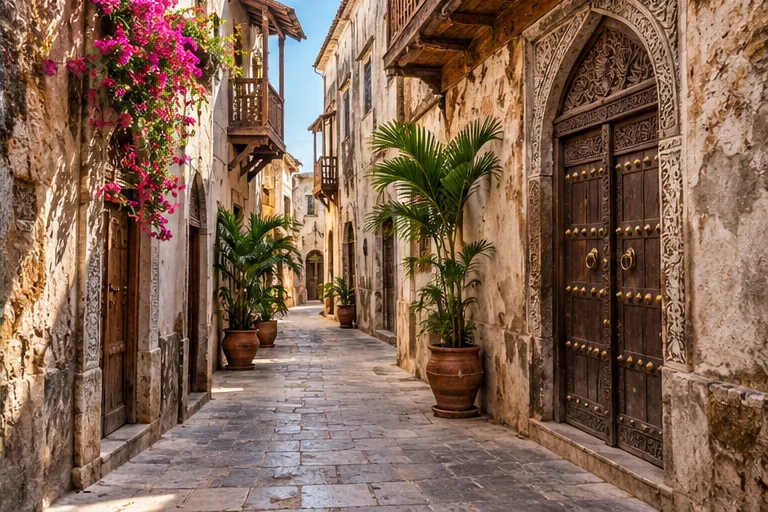
A useful walk connects the narrow lanes, carved doors, waterfront and public buildings with the people who still use them. Avoid reducing the visit to a collection of door photographs. Ask the guide how trade, household life and changing uses of buildings shaped the area, and leave room for residents to pass through their own streets.
Choose a manageable circuit with a shaded break and one or two historical sites that are actually open. A restoration project or closure can change the plan, so ask what you will enter and what you will see from outside. In markets, ask before photographing vendors and do not assume everyone wants to explain their work to a tour group. When discussing slavery and other difficult history, give the subject time rather than turning a memorial into a hurried stop. Comfortable footwear and an organised return transfer improve the visit more than trying to cover every landmark in one hot afternoon.
Give every transfer a pickup and a return plan
Confirm the hotel or terminal, meeting point, driver's identification and luggage capacity. If a flight is delayed, know who updates the pickup and whether waiting affects the price. A transfer between the airport and a nearby town is not the same product as a journey to a distant beach with several passengers and large bags.
For an outing, agree whether the driver waits, returns later or supplies only one direction. Save the contact and meeting instructions offline. If the activity already includes transport, check before paying another provider for the same journey. Keep a buffer before ferries, flights and tide-dependent boat departures; map travel time does not include every check-in or traffic delay. After dark, use a reliable agreed arrangement instead of improvising an unfamiliar isolated walk. A rental car changes the responsibility as well as the price, so read its paperwork, insurance and breakdown terms before choosing independence.
A town day planned around practical needs
An illustrative Ramadan outing uses a confirmed guide, a suitable walking circuit and an agreed meal location, followed by a known return. If a usual food programme is unavailable, choose another interest rather than expecting vendors to change their routine. The visitor's day can remain enjoyable while recognising that the town is living through a religious month, not maintaining a theme-park timetable.
- Confirm locally observed dates.
- Ask about dining and outing hours.
- Pack suitable town clothing.
- Arrange respectful meals and return transport.
Which approach fits your priorities?
| Option | Who it suits | The main consideration |
|---|---|---|
| Hotel-based relaxed stay | Visitors prioritising simple meal access | Confirm actual service times. |
| Adapted cultural itinerary | Travellers interested in town and hosted experiences | Follow local operating and behaviour guidance. |
| Flexible outing programme | Visitors keeping options open | Use current confirmations rather than old schedules. |
Costs and practical details
Check whether changes to meals, private transport or programme timing affect the quote. Ramadan does not establish a universal discount or premium. Obtain the actual room and service terms, including any holiday-period conditions, and distinguish current confirmations from broad seasonal descriptions.
A resort's operating pattern should not be applied automatically to town restaurants, villages or religious spaces.
How to use this guide to plan a better trip
The details behind Zanzibar During Ramadan: What Tourists Should Know Before Visiting become more useful when they are translated into real decisions: where time is spent, what must be confirmed before travel, and which details can remain flexible. Use the following field guide alongside the destination information above.

Choose a beach for your daily routine
Zanzibar is not a single beach experience. The north, east and southeast coastlines differ in tide exposure, village atmosphere, restaurant choice and the ease of swimming throughout the day. Ask for practical information about the specific stretch of shore, not only the resort name: where can you enter the water, what happens at low tide, and how far away are groceries, cafés or evening activities? A beautiful aerial photograph does not reveal an exposed reef flat, a long transfer or the noise of a lively beachfront. Those details matter more after five days than they do during five minutes of searching hotels.
Plan sea activities around conditions and ethics
Snorkelling, diving, boat trips and wildlife encounters are affected by sea state, tides, visibility and operator standards. Ask how guides choose the departure time, what happens when the water is unsuitable and which equipment and safety briefing are included. Do not assume marine wildlife will appear on demand or that getting closer makes an experience better. Avoid tours that chase dolphins or encourage contact with turtles and other wildlife. If you are not a confident swimmer, tell the operator in advance and ask about buoyancy aids, boat access and alternative viewpoints.
Allow room for culture beyond the resort
Stone Town, local food, markets, farming communities and village life give context to a beach holiday. Schedule cultural activities at a pace that lets you listen and participate respectfully rather than treating every stop as a photo opportunity. In public areas away from beaches, dress considerately and ask before photographing people. Opening hours and visitor access can be affected by local holidays or religious observances. A knowledgeable local guide can make the difference between simply seeing a door, spice plant or fishing boat and understanding what it means within the island’s history and everyday life.
Calculate the complete island day
For any excursion, account for hotel pickup, driving time, boat boarding if relevant, time at the attraction and the journey back. A route that seems short on a map may take longer during busy periods. Compare what a quoted price includes: transfer, entrance fees, equipment, guide, food, drinks and cancellation conditions. Keep a little open time between major activities. A rainy afternoon can become an opportunity to explore an indoor attraction or rest, while an unusually calm morning may be better spent on the water. Flexibility usually improves a Zanzibar holiday.
Leave space to learn about the people behind the place. Ask for locally led interpretation, agree before taking photos, and dress respectfully outside dedicated beach areas. Confirm observance-related opening hours and consider where your visit supports local guides, producers and communities.
Four decisions that change the experience
Use these prompts as a quick decision worksheet. Each one is linked to a detailed section in this guide, so you can revisit the evidence instead of making a choice from a short sales description.
Ramadan planning checks
Ramadan follows the Islamic calendar and observed dates can depend on local announcements. Avoid inserting one unverified future-year date range into a booking.
Explore this considerationDates and daily rhythm need local confirmation
Ramadan follows the Islamic calendar and observed dates can depend on local announcements. Avoid inserting one unverified future-year date range into a booking.
Explore this considerationOrganise meals before a town or village outing
FCDO advises avoiding public eating and drinking outside hotels or restaurants during Ramadan. Ask the hotel how meals are provided and where a suitable stop is available during an outing.
Explore this considerationRespect is visible in dress and participation
Use modest clothing in town, villages and religious areas according to local guidance. A beach holiday does not make swimwear appropriate everywhere. Photography and invitations remain separate permissions.
Explore this considerationQuestions worth sending before you book
Good planning emails are specific. You do not need a complicated spreadsheet; you need written answers to the points that could change your comfort, budget or available time. These questions help you turn the advice in this article into an itinerary or booking that is genuinely suitable for you.
- How does your suggested plan handle ramadan planning checks for my exact travel dates?
- What would change if dates and daily rhythm need local confirmation became difficult because of weather, availability or my preferred pace?
- Could you explain how you approach organise meals before a town or village outing and what is included in the price?
- Which alternative would you recommend if the main experience is unavailable, and what would that mean for transfers or costs?
- Can you list the total price, the important exclusions, deposit and cancellation rules, and any permits or fees that might change?
- What information do you need from me about mobility, ages, dietary requirements, interests and onward travel to make the plan more suitable?
Ask for a thoughtfully paced itinerary.
Send your travel month, number of guests, approximate budget and two experiences you care about most. You can use the questions above as a starting point.
Bring the details together before you decide
Your ideal version of Zanzibar During Ramadan: What Tourists Should Know Before Visiting depends on your time, priorities and the conditions you will actually encounter. Start with the three questions below, then use the checklist to spot details that are often missing from a short description.
Ramadan planning checks
Ramadan follows the Islamic calendar and observed dates can depend on local announcements. Avoid inserting one unverified future-year date range into a booking.
Read this section ↗Dates and daily rhythm need local confirmation
Ramadan follows the Islamic calendar and observed dates can depend on local announcements. Avoid inserting one unverified future-year date range into a booking.
Read this section ↗Organise meals before a town or village outing
FCDO advises avoiding public eating and drinking outside hotels or restaurants during Ramadan. Ask the hotel how meals are provided and where a suitable stop is available during an outing.
Read this section ↗Practical checks for this type of journey
- Confirm how tide and sea conditions change the attraction on your chosen dates.
- Ask how long the round-trip transfer takes and what the excursion price includes.
- Choose water activities with strong safety standards and respectful wildlife practices.
- Leave time for local culture and unscheduled beach hours rather than stacking activities.
Leave space to learn about the people behind the place. Ask for locally led interpretation, agree before taking photos, and dress respectfully outside dedicated beach areas. Confirm observance-related opening hours and consider where your visit supports local guides, producers and communities.
Questions travellers actually ask
Will every restaurant operate normal daytime hours?
Do not assume so. Confirm current arrangements for the exact provider.
Should I use one online date for every year?
No. Check the travel year and local observation.
Can I still enjoy cultural outings?
Where appropriately operated, yes; plan respectfully around hosts and current hours.
Make the decision with the whole trip in mind
A thoughtful Ramadan holiday recognises the island's own rhythm. Clear meal arrangements and respectful behaviour make the visit easier for both guests and the people hosting them.
Sources and further reading
Official and specialist references are linked below. Suggested schedules and worked budgets are planning examples, not provider guarantees. Check date-sensitive requirements and operating arrangements directly with the relevant authority or supplier.
Research reviewed on .
Turn the guide into a trip that fits you
Share your dates and priorities with Haven Trails for a suitable itinerary and a written breakdown of inclusions.
Discuss your itinerary Read more guides